On May 2, 1989, Hungary began dismantling its border fence with Austria, allowing a number of East Germans to defect.
Categories
Run for the border
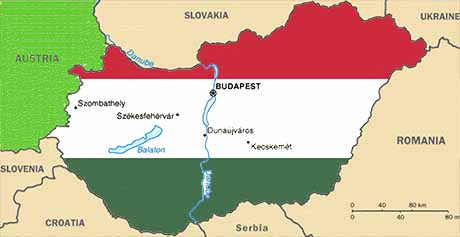
On May 2, 1989, Hungary began dismantling its border fence with Austria, allowing a number of East Germans to defect.
Happily common sense, though she is by nature the gentlest creature living, when she feels the knife at her throat, is apt to develop unexpected powers of resistance, and to send doctrinaires flying, even when they have bound her down and think they have her at their mercy.
Samuel Butler, Erewhon (1872), chapter 26.
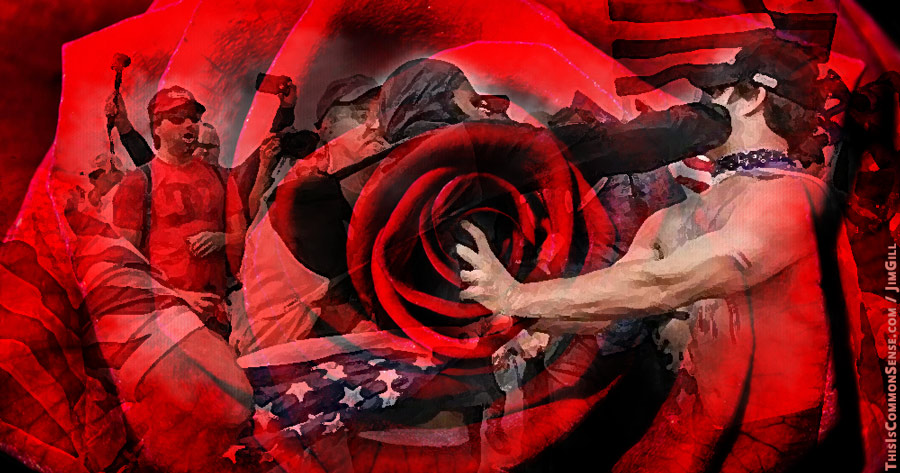
Portland, Oregon, styles itself as “The City of Roses.” For over a century, this Pacific Northwest city has held an annual Rose Festival, complete with multiple parades.
This year, there will be at least one parade less.
“The annual 82nd Avenue Rose Parade and Carnival scheduled for Saturday have been canceled because of threats against the Multnomah County Republican Party, a longtime participant in the parade,” we learn from the Portland Tribune. “In a Tuesday afternoon email, the 82 Avenue Business Association, which sponsors the Rose Festival-sanctioned event, said it canceled the entire event because [it] could not guarantee the safety of the community.”
KOIN-6 News reported that the threats came from the Direct Action Alliance, an “antifa”-styled group that “created a Facebook event called ‘Defend Portland from Fascists at the Avenue of Roses Parade.’ The group wanted to disrupt the march because of ‘Nazis and fascists’ participating.”
Now, what you regard as “white supremacist” and what young pseudo-antifascists think of as “white supremacy” are probably very different. I doubt that many real Nazis and fascists would have marched on Saturday.
But the identification issue is irrelevant. If fascists want to peacefully parade, let them.
What is objectionable? Those who engage in violence to suppress views of which they disapprove.
Also objectionable? The organizers and the City of Roses police, who, by caving in, let free speech and assembly be squelched.
Spontaneous marches did occur on parade day, corralled to the left and right sides of the street. Literally and figuratively. Three violent activists were arrested but not identified by affiliation.
Portlanders used to worry that the clouds would rain on their parades. Now, it is ideological violence casting a dark shadow.
This is Common Sense. I’m Paul Jacob.

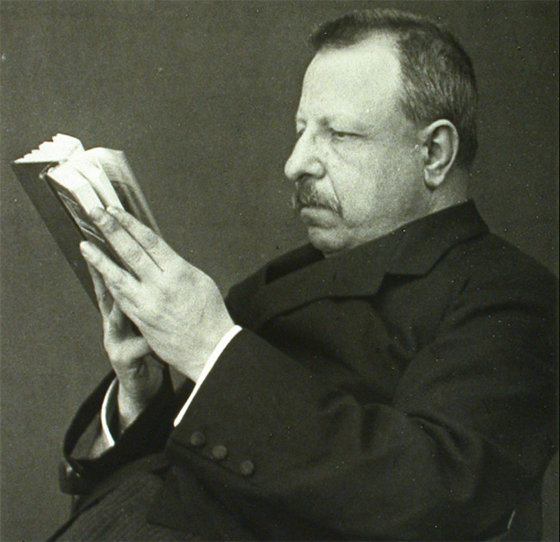
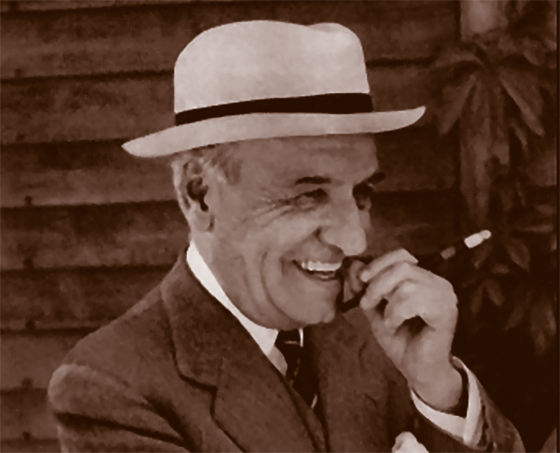
The Manifesto of the Anti-Fascist Intellectuals, written by philosopher Benedetto Croce [pictured, above] in response to the Manifesto of the Fascist Intellectuals by Giovanni Gentile, sanctioned the unreconcilable split between the philosopher and the Fascist government of Benito Mussolini, to which he had previously given a vote of confidence on October 31, 1922.
The manifesto was published by Il Mondo on May 1, 1925, which was Workers’ Day, symbolically responding to the publication of the Fascist manifesto on the Natale di Roma, the founding of Rome (celebrated on April 21). The Fascist press claimed that the Crocian manifesto was “more authoritarian” than its Fascist counterpart — a typical leftist dismissal of what used to be called “liberalism” — in Italian, liberismo — but which Croce dubbed liberism, to distinguish it from the dirigiste quasi-socialisms of self-described “liberals” of the time.
Strictly speaking, the mass, as a psychological fact, can be defined without waiting for individuals to appear in mass formation. In the presence of one individual we can decide whether he is ‘mass’ or not. The mass is all that which sets no value on itself — good or ill — based on specific grounds, but which feels itself ‘just like everybody,’ and nevertheless is not concerned about it; is, in fact, quite happy to feel itself as one with everybody else.
José Ortega y Gasset, The Revolt of the Masses, 1929.

Oh, what will we do? The socialists in the United Nations do not approve of an American policy proposal… Click on over to Townhall. Then come back here for more info:
Samuel Butler, describing the residents of the imagined southern hemispheric utopians in his satirical novel, Erewhon, 1872.
The main feature in their system is the prominence which they give to a study which I can only translate by the word ‘hypothetics.’ They argue thus — that to teach a boy merely the nature of the things which exist in the world around him, and about which he will have to be conversant during his whole life, would be giving him but a narrow and shallow conception of the universe, which it is urged might contain all manner of things which are not now to be found therein. To open his eyes to these possibilities, and so to prepare him for all sorts of emergencies, is the object of this system of hypothetics. To imagine a set of utterly strange and impossible contingencies, and require the youths to give intelligent answers to the questions that arise therefrom, is reckoned the fittest conceivable way of preparing them for the actual conduct of their affairs in after life.
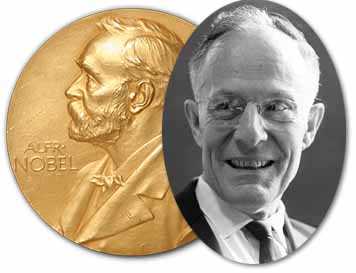
On April 30, 1902, economist Theodore W. Schultz was born. His work studying the quick post-war recovery in Germany and Japan led to his development of “human capital theory,” explicated in many books, including Investing in People (1981). He was co-winner (with William Arthur Lewis) of the 1979 Alfred Nobel Memorial Prize in Economic Sciences. Schultz died in 1998.

Michael Malice explains the method to North Korean madness:
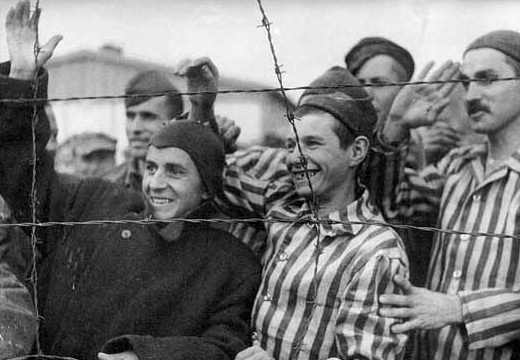
On April 29, 1945, U.S. troops of the Seventh Army liberated the Dachau concentration camp.