Categories
Today

The New World

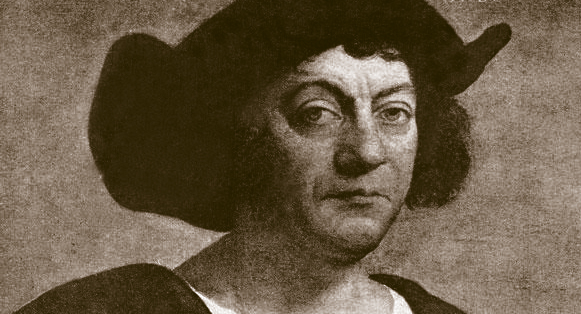
On October 12, 1492, Christopher Columbus landed in the Bahamas, thinking he had reached “the Indies.”

Exactly two hundred years later, a letter from Massachusetts Governor William Phips ended the Salem Witch Trials.

On this date in 1892, the Pledge of Allegiance was first recited by students in many U.S. public schools, as part of a celebration marking the 400th anniversary of Columbus’s voyage.

The Pledge had been composed that year by Francis Bellamy, a Christian Socialist minister, and was first published in Youth’s Companion magazine, September 8, 1892. The recital was accompanied with a salute to the flag known as the Bellamy salute. During World War II, the salute was replaced with a hand-over-heart gesture because the original form (described in detail by Bellamy) involved stretching the arm out towards the flag in a manner that resembled the later Nazi salute. The original form of the Pledge was somewhat less involved than later versions:

I pledge allegiance to my Flag and the republic for which it stands, one nation indivisible, with liberty and justice for all.

In October an editorial addition occurred, the word “to” prefixing “the republic.”
Categories
Today

A Revolution Remembered

October 11, 1890, marks the founding of the Daughters of the American Revolution.

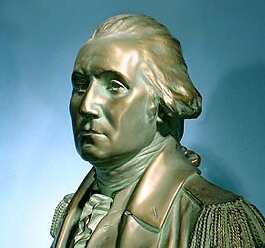
On the same date in 1976, President Gerald R. Ford approved a congressional joint resolution Public Law 94–479 to appoint, posthumously, George Washington to the grade of General of the Armies of the United States, as part of the bicentennial celebrations.

John J. Pershing (1860 – 1948) is the only other American to attain this high title, and the only one to achieve it while alive.

Categories
Today

Atlas?

On October 10, 1957, Ayn Rand’s dystopian/utopian novel Atlas Shrugged was published. Written to expound and defend an individualist, freedom/free-market point of view, it is one of the most influential and literarily successful didactic novels ever written.


On October 10, 1973, Austrian-born American economist, Ludwig von Mises* (pictured above) died.

Two-hundred fifty-nine years earlier, the French law-maker and Jansenist Pierre le Pesant, sieur de Boisguilbert died.

Both economists were known for their defenses of freer markets: le Pesant for pioneering the critique of mercantilism, arguing that a nation’s wealth consisted in what its people produce and trade; Mises for systematizing economic theory and advancing the critique of both socialism and latter-day mercantilism (what he called “interventionism”).


* In January 1958, following the publication of Atlas Shrugged, Mises wrote Ayn Rand a letter of congratulations.

Categories
Today

Banished

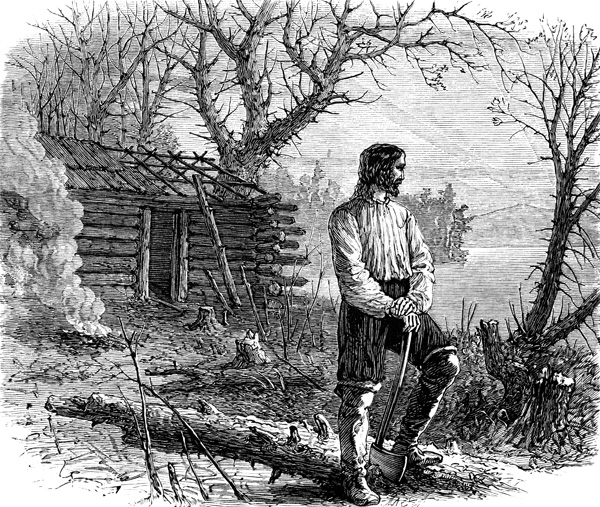
On October 9, 1635, Protestant theologian Roger Williams was banished from the Massachusetts Bay Colony as a religious dissident after he spoke out against punishments for religious offenses and giving away Native American land. He moved south, founding Providence Plantations, where he worked for separation of church and state, the rights of aboriginal Americans, and against slavery.

Categories
Today

Missing Day(s)

The date October 8, 1582, does not exist in the records of Italy, Poland, Portugal and Spain, the result of that year’s implementation of the Gregorian calendar.

Fearing a Catholic plot, Protestant countries adopted the more accurate calendar much later. By the time Britain and its colonies got on board in 1752, eleven days had to be “disappeared.” This caused riots in some places, as people suspected some horrible chicanery — and in actual fact the inspiration for the “Give us our eleven days” protest had something to do with taxes, so it might not have been as idiotic as it now seems.


On October 8, 1793, American merchant, president of the Second Continental Congress (1775–1777) and first and third Governor of the Commonwealth of Massachusetts, John Hancock (b. 1737), died.

Categories
Today

George Mason

On October 7, 1691, the charter for the Province of Massachusetts Bay was issued.

Also on a seventh day of the tenth month, King George III issued the Royal Proclamation of 1763, which closed Indigenous lands in North America north and west of the Alleghenies to white settlements.


On October 7, 1792, George Mason — “The Father of the Bill of Rights” — died. He had drafted the Virginia Declaration of Rights in 1776, and, at the time of the drafting and ratification of the Constitution, had insisted on the addition of articles to solidify state’s and individual rights within the new order.

George Mason (pictured) has been honored in numerous ways, including by the United States Postal Service with an 18¢ Great Americans series postage stamp; a bas-relief in the Chamber of the U.S. House of Representatives as one of 23 honoring great lawmakers; and with an annual award named for him presented to a person who has made significant, lasting contribution to the practice of journalism in the Commonwealth, awarded by the Society of Professional Journalists, Virginia Pro Chapter.


On October 7, 2003, California Governor Gray Davis was recalled and Arnold Schwarzenegger voted into Davis’s previous gubernatorial spot.

Categories
Today

William Tyndale

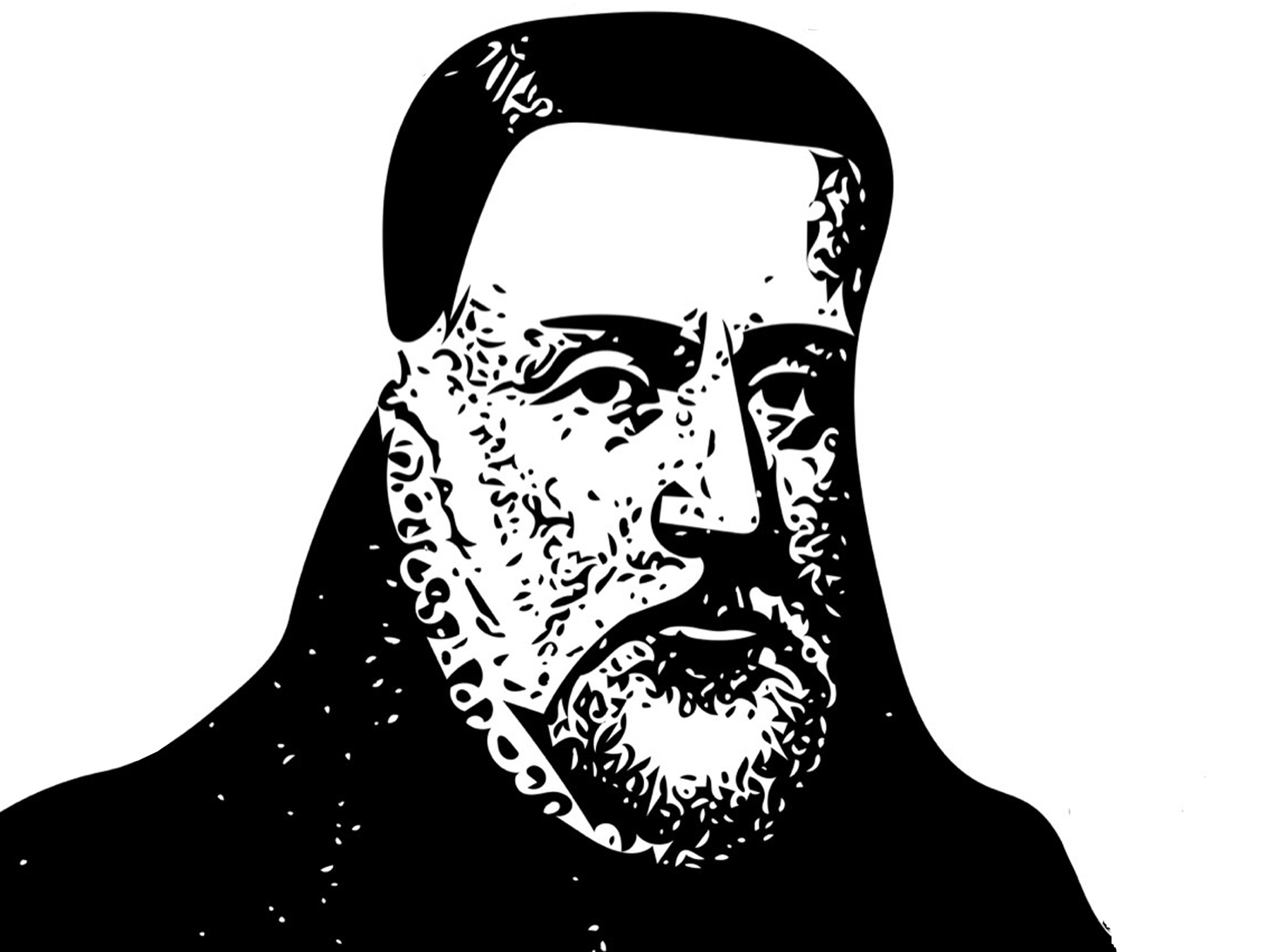
October 6 is the traditional date commemorating the martyrdom of William Tyndale, in 1536.

Tyndale translated the New Testament and much of the Old into the English of his day, and in the process added more new words into the English language than any other single wordsmith, with the possible exception of Shakespeare. He also laid the ground for the later, and more famous, King James (“Authorized”) Edition of the Bible.

Among his memorable coinages and turns of phrase coined as translations from Hebrew and Greek into English include

  • Passover (constructed from the Hebrew Pesach or Pesah)
  • scapegoat
  • a moment in time
  • the powers that be
  • the salt of the earth
  • a law unto themselves
  • it came to pass
  • the signs of the times
  • filthy lucre
Categories
Today

A Republic

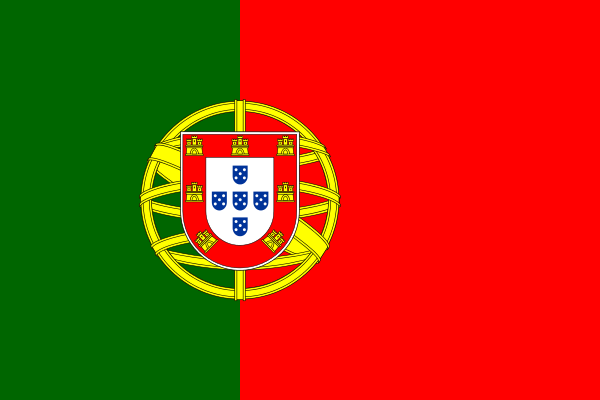
On October 5, 1910, the Portuguese monarchy was overthrown and a republic declared.

Categories
Today

SpaceShipOne

On October 4, 2004, SpaceShipOne became the first private craft to fly into space, thereby winning the Ansari X Prize for private spaceflight.

Categories
Today

Buchanan & Vidal

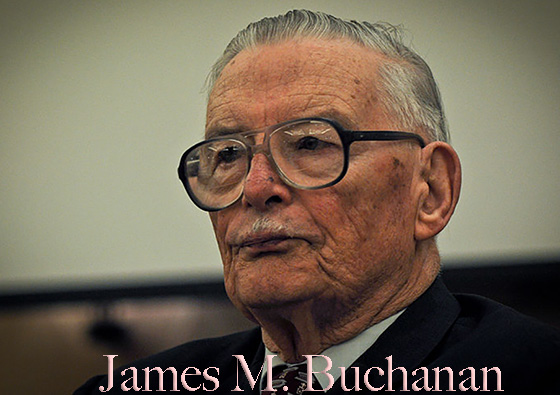
On October 3, 1919, James M. Buchanan was born. Buchanan would develop the theory of “Public Choice,” and receiving the 1986 Nobel Memorial Prize in Economic Sciences for his work. His books include Cost and Choice, The Calculus of Consent (with Gordon Tullock), and The Limits of Liberty: Between Anarchy and Leviathan. Some of his most interesting research was into the realm of constitutional theory and practice.

He died January 9, 2013.


In 1925, on this date, Gore Vidal was born. Vidal would go on to become one of the leading post-WWII liberal essayists as well as a major novelist and screenwriter. His most famous novels include Burr, 1876, and Lincoln, installments in his American history series; his collection of essays, The United States, was one of his many bestsellers. Vidal was an elitist who expressed sympathy for populism and socialism, but also was a radical civil libertarian, and may occupy the extreme of the “liberal” quadrant in American political ideology: great on personal liberties but quite bad on market/property liberties.

He died on July 31, 2012.

Gore Vidal during “Alexander” Los Angeles Premiere – Red Carpet at Grauman’s Chinese Theatre in Hollywood, California, United States. (Photo by L. Cohen/WireImage)