Categories
Today

The Eleventh of September

September 11 is the 255th day of 2024. Notable events on this date from previous years include:

  • 1390 — The Teutonic Knights began a five-week siege of Vilnius in the Lithuanian Civil War (1389–92).
  • 1565 — Ottoman forces retreated from Malta ending the Great Siege of Malta.
  • 1649 — Oliver Cromwell’s Parliamentarian troops ended the Siege of Drogheda by taking the town and executing its garrison.
  • 1683 — Coalition forces, including the famous winged Hussars, led by Polish King John III Sobieski, lifted the siege laid by Ottoman forces, ending the Battle of Vienna.
  • 1714 — Barcelona, capital city of the Principality of Catalonia, surrendered to Spanish and French Bourbon armies in the War of the Spanish Succession, thus ending the Siege of Barcelona.

In non-siege related history:

  • 1789 — Alexander Hamilton was appointed the first United States Secretary of the Treasury.
  • 1830 – The Anti-Masonic Party held its first convention, one of the first American political party conventions. Four years earlier on this date Captain William Morgan, a former freemason, was arrested in Batavia, New York, for debt after declaring that he would publish The Mysteries of Free Masonry, a book against Freemasonry. Soon after he mysteriously disappeared.
  • 1851 — Escaped slaves led by William Parker fought off and killed a slave owner who, with a federal marshal and an armed party, had sought to seize three of his former slaves in Christiana, Pennsylvania, thereby creating a cause célèbre between slavery proponents and abolitionists.
  • 2001 — On September 11, “some people did something,” in the words of Rep. Ilhan Omar.


Categories
Today

Missing Money

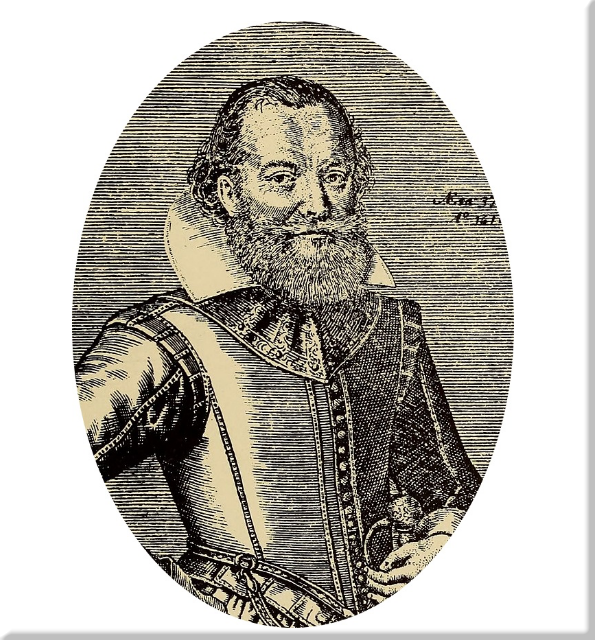
On September 10, 1608, John Smith was elected council president of Jamestown, Virginia.


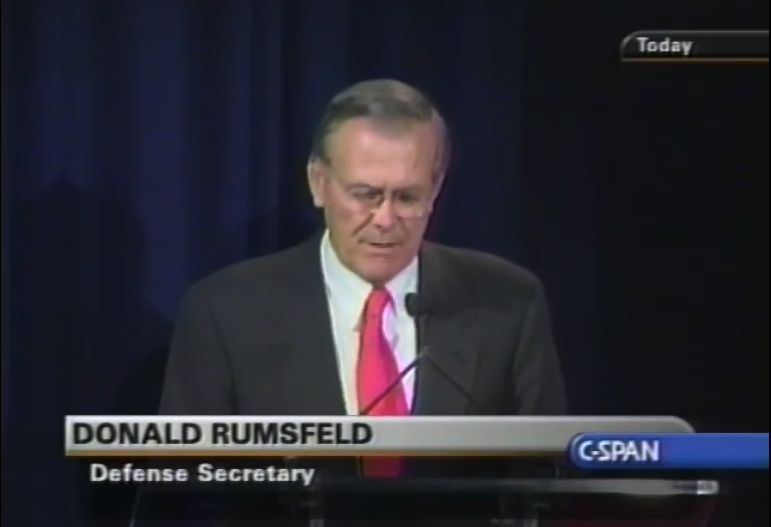
On September 10, 2001, Secretary of Defense Donald Rumsfeld gave a speech about an “adversary that poses a serious threat to the United States of America.” Describing it as “one of the last bastions of central planning, governs by dictating five year plans,” and that “with brutal consistency it stifles free thought and crushes new ideas.”

The adversary? “The Pentagon bureaucracy — not the people, but the processes.” And he went on to state that the Pentagon could not account for more than $2.3 trillion.

Categories
Today

Leo Tolstoy

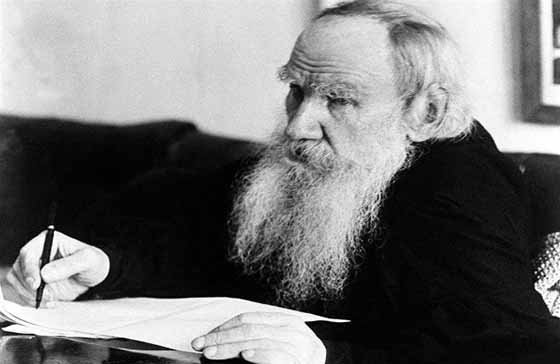
On September 9, 1828, Count Lev Nikolayevich Tolstoy was born. Known most commonly in the English-speaking world as Leo Tolstoy, he became the celebrated author of the novels Anna Karenina and War and Peace, as well as the novellas and short stories such as “Family Happiness,” “The Death of Ivan Ilyich,” and “The Kreutzer Sonata.”

His political and religious ideas heavily influenced Gandhi and Martin Luther King, Jr.

Tolstoy died in 1910.

Categories
Today

Statute of Kalisz

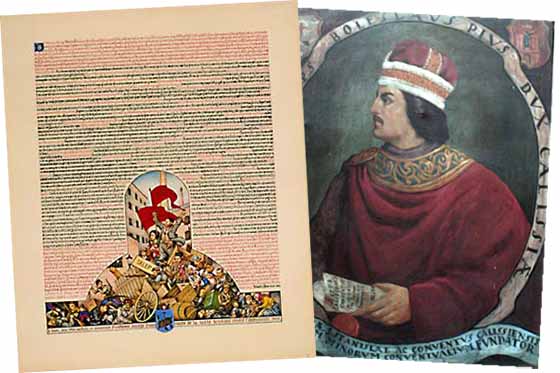
On September 8, 1264, Boleslaus the Pious, Duke of Greater Poland, promulgated the Statute of Kalisz, guaranteeing Jews safety and personal liberties and giving battei din jurisdiction over Jewish matters.

On the same date in 1883, former U.S. President Ulysses S. Grant drove in the final “golden spike” completing the Northern Pacific Railway in a ceremony at Gold Creek, Montana.

Categories
Today

Fannie and Freddie

On September 7, 2008, the U.S. Government “took control” of the two largest mortgage financing companies in the United States, Fannie Mae and Freddie Mac.

Both of these had been created, decades before, by Congress as part of a concerted plan to make home ownership easier, and both had gotten completely out of hand during the many years of their existence, especially under new rules established by politicians in the 1990s. The after-market that they helped create — the packaged mortgage market — was what imploded in 2007–2008, leading to the economic slump that Nicholas Nassim Taleb referred to as setting the U.S. government on President Obama’s economic policy course of “eight years of Novocain.”

Categories
Today

Yves Guyot

On September 6, 1843, Yves Guyot was born.

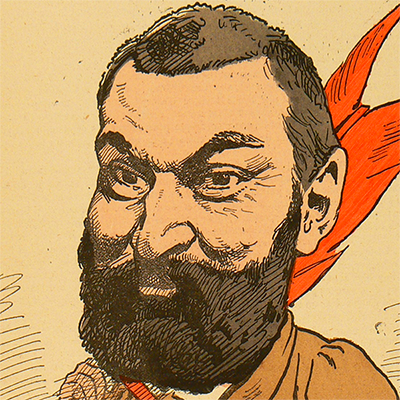
A journalist, economist, and political activist, he once endured a six-month prison term for his campaign against the prefecture of police. He served as minister of public works under the premiership of P.E. Tirard in 1889, retaining his portfolio in the cabinet of Charles de Freycinet until 1892. A free-trade liberal, he lost his seat in the election of 1893 owing to his militant attitude against socialism. His many books included The Principles of Social Economy (1892), The Tyranny of Socialism (1894), The Comedy of Protection (1906), Socialistic Fallacies (1910), and Where and Why Public Ownership Has Failed (1914). He served as editor of Journal des Économistes, following the Belgian economist Gustave de Molinari. Guyot died on February 22, 1928.


Illustration is a detail from a caricature by artist André Gill (1840-1885).

Categories
Today

First President of Congress

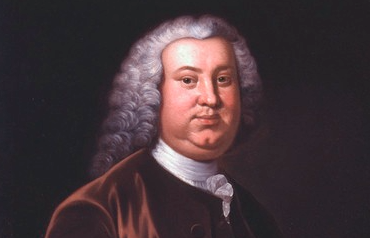
Responding to British Parliament’s enactment of the Coercive Acts in the American colonies, the first session of the Continental Congress convened at Carpenter’s Hall in Philadelphia, on September 5, 1774. Virginian Peyton Randolph (pictured) was appointed as the first president of Congress. John Adams, Patrick Henry, John Jay and George Washington were among the delegates.

Categories
Today

Rome Fell

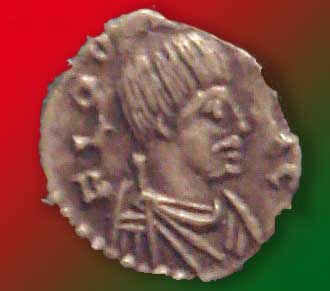
Odoacer, a German “barbarian,” ousted Romulus Augustus, the last emperor of the Western Roman Empire, thus ending that empire on September 4, 476 A.D.

Many common people did not notice a change.

Categories
Today

Dixy Lee Ray

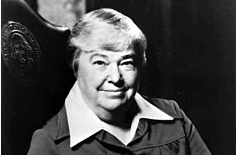
On September 3, 1914, Dixy Lee Ray was born.

Her stint as governor of the State of Washington was a controversial one, as she economized in startling ways, and proved largely unsympathetic to environmentalist politics. Indeed, she later wrote Trashing the Planet, which took on trendy “solutions” to environmental problems, based in no small part on her own experience and perspective as a scientist. She was an early critic of the developing “global warming” pseudo-“consensus.”

Ray died on January 2, 1994.

Categories
Today

Henry George

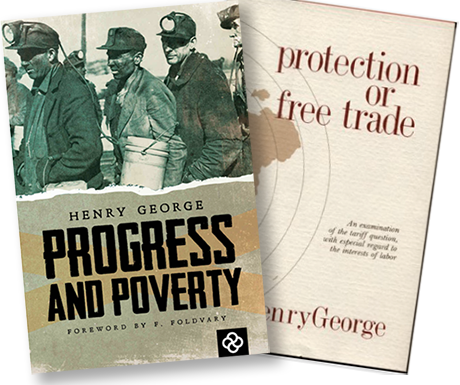
September 2 marks the 1839 birth of American economist and reformer Henry George.

George is most famous for his 1879 treatise, Progress and Poverty, but made other contributions, including advocacy of the secret ballot and his able economic policy polemic Protection or Free Trade (1886).

George died on October 29, 1897.