On Feb. 15, 1898, the USS Maine, a battleship, exploded in the Cuba’s Havana harbor, killing 260 American sailors. An official U.S. Naval Court of Inquiry ruled in March 1898 that the ship was blown up by a mine, without directly blaming Spain. Nonetheless, Congress declared war and, within three months, the U.S. had decisively defeated Spanish forces. On December 12, 1898, the Treaty of Paris was signed between the U.S. and Spain, granting the United States its first overseas empire with the ceding of such former Spanish possessions as Puerto Rico, Guam, and the Philippines. In 1976, a team of American naval investigators concluded that the Maine explosion was likely caused by a fire that ignited its ammunition stocks, not by a Spanish mine or act of sabotage.
Categories
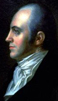 On February 6, 1756, Aaron Burr was born. Burr was an American politician who served as third Vice President of the United States, a man with a deeply ambiguous record. His popularity in his home state of New York, combined with the Slave Power vote, allowed for Thomas Jefferson’s victory in 1800 — and yet, another constitutional quirk, in addition to his apparent calculating ambition, precipitated a constitutional crisis in that election. He found a strong opponent in Federalist politician Alexander Hamilton, whom he later killed (in a duel, during his vice presidency). Out of office, Burr gathered an army west of the Appalachians, ostensibly to conquer Mexico. The army was captured, and Burr was put on trial for treason, with Thomas Jefferson moving heaven and earth to see a conviction. Burr was found not guilty, traveled to Europe, and then returned to America for a long life in the private sector.