On Jan. 28, 1981, President Ronald Reagan lifted the federal government’s remaining domestic petroleum price and allocation controls in the United States, helping to end the 1970s energy crisis and begin the 1980s oil glut.
Categories
On Jan. 28, 1981, President Ronald Reagan lifted the federal government’s remaining domestic petroleum price and allocation controls in the United States, helping to end the 1970s energy crisis and begin the 1980s oil glut.
On January 28, 1912, Belgian economist Gustave de Molinari died. One of the last major economists of the French Liberal School, heir to Frederic Bastiat, and a prominent advocate of laissez faire, Molinari’s last book, “The Society of To-morrow” (the only one of his many books to be translated into English in his day) envisioned a future of extremely limited government, and argued against the growing tide of socialism and war that was becoming all too apparent as the future of Europe.
On Jan. 27, 1973, President Richard Nixon’s Secretary of Defense, Melvin R. Laird, announced an end to the military draft in favor of a system of voluntary enlistment. Since 1973, the United States armed forces have been known as the All-Volunteer Force. However, the Selective Service System, the federal agency that would administer a military draft, continues to be funded and American males continue to be forced to register for the draft.
On January 27, 1945, the Red Army liberated the Auschwitz-Birkenau concentration camp built by the Nazis.
On January 26, 1992, Boris Yeltsin announced that Russia would stop targeting United States cities with nuclear weapons.
On January 25, 1787, Shays’ Rebellion experienced its largest confrontation, outside the Springfield Armory, with four of the rebels dead, and 20 wounded. The rebellion was a key moment in United States history. Daniel Shays and his followers objected to Massachussetts’ high taxes and rampant cronyism. The revolt, which was completely suppressed, led to the adoption of the U.S. Constitution and drawing George Washington from his retirement.
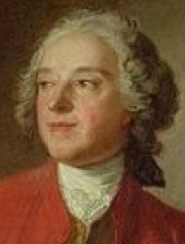 On January 24, 1732, French playwright, watchmaker, inventor, musician, diplomat, fugitive, spy, publisher, horticulturalist, arms dealer, satirist, financier, and revolutionary (both French and American) Pierre-Augustin Caron de Beaumarchais was born. He proved instrumental in securing armaments for the America Revolution, but remains best known for his three “Figaro” plays, Le Barbier de Séville, Le Mariage de Figaro, and La Mère coupable.
 On January 23, 1783, novelist Marie-Henri Beyle, known by his pen name Stendhal, was born. Stendahl was an avid student of the French liberal philosophical tradition, a follower of Destutt de Tracy and an attendant at the count’s salons. His most famous works include the novel “The Red and the Black” and a treatise on romantic love.
On January 23, 1860, the Cobden–Chevalier Treaty was signed between France and Great Britain. The treaty was named after the two main proponents of the agreement, Richard Cobden (in England) and economist Michel Chevalier (in France). The treaty had been suggested the year earlier, in British Parliament, by Cobden’s colleague John Bright, who saw the measure as a peace measure, and an alternate to a military build-up.
On January 22, 1920, American neoconservative pundit and author Irving Kristol was born.
On January 21, 1950, Alger Hiss was convicted of perjury, with Whittaker Chambers being the main witness in Hiss’s prosecution. Chambers confessed to having been a Soviet spy, and accused Hiss as an accomplice, which Hiss denied to his dying day. Chambers wrote a fascinating memoir about all this in “Witness.”
Today is economist Tyler Cowen’s birthday. Happy Birthday, Tyler.