On July 19, 1848, a two-day Women’s Rights Convention opened in Seneca Falls, New York.
Categories
Seneca Falls
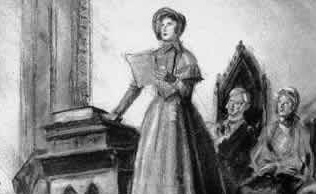
On July 19, 1848, a two-day Women’s Rights Convention opened in Seneca Falls, New York.
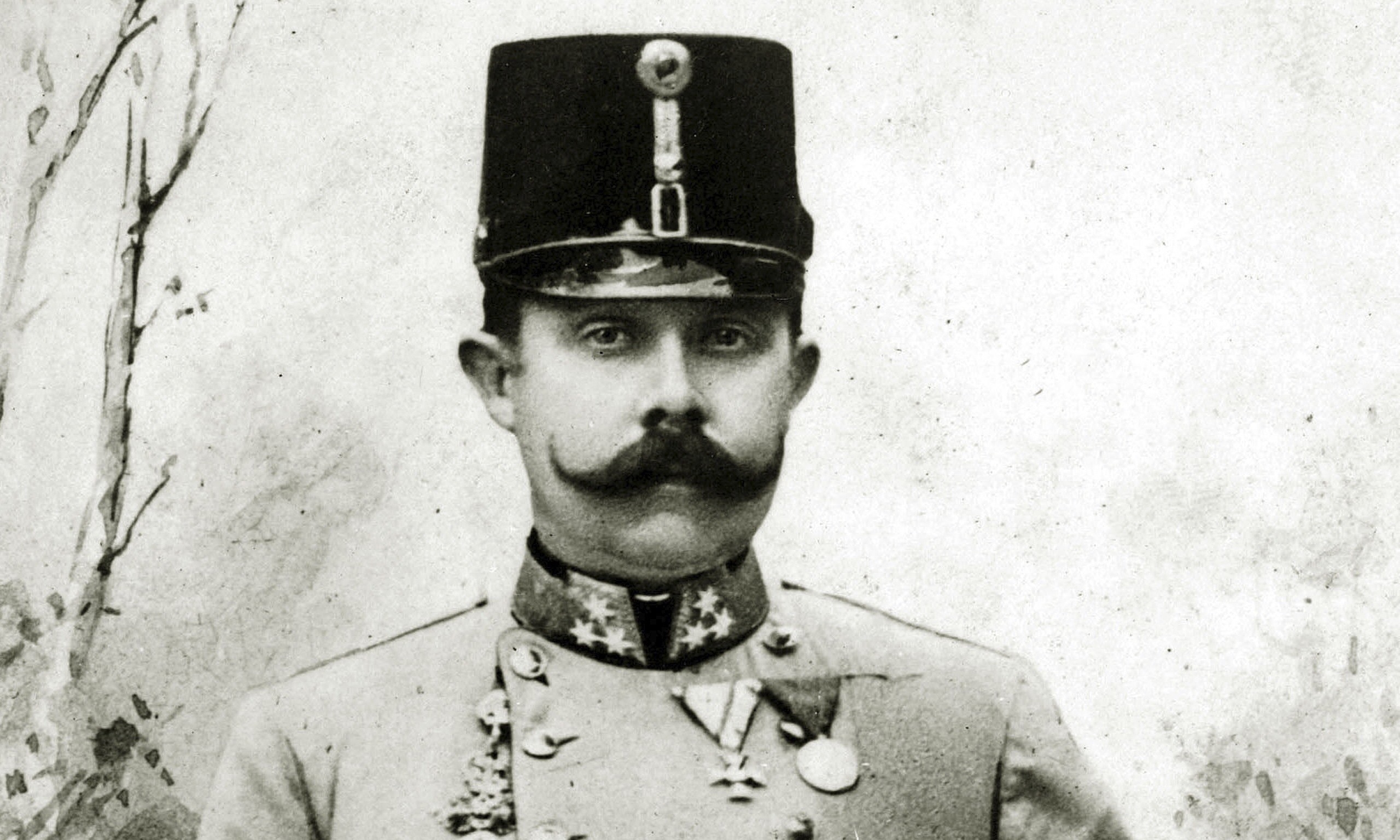
On June 29, 1914, the day after the shooting of the Archduke Ferdinand and his wife, Austrian interrogations confirmed that the Serbian government was behind the assassination. Serbia denied involvement.
Thus continued the series of events that led to “The Great War,” now known as “World War I.”
This year marks the centennial-plus-one of that most horrific and destructive of wars.
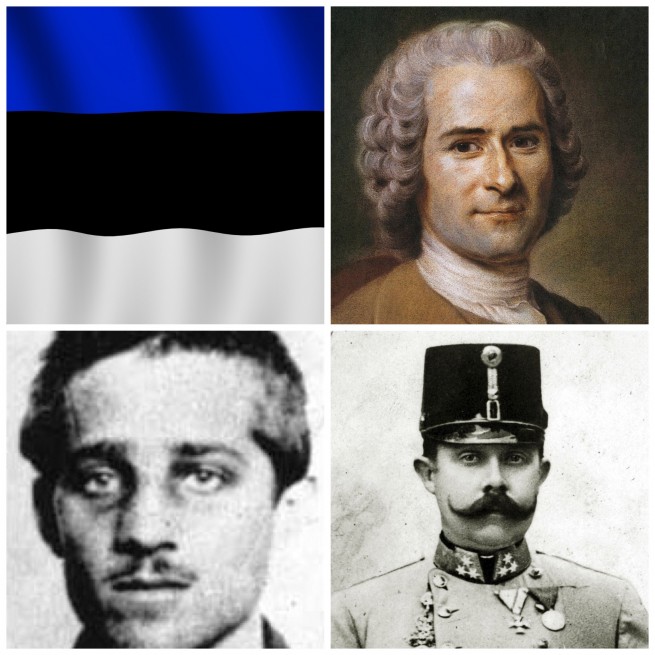
On June 28, 1992, the Constitution of Estonia was signed into law.
June 28 birthdays include that of Jean-Jacques Rousseau, philosopher, in 1712.
On this date in 1914, 19-year-old Gavril Princip assassinated Archduke Franz Ferdinand, heir to the Austrian throne, and the Archduke’s wife Sophie. The Archduke had earlier missed a bomb thrown at his car, which necessitated a change in the motorcade route, which the driver forgot, which is why the car paused at the precise intersection in which Princip fired his fatal shots.
The shooting began a series of events that led to “The Great War,” now known as “World War I.”
This year marks the centennial of that most horrific and destructive of wars.
On June 21, 1915, the U.S. Supreme Court struck down an Oklahoma law denying the right to vote to some citizens. In Guinn v. United States, the Supreme Court found “grandfather clauses” in effect in several formerly slave states to be little more than sneaky ways of allowing illiterate white folks to vote while disallowing illiterate black folks.
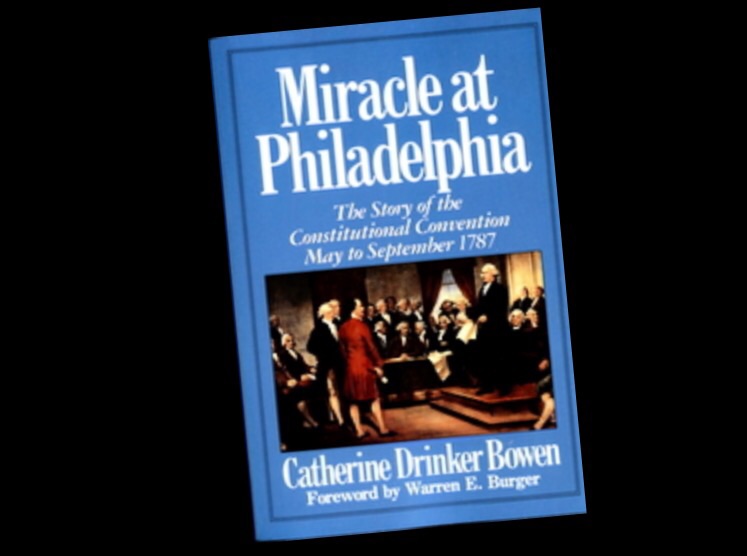
On this date in 1787, at the Constitutional Convention in Philadelphia, it was moved and debated to confine legislative powers to two distinct branches, and to strike the word “national” from the document.
The final wording eventually became “All legislative powers herein granted shall be vested in a Congress of the United States, which shall consist of a Senate and House of Representatives.” And the word “national” does not occur anywhere in the Constitution.

In 1941, Václav Klaus was born; other June 19 births include Salman Rushdie in 1947, Kathleen Turner in 1954, and Laura Ingraham in 1964.
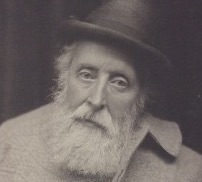
On June 18, 1838, Auberon Edward William Molyneux Herbert was born.
Auberon Herbert was a Liberal Member of Parliament who, after reading the writings of Herbert Spencer, became a radical individualist and author of essays such as “The Ethics of Dynamite,” “A Politician in Trouble About His Soul,” and “The Right and Wrong of Compulsion by the State.”
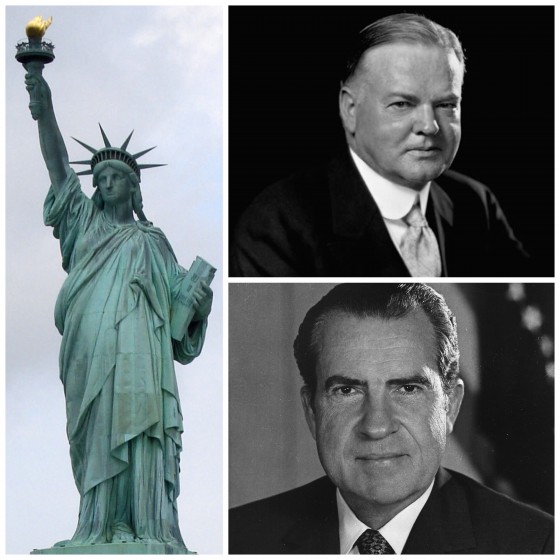
The Statue of Liberty arrived in New York Harbor on June 17, 1885. On the same day in 1930, progressive Republican President Herbert Hoover — eager to please agricultural states, and confident that protectionism would yield greater wealth — signed the Smoot-Hawley Tariff. The Great Depression deepened, especially as provisions of the bill took effect.
Three years later, investment author and two-time Libertarian Party presidential candidate Harry Browne was born.
On June 17, 1944, Iceland declared independence from Denmark.
On this day in 1971, President Richard Nixon declared a “War on Drugs,” which steadily decreased civil liberty and the rule of law in America.
Exactly one year later, five men were arrested for attempted burglary on the offices of the Democratic National Committee in the Watergate complex in Washington, D.C., igniting the Watergate scandal that ultimately led to the resignation of U.S. President Richard Nixon more than two years later.
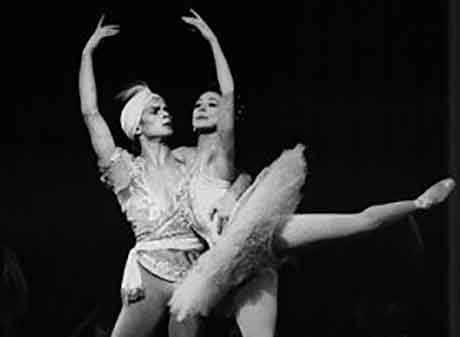
On June 16, 1961, dancer Rudolf Nureyev defected from the Soviet Union.
The great Scottish moral philosopher, political economy pioneer, and Enlightenment intelectual Adam Smith (1723-1790), best known for authoring the 1776 masterwork The Wealth of Nations, was born on June 16.
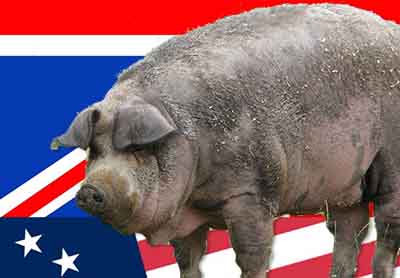
The Oregon Treaty, signed June 15, 1846, established the boundary between Great Britain’s Canadian territory and the United States of America, from the Rocky Mountains to the Strait of Juan de Fuca, using the 49th Parallel as the handy marker. However, the treaty was not exactly clear on the territorial status of the San Juan Islands, so exactly 13 years later, to the day, a war erupted, over a shot pig.
Basically, an American farmer shot a pig rooting through his garden. The pig belonged to an Irishman. The two did not agree upon compensation, and “the authorities” were called in, with infantry mustering from the south and the Governor of Vancouver Island instructing marines to land on San Juan Island — though the rear admiral in charge refused to comply with the order, on the reasonable grounds that war over a pig was not worth it. Local troops from both sides lined up against each other, but under command to defend themselves only and not shoot first. All that was exchanged in this war were insults. It turned out to be a bloodless war, discounting the pig, so it might qualify as the best war in American history.
On June 15, 1992, Vice President Dan Quayle incorrectly added an “e” to the end of a Trenton, N.J., sixth grader’s correctly spelled “potato.”