American author, art critic, and commentator Camille Paglia was born April 2, 1947.
Categories
Camille Paglia

American author, art critic, and commentator Camille Paglia was born April 2, 1947.
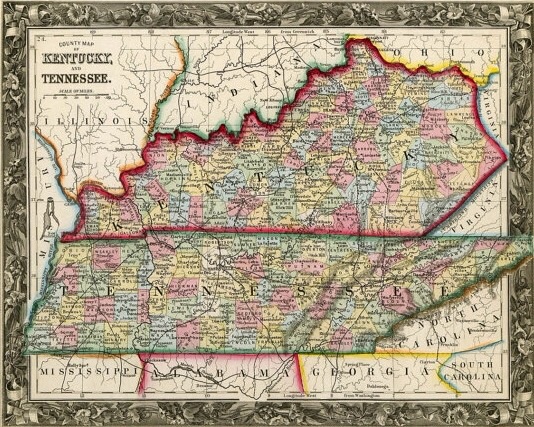
On June 1, 1792, Kentucky was admitted as the 15th state of the United States. Four years later, Tennessee became the 16th state.

On April Fools’ Day, 1957, the BBC offered for viewers of the current affairs program “Panorama” the infamous spaghetti tree report hoax. In the spirit of the day, Common Sense offers these “historic” events:
On April 1, 1787, James Madison, father of the Constitution, removed the General Welfare clause from his draft of the U.S. Constitution, telling friends that, “I fear future big-government-loving politicians will undoubtedly abuse the clause’s vague concept to drown the people in federal overreach.”
On April 1, 1918, Woodrow Wilson became the first and only President of the United States to be impeached and removed from office for lying about munitions being aboard the Lusitania in an effort to whip up war fever against Germany and push the nation into World War I.
On April 1, 2002, the U.S. Congress refused to grant President George W. Bush’s request for a declaration of war against Iraq.
On April 1, 2014, President Barack Obama admitted to being a Kenyan, er, Keynesian, but argued that the Constitution did not bar Keynesians from office.
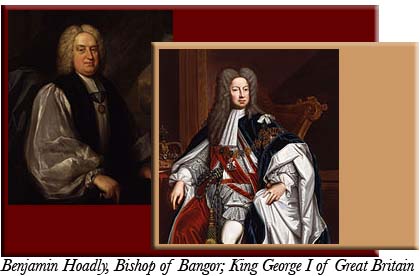
On March 31, 1717, a sermon on “The Nature of the Kingdom of Christ,” by Benjamin Hoadly, the Bishop of Bangor, provoked the Bangorian Controversy.
The sermon’s text was John 18:36, “My kingdom is not of this world,” and from that Hoadly deduced — supposedly at the request of King George I himself, who was present in the assembly — that there was no Biblical justification for any church government. Hoadly identified the church with the kingdom of Heaven, noting that Christ had not delegated His authority to any representative.
King George’s preference for the Whig Party, and for latitudinarianism in ecclesiastical policy, is widely thought to have been a strategic maneuver to degrade church power in political government.
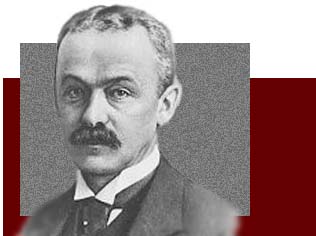
On March 30, 1864, German sociologist and economist Franz Oppenheimer was born. This sociologist is most famous for his 1908 book The State, in which he elaborated some consequences of two means for acquiring wealth, the “economic means,” by which he meant private production or by trade, and the “political means,” by which he meant forcible extraction from one group or person by another person or group. Oppenheimer taught in Palestine in the mid-1930s, and fled the Nazis to the United States, via Japan in 1938. In 1941 he became a founder of The American Journal of Economics and Sociology, and died two years later.
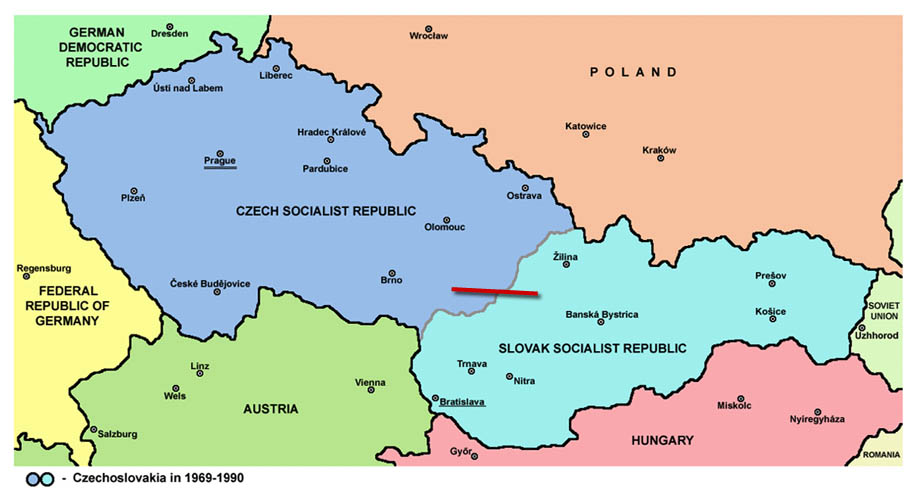
On March 29, 1990, the Czechoslovak parliament proved unable to reach an agreement on what to call the country after the “Velvet Revolution” — in which the Communist Party was booted from sole power. This sparked the “Hyphen War,” a tongue-in-cheek moniker for the dispute between Czechs and Slovaks about official recognition of the two nations’ equal status. (The Slovak representatives wanted to insert a hyphen into the name, to make the Slovak part stand out.) Eventually, the dispute was resolved with the “Velvet Divorce,” in which the two countries split up, on New Year’s Day, 1993.
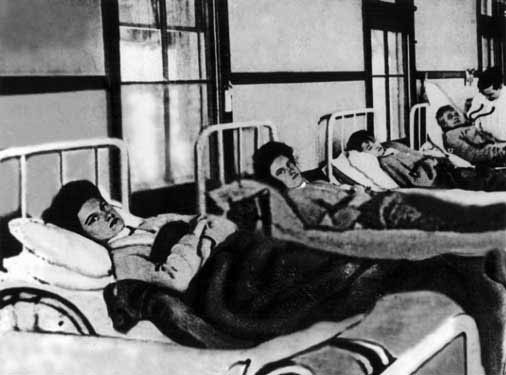
On March 27, 1915, Mary Mallon, popularly and scandalously known as “Typhoid Mary,” was put in quarantine, where she would remain for the rest of her life, over 23 years incarcerated.
Ms. Mallon was the first healthy carrier of disease ever identified in the United States. As an asymptomatic carrier of typhoid, she was a puzzle to science, and, once discovered, an apparent threat to those around her, with at least three deaths attributable to her presence. She did not co-operate with officials, and preferred to work as a cook, which paid higher wages than less dangerous-to-the-public occupations. She had been quarantined once before her final permanent quarantine in a hospital.
The civil liberties aspect to her incarceration loom large, and it is obvious that health officials of her time were not exactly any more co-operative regarding her rights as she was with those of her clients and neighbors. The case was an obvious turning point in American legal practice, and can be categorized along with eugenics and “social hygiene” — along with prohibition regarding alcohol and recreational drugs — in the increasing illiberality of legal practice in America in the early part of the 20th century.

On March 26, 1991, local self-government in South Korea was restored after three decades of centralized control.

On March 25, 1965, civil rights activists led by Martin Luther King, Jr., successfully completed their four-day, 50-mile march from Selma to the capitol in Montgomery, Alabama.
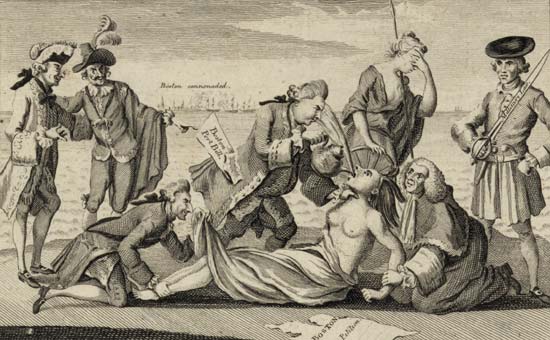
On March 24, 1765, the Kingdom of Great Britain passed the Quartering Act, which required the Thirteen Colonies to house British troops.
On the same date in 1855, slavery was abolished in Venezuela.
The Intolerable Acts (among which was the Quartering Act) was the American Patriots’ name for a series of punitive laws passed by the British Parliament in 1774 after the Boston Tea party. They were meant to punish the Massachusetts colonists for their defiance in throwing a large tea shipment into Boston harbor. In Great Britain, these laws were referred to as the Coercive Acts.