Categories
Today

Freedom of Religion

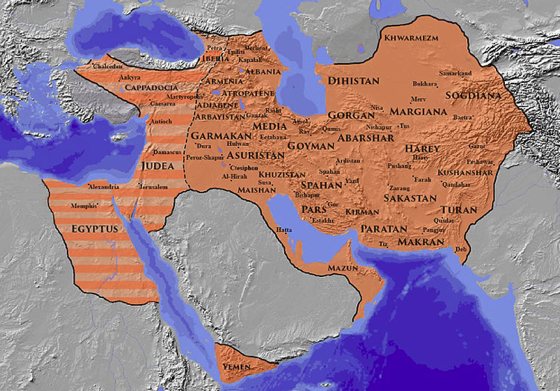
On May 26, 451, the Sassanid Empire defeated the Armenians at the battle of Battle of Avarayr, but guaranteed them freedom to openly practice Christianity.

On May 26, 1328, scholastic philosopher and Franciscan friar William of Ockham and other Franciscan leaders secretly exited Avignon, fearing a death sentence from Pope John XXII. On the same day in 1538, the city of Geneva expelled John Calvin and his followers, who headed to exile in Strasbourg.

Categories
Today

Jacob Burckhardt

May 25, 1818, the Swiss historian and academic Jacob Burckhardt was born. Burckhardt’s best known work is The Civilization of the Renaissance in Italy (1860), but is remembered here as the author of Reflections on History (1905).

Categories
Today

John Hancock

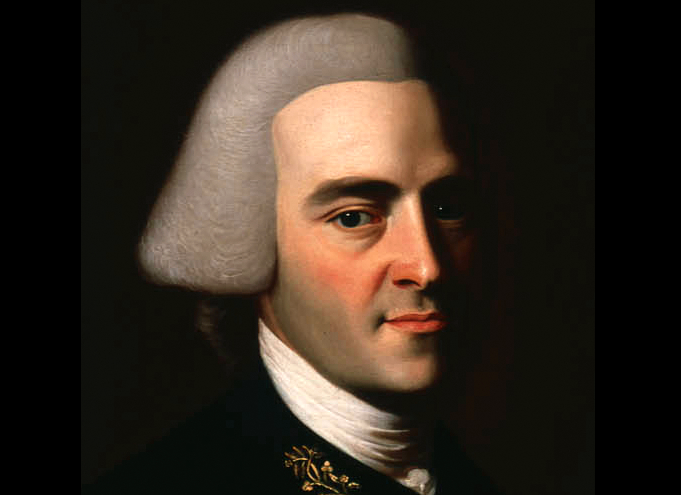
On May 24, 1775, John Hancock was elected president of the Second Continental Congress.

Hancock’s involvement with Samuel Adams and his radical group, the Sons of Liberty, won the wealthy merchant the dubious distinction of being one of only two Patriots (the other being Sam Adams) that the Redcoats marching to Lexington in April 1775 to confiscate Patriot arms were ordered to arrest. When British General Thomas Gage offered amnesty to the colonists holding Boston under siege, he excluded those same two men from his offer.

Categories
Today

Eighth State and Drew Carey

On May 23, 1788, South Carolina became the 8th state to ratify the U.S. Constitution.

Other May 23 events include:

* 1813: South American independence leader Simón Bolívar entered Mérida, where he was proclaimed El Libertador (“The Liberator”), leading the invasion of Venezuela.

* 1900: Sergeant William Harvey Carney became the first African American to be awarded the Medal of Honor, for his heroism in a Civil War battle fought 37 years prior, in 1863.

* 1958: Birthday of American comedian and game show host Drew Carey.

Categories
Today

Term limits

On May 22, 1995, in the case U.S. Term Limits v. Thornton, the U.S. Supreme Court struck down Arkansas’s congressional term limits law, 5-4, overturning the congressional term limits then the law in 23 states: Arizona, Arkansas, California, Colorado, Florida, Idaho, Louisiana, Maine, Massachusetts, Michigan, Missouri, Montana, Nebraska, Nevada, New Hampshire, North Dakota, Oklahoma, Ohio, Oregon, South Dakota, Utah, Washington and Wyoming.

Other May 22 events include

* 1856: South Carolina Congressman Preston Brooks savagely beat Massachusetts Senator Charles Sumner in the halls of Congress as tensions rise over the expansion of slavery. Sumner did not return to the Senate for three years while he recovered.

* 1848: Slavery was abolished in Martinique.

* 1807: A grand jury indicted former Vice President of the United States Aaron Burr on a charge of treason. Burr (in portrait, above) was later acquitted.


On the hundredth day of 1998, the Northern Ireland peace talks ended with an historic agreement, dubbed the Belfast, or Good Friday Agreement. The accord was reached after nearly two years of talks and 30 years of conflict. A little more than a month later, on May 22, 1998, this Agreement was approved by voters across the island of Ireland in two referendums.

In Northern Ireland, voters were asked whether they supported the multi-party agreement.

In the Republic of Ireland, voters were asked whether they would allow the state to sign the agreement and allow necessary constitutional changes to facilitate it. The people of both jurisdictions needed to approve the Agreement in order to give effect to it.

The British-Irish Agreement came into force on December 2, 1999.
Categories
Today

Colombia

On May 21, 1851, slavery was abolished in Colombia, South America.

Categories
Today

Mill and Passy

French economist and co-winner of the first (1901) Nobel Prize for Peace, Frédéric Passy, was born on May 20, 1822.

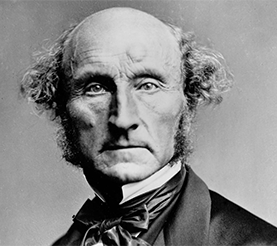
English economist and philosopher John Stuart Mill was born exactly 16 years earlier.

JohnStuartMill

Categories
Today

Wilde Released

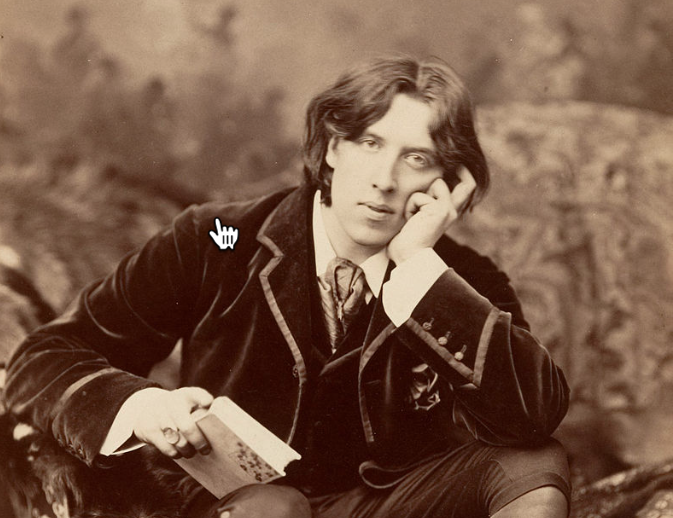
On May 19, 1897, Irish author, playwright, and poet Oscar Wilde (October 16, 1854 – November 30, 1900) was released from Reading Prison, where he had finished, in ill health, his hard labor sentence for “gross indecency.” His “Ballad of Reading Gaol,” first published pseudonymously in a periodical with wide circulation amongst criminals, quickly achieved the status of a classic, and one of only two great works following his imprisonment.

He died less than three years later, in exile in Europe. His most famous works include the play The Importance of Being Earnest, the novel The Picture of Dorian Gray, and the fascinating essay “The Soul of Man Under Socialism.”

Categories
Today

Heresy and Slavery

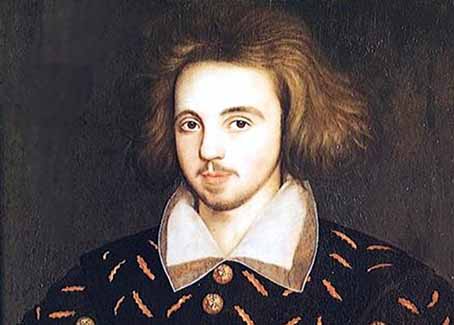
On May 18, 1593, playwright Thomas Kyd’s accusations of heresy led to an arrest warrant for fellow playwright Christopher Marlowe.

Kyd was the famed author of The Spanish Tragedy, and “Kit” Marlowe [pictured] was known for a number of plays, including The Jew of Malta and The Tragicall History of the Life and Death of Doctor Faustus.

Marlowe died a few weeks later, on May 30, without having been arrested. The circumstances of his death were bizarre, suspicious — as if written by a playwright.

On May 18, 1652, Rhode Island passed the first law in English-speaking North America making slavery illegal.

Categories
Today

Watergate!

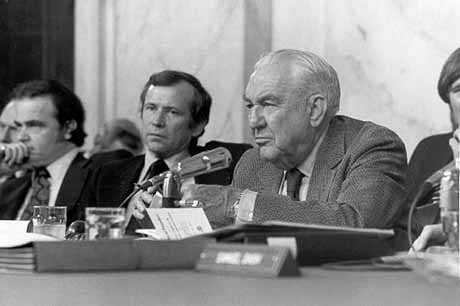
On May 17, 1973, televised hearings regarding the Watergate scandal began in the United States Senate. Sen. Sam Ervin chaired.

Little did participants know that the name of the hotel in which the White House-arranged break-ins occurred would provide a template for most future political scandals: “-gate” would be suffixed to nearly every other possible designator of scandal. Hillary Clinton’s problems regarding a private Internet server has been called “Emailgate,” for instance.

This could be called a suffix meme. Or insufferable meme, if you prefer.