Categories
Today

B of E

July 27 births include that of Samuel Smith (1872; pictured), an American who served as a captain, major, and lieutenant colonel in the Continental Army, and later as a politician in several capacities in the state of Maryland; Hillaire Belloc (1870), author of a classic analysis of modern political governance, The Servile State; and American singer and songwriter Bobbie Gentry (1944).

On July 27, 1694, the Bank of England received a royal charter, beginning a long history of central banking in England. Subsequent inflationary booms and deflationary busts are subsequently considered “mysterious” by people connected with the bank.
Categories
Today

Atahualpa

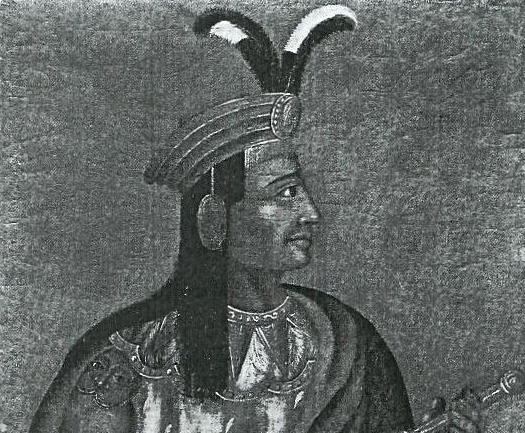
On July 26, 1533, Francisco Pizarro’s Spanish conquistadors strangled to death Atahualpa, the 13th and last emperor of the Incas, thereby ending 300 years of Inca civilization. The conquistadors were greedy and murderous, but the Inca civilization, arguably, was worse: totalitarian and radically inegalitarian. But they made great high-mountain roads. (Arguments about infrastructure promoted by Big Government continue to this very day.)

On this day in 1948, U.S. President Harry S. Truman signed Executive Order 9981 desegregating the U.S. military.

Categories
Today

A Fine Point of the War

On July 25, 1861, the U.S. Congress passed the Crittenden-Johnson Resolution, stating that the war with the seceded states of the Confederacy was being fought to preserve the Union, not to end slavery.

Categories
Today

Nixon Tapes

On July 24, 1823, Chile abolished slavery.

On this day in 1974, the U.S. Supreme Court told President Richard Nixon that he lacked constitutional authority to withhold the infamous “Nixon Tapes” from Congress.

July 24 is Pioneer Day in Utah and Simón Bolívar Day in Bolivia, Ecuador, Colombia, and Venezuela.

Categories
Today

Twenty-fourth of July

On July 24, 1487, citizens in Leeuwarden, Netherlands, went on strike against a ban on foreign beer.

On the same day of 1823’s calendar, slavery was abolished in Chile.

The United States Supreme Court unanimously ruled, on July 24, 1974, that President Richard Nixon did not have the authority to withhold subpoenaed White House tapes in the developing Watergate scandal.

Categories
Today

Typewriter

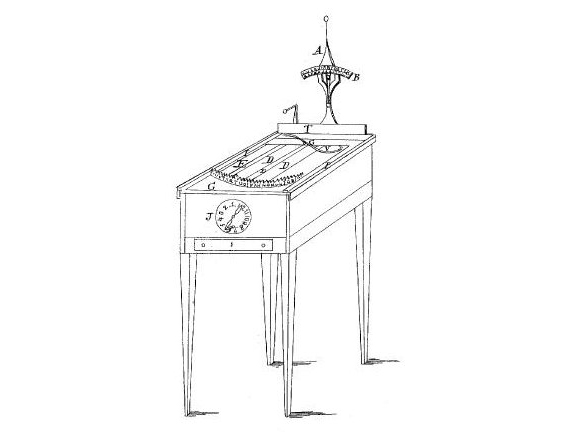
On this day in 1929, American William Austin Burt patents the “typographer” — a precursor to the typewriter.

Categories
Today

Only Nine?

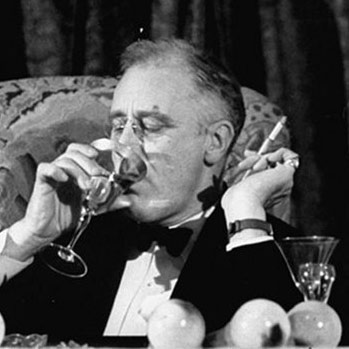
On July 22, 1937, the U.S. Senate voted down Franklin Delano Roosevelt’s court packing scheme.

Categories
Today

Monkey Trial Verdict

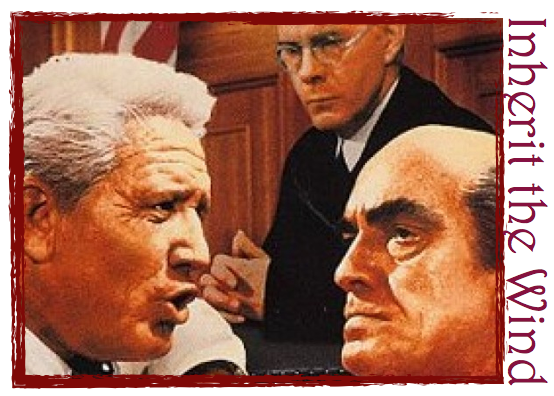
On July 21, 1925, in Dayton, Tennessee, high school biology teacher John T. Scopes was found guilty of teaching evolution in a public school classroom, and fined $100. The ambiguous legacy of the trial would continue — for decades, even to the present — to reveal the tensions inherent within a school system run by government and funded by taxpayers.


Pictured above, publicity for Inherit the Wind, a 1960 movie about the trial, but with the names changed, fictionalized. The movie starred Spencer Tracy in the Clarence Darrow (lawyer for the defense) role; Frederic March in the prosecutorial part, “Matthew Harrison Brady,” the pseudonymous name for politician William Jennings Bryan; Dick York as the defendant, Mr. Scopes; and Gene Kelly as the Baltimore journalist, a stand-in for H. L. Mencken, whose infamous coverage of the story shocked the nation almost as much as the trial itself.

At the end of the movie (spoiler) the famous prosecutor dies in the courtroom. In the historical case, Bryan died five days after the verdict. The movie was based on the 1955 play of the same name, written by Jerome Lawrence and Robert Edwin Lee, directed by Stanley Kramer. The script was adapted by Nedrick Young (originally as Nathan E. Douglas) and Harold Jacob Smith.

Categories
Today

The Count Tracy

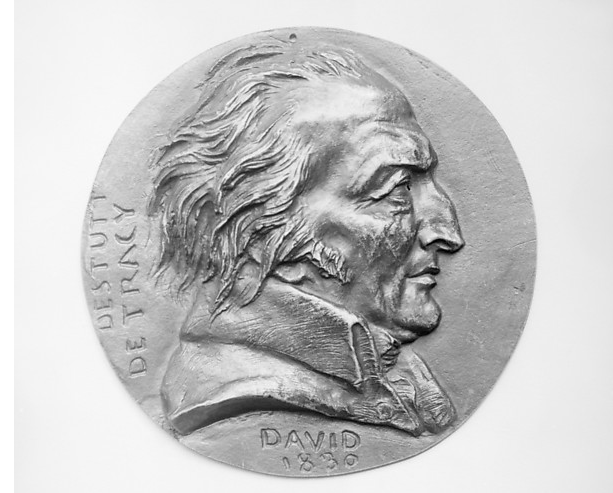
Born on July 20, 1754, Antoine Louis Claude Destutt, comte de Tracy, French philosopher and economist. Perhaps best remembered for coining the term “ideology,” he didn’t mean by that term what scornful Napoleon and communist Karl Marx later turned it into — for Destutt de Tracy ideology meant “the science of ideas,” a unified approach to all knowledge, from epistemology to social theory.

Though his family had been enobled twice, he renounced the title and entered the 1789 Estates General conference as a member of the Third Estate. During the Reign of Terror, he was imprisoned, and would have been executed had not Robespierre got to the scaffold ahead of him.

Two of his books became popular in early 19th century America, his commentaries on Montesquieu’s Spirit of the Laws, and his Traité de la volonté, which Thomas Jefferson, the editor of the American edition, retitled A Treatise on Political Economy. Tracy’s economics was of a deductivist stripe, familiar to readers of later economists such as Nassau Senior and Ludwig von Mises.

Destutt de Tracy’s politics was republican, and his preferred economic policy was laissez-faire.

Categories
Today

Seneca Falls

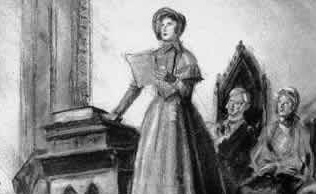
On July 19, 1848, a two-day Women’s Rights Convention opened in Seneca Falls, New York.