Categories
Today

Committee of Correspondence

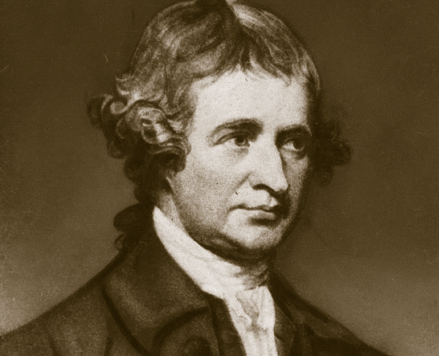
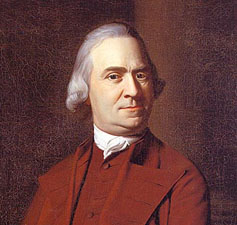
On November 2, 1772, Samuel Adams (pictured) and Joseph Warren formed the first Committee of Correspondence, which were instrumental in preparing the colonies from their 1776 breakaway from the British Empire of George III.

Categories
Today

The French Revolution

On November 1, 1790, Edmund Burke published his Reflections on the Revolution in France, predicting that the French Revolution would end in disaster. Though many have disputed his premises and reasoning, few dispute his prophecy, which proved spot on.

Categories
Today

Halloween

Ireland, Canada, United Kingdom, United States and other nations celebrate Halloween on October 31.

The word Halloween or Hallowe’en dates to about 1745 and is of Christian origin, meaning “hallowed evening” or “holy evening.” It comes from a Scottish term for All Hallows’ Eve (the evening before All Hallows’ Day). In Scots, the word “eve” is “even,” and this is contracted to “e’en” or “een.” Over time, (All) Hallow(s) E(v)en shortened into Halloween.

It is one of those darker-themed celebrations, often conjuring up images of death and horror. As if in keeping with this theme, Josef Stalin’s body was removed from Lenin’s Tomb on October 31, 1961.

N.B. The carving of pumpkins into mock-horrific faces is an old tradition. This Jack-o’-Lantern photo is taken from Dose of Funny.

Categories
Today

Martha and Rose

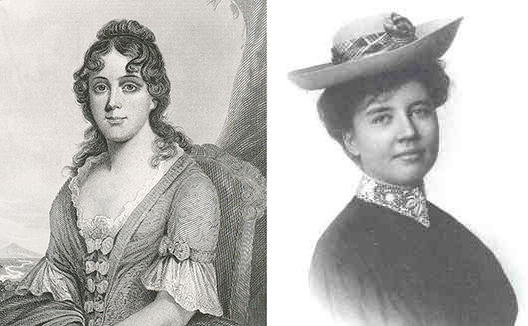
Martha Wayles Skelton Jefferson, Thomas Jefferson’s wife, was born on October 30, 1748.

On the same date in 1968, American journalist, novelist and author Rose Wilder Lane died. Lane is perhaps best known, today, for her editorial work — some say “ghost writing” — of her mother’s Little House on the Prairie books for children. Her non-fiction The Discovery of Freedom was published in 1943, the same year as a similarly themed book, The God of the Machine, was published by her friend Isabel Paterson.

Categories
Today

Statue of Liberty

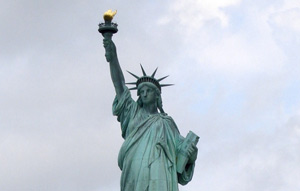
On October 28, 1886, in New York Harbor, the Statue of Liberty was dedicated by President Grover Cleveland, despite the fact that the monument was not a federally funded project.

Categories
Today

Times for Choosing

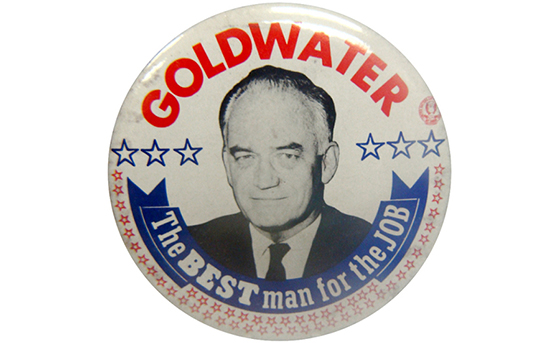
On October 27, 1964, Ronald Reagan delivered a speech on behalf of Republican candidate for the United States Presidency, Barry Goldwater, thereby launching Reagan’s political career. The speech came to be known as “A Time for Choosing.”

Two years earlier, Vasili Arkhipov, a flotilla commander present on the Soviet Foxtrot-class submarine B-59 in the Caribbean sea, defied the sub’s captain, Valentin Savitsky, to launch a nuclear device. The captain had come to the conclusion that war had started while the submarine had been submerged. He had inferred this from the depth charges that American ships had deployed in order to force the submarine to the surface during the Cuban Missile Crisis. Captain Savitsky, seeking the necessary approval of two others on board, political officer Ivan Masslenikov and the flotilla commander Vasili Arkhipov, to launch a nuclear torpedo.

Masslenikov agreed. Arkhipov refused.

The date was October 27, 1962, and World War III was prevented by this one man, Arkhipov, who held his ground while facing the increasing anger of the submarine commander, refusing to approve a nuclear torpedo launch that would most almost certainly have triggered a conflict that would have doomed civilization, perhaps most or all of humanity.

That, we can now agree, was a “time for choosing” when the correct choice was made.
Categories
Today

Reagan and Goldwater

On October 27, 1964, Ronald Reagan delivered a speech on behalf of Republican candidate for president, Barry Goldwater, thereby launching Reagan’s political career. The speech came to be known as “A Time for Choosing.”

Categories
Today

Continental Congress

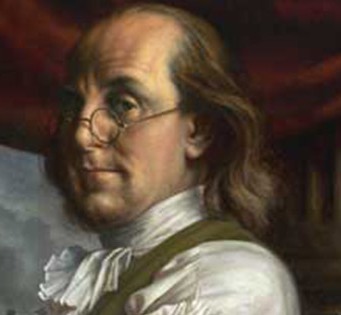
On October 26, 1774, the first Continental Congress adjourned in Philadelphia, Pennsylvania. Exactly one year later, King George III of Great Britain went before Parliament to declare the American colonies in rebellion. And one year later yet, to the day, in 1776, septuagenerian Benjamin Franklin (pictured, above) departed from America for France, seeking financial support for the American Revolution.

Categories
Today

Max Stirner

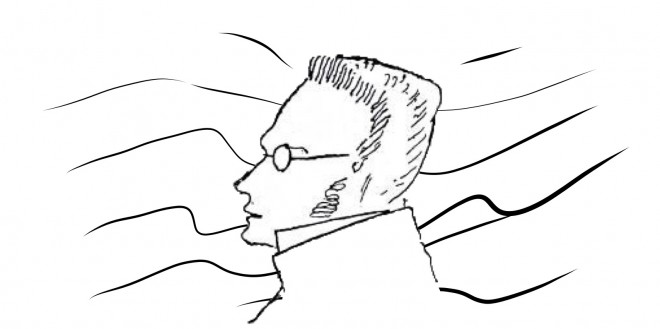
On October 25, 1806, the German philosopher Max Stirner was born. Stirner was known for his radical individualism, which under the name of “egoism” became culturally chic in the late 19th and early 20th centuries. In addition to Der Einzige und sein Eigentum, a major work that was famously attacked by Karl Marx, he translated Adam Smith’s Wealth of Nations and J.-B. Say’s A Treatise on Political Economy into German.

Categories
Today

Thirty Years’ War

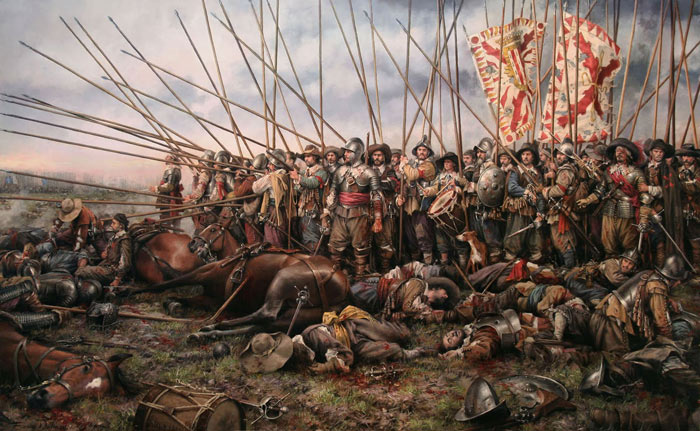
On October 24, 1648, the Peace of Westphalia was signed, marking the end of the Thirty Years’ War.