Categories
Today

John Brown

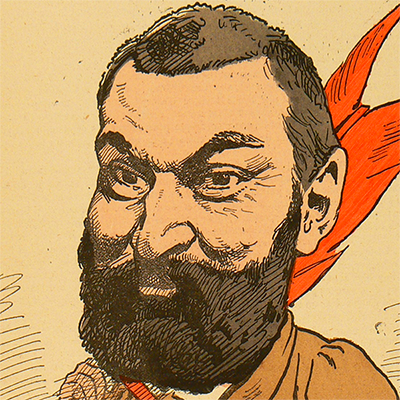
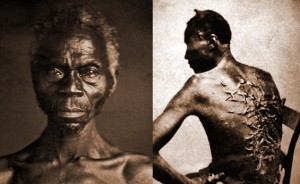
On May 9, 1800, abolitionist revolutionary (and, technically, insurrectionist, possibly a terrorist) John Brown was born.

In 1883 on this date, Spanish philosopher José Ortega y Gasset was born.

Categories
Today

Mill and Hayek . . . and bang!

On May 8, 1899, Austrian-English economist and philosopher Friedrich August von Hayek was born. He signed the bulk of his books written in the English language as “F.A. Hayek,” and is best known for The Road to Serfdom, The Constitution of Liberty, The Fatal Conceit, and many essays, several of them widely cited, including “Individualism, True and False” and “The Use of Knowledge in Society.”

Years earlier, on the same date in 1873, English philosopher and economist John Stuart Mill died. Now best known for On Liberty (1859) and Utilitarianism (1861), he was and is considered one of the most important economists and philosophers of the Victorian age, with other classics including A System of Logic (1843) and Principles of Political Economy (1848). Mill’s letters to his wife were edited into book form by Hayek.

On May 8, 1946, two Estonian school girls (Aili Jõgi and Ageeda Paavel) blew up the Soviet memorial which stood in front of the Bronze Soldier in Tallinn.

Categories
Today

Belated Amendment

On May 7, 1992, the State of Michigan ratified a 203-year-old proposed amendment to the United States Constitution, thereby fulfilling the terms of amending the document, adding it as 27th Amendment. The amendment had been written by James Madison. He had presented it as part of the original twelve amendments that became the ten making up the Bill of Rights. It bars the U.S. Congress from giving itself a pay raise until after the next election, so that voters have a chance to decide whether those voting for the raise would remain in Congress to receive it.

Categories
Today

Now comes good sailing

On May 6, 1862, American author, philosopher and abolitionist Henry David Thoreau died, after many years of tuberculosis.

Aware he was dying, Thoreau’s last words were “Now comes good sailing,” followed by two lone words, “moose” and “Indian.” Bronson Alcott planned the service and read selections from Thoreau’s works, and Ralph Waldo Emerson wrote the eulogy spoken at his funeral.

His remains, as well as those of members of his immediate family, were eventually moved to Sleepy Hollow Cemetery in Concord, Massachusetts.

His most famous works are Walden and An Essay on Civil Disobedience.

Categories
Today

Cinco de Mayo

In 1862, troops led by Ignacio Zaragoza stopped a French invasion in the Battle of Puebla in Mexico — an event leading to the popular “Cinco de Mayo” celebration.

No cause for civilization, however, is the bicentennial of Karl Marx’s birth.

Categories
Today

Historian

On May 4, 1796, American historian William H. Prescott was born. Prescott’s History of the Conquest of Mexico and his Conquest of Peru remain classic works of well-researched, ”scientific history.” Prescott, Arizona, was named in his honor.

Categories
Today

Between the crosses

In 1791, the Constitution of May 3, the first modern constitution in Europe, was proclaimed by the Sejm of the Polish–Lithuanian Commonwealth.

On May 3 in 1915, Lieutenant Colonel John McCrae composed the poem “In Flanders Fields,” the most famous poem of World War I. The Canadian physician wrote it after presiding over the funeral of friend and fellow soldier Lieutenant Alexis Helmer, who died in the Second Battle of Ypres. It is in the form of a rondeau.

Categories
Today

Run for the border

On May 2, 1989, Hungary began dismantling its border fence with Austria, allowing a number of East Germans to defect.

Categories
Today

A True Anti-Fascist

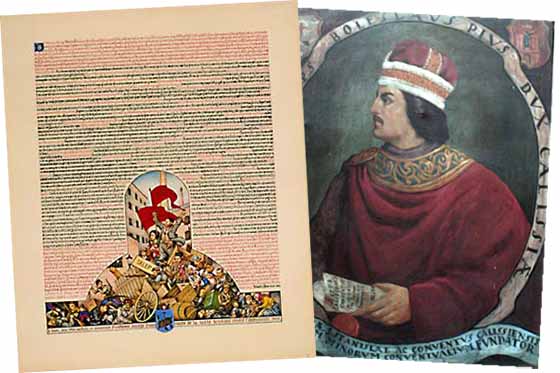
The Manifesto of the Anti-Fascist Intellectuals, written by philosopher Benedetto Croce [pictured, above] in response to the Manifesto of the Fascist Intellectuals by Giovanni Gentile, sanctioned the unreconcilable split between the philosopher and the Fascist government of Benito Mussolini, to which he had previously given a vote of confidence on October 31, 1922.

The manifesto was published by Il Mondo on May 1, 1925, which was Workers’ Day, symbolically responding to the publication of the Fascist manifesto on the Natale di Roma, the founding of Rome (celebrated on April 21). The Fascist press claimed that the Crocian manifesto was “more authoritarian” than its Fascist counterpart — a typical leftist dismissal of what used to be called “liberalism” — in Italian, liberismo — but which Croce dubbed liberism, to distinguish it from the dirigiste quasi-socialisms of self-described “liberals” of the time.

Categories
Today

Dachau

On April 29, 1945, U.S. troops of the Seventh Army liberated the Dachau concentration camp.