Categories
Today

Cyrus

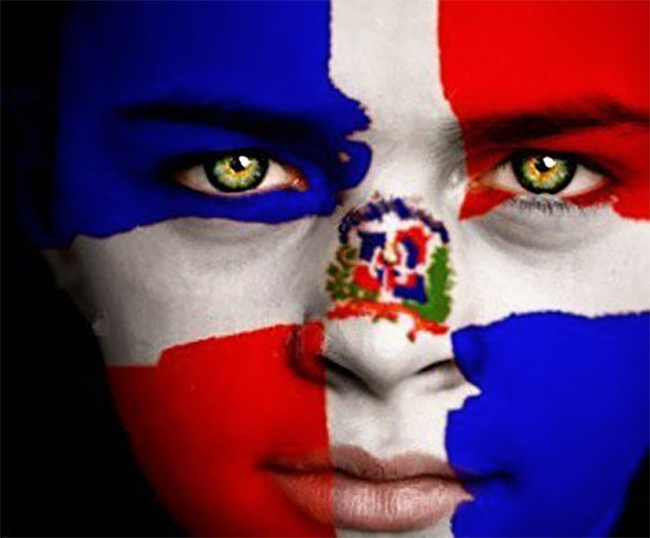
On October 29, 539 BC, Cyrus the Great entered the city of Babylon as conqueror. His general policy of religious toleration would be extended to the Jews, who were not long after allowed to return to their homeland.

On the same date in 1923 AD, the Ottomon Empire’s dissolution marked the start of the Turkish Republic.

Categories
Today

Statue of Liberty

On October 28, 1886, in New York Harbor, the Statue of Liberty was dedicated by President Grover Cleveland, despite the fact that the monument was not a federally funded project.

Categories
Today

Reagan and Goldwater

On October 27, 1964, Ronald Reagan delivered a speech on behalf of Republican candidate for president, Barry Goldwater, thereby launching Reagan’s political career. The speech came to be known as “A Time for Choosing.”

Categories
Today

Continental Congress

On October 26, 1774, the first Continental Congress adjourned in Philadelphia, Pennsylvania. Exactly one year later, King George III of Great Britain went before Parliament to declare the American colonies in rebellion. And one year later yet, to the day, in 1776, septuagenerian Benjamin Franklin (pictured, above) departed from America for France, seeking financial support for the American Revolution.

Categories
Today

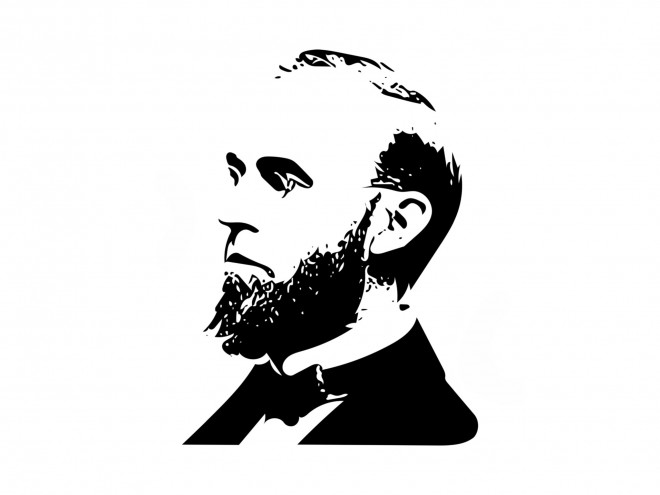
Max Stirner

On October 25, 1806, the German philosopher Max Stirner was born. Stirner was known for his radical individualism, which under the name of “egoism” became culturally chic in the late 19th and early 20th centuries. In addition to Der Einzige und sein Eigentum, a major work that was famously attacked by Karl Marx, he translated Adam Smith’s Wealth of Nations and J.-B. Say’s A Treatise on Political Economy into German.

Categories
Today

Thirty Years’ End

On October 24, 1648, the Peace of Westphalia was signed, marking the end of the Thirty Years’ War.

Categories
Today

Uprising(s)

On October 23, 1850, the first National Women’s Rights Convention began in Worcester, Massachusetts.

On the same October date 106 years later, thousands of Hungarians rose up against Soviet rule.

Categories
Today

Sartre Doesn’t Take the Prize

On October 22, 1964, philosopher and novelist Jean-Paul Sartre (1905 – 1980) was awarded the Nobel Prize for Literature, but turned down the honor — establishing a precedent that should have been followed by numerous Peace Prize winners, including Barack Obama and the European Union.

Only one other recipient of the award has turned it down voluntarily, namely Henry Kissinger’s co-winner in 1973, Le Duc Tho. Four other recipients were coerced by their governments from accepting the prize’s monetary award: Richard Kuhn, Adolf Butenandt and Gerhard Domagk, by the Nazi government, and Boris Pasternak, by the Soviet Union.

Categories
Today

Harding Spoke Out

On October 21, 1921, President Warren G. Harding delivered the first speech by a sitting U.S. President against lynching in the deep South.

Categories
Today

American boundaries

On October 20, 1803, the United States Senate ratified the Louisiana Purchase.

Exactly 15 years later, the Convention of 1818 signed between the United States and the United Kingdom which, among other things, settled the Canada-United States border on the 49th parallel for most of its length.