Categories
Today

The Mayflower Compact

On November 21, 1620, Plymouth Colony settlers signed the Mayflower Compact.

On this day in 1922, Rebecca Latimer Felton of Georgia took the oath of office, becoming the first female United States Senator.

November 21st birthdays include:

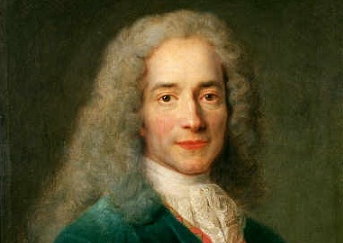
1694 – Voltaire, French philosopher (d. 1778) — portrait above.
1729 – Josiah Bartlett, American signer of the Declaration of Independence (d. 1795).
1870 – Alexander Berkman, anarchist (d. 1936), who shot but did not kill industrialist Henry Clay Frick.

Categories
Today

Fidelio

On November 20, 1789, New Jersey became the first U.S. state to ratify the Bill of Rights.

In 1805 on this date, Ludwig van Beethoven’s only opera, Leonore, oder Der Triumph der ehelichen Liebe (in English, Leonore, or The Triumph of Marital Love, later renamed Fidelio), premiered in Vienna. Beethoven wrote four overtures for the opera, all part of the orchestra’s concert repertoire. The opera tells the tale of the rescue from unjust imprisonment of Florestan by his wife Leonore, who disguises herself as a boy, Fidelio.

Categories
Today

Of/By/For

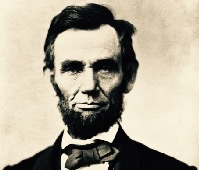
On November 19, 1863, President Abraham Lincoln delivered the Gettysburg Address at the ceremonial dedication of the military cemetery in Gettysburg, Pennsylvania, appropriating an old phraseology for republican government — “of the people, by the people, for the people” — and giving it its most memorable usage.

On the same date in 1955, National Review published its first issue.

Categories
Today

Tell and Shaw

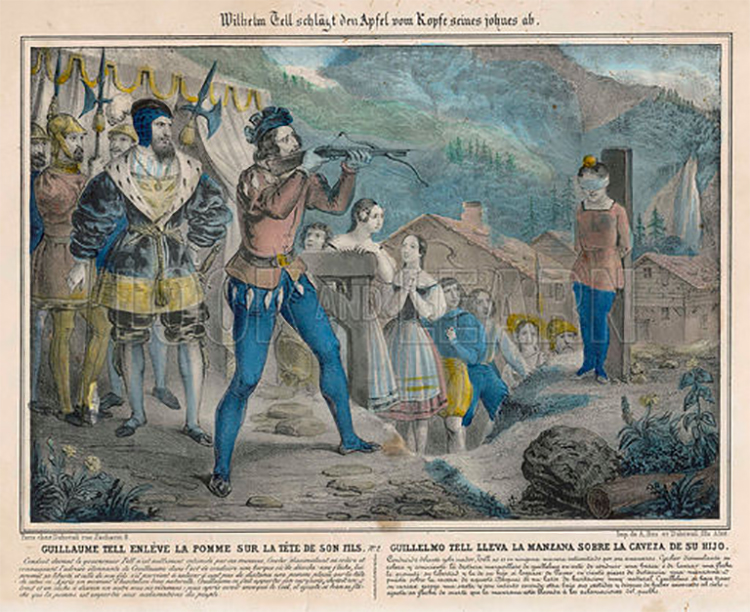
On November 18, 1307, legend has it, William Tell shot a crossbow bolt to pierce an apple, toppling it off his son’s head. He was forced to do this by the local Austrian authority, whose hat hung on a pole in the Altdorf town square Tell had refused to bow to when entering the village. Tell endures as a Swiss folk hero, and provides the subject of a famous opera by Rossini — the music of which is associated with, in many ears, Bugs Bunny and the Lone Ranger.

In 1926, on this date, George Bernard Shaw formally refused to accept the money for his Nobel Prize for Literature, saying, “I can forgive Alfred Nobel for inventing dynamite, but only a fiend in human form could have invented the Nobel Prize.”

Categories
Today

Confederation & Congress

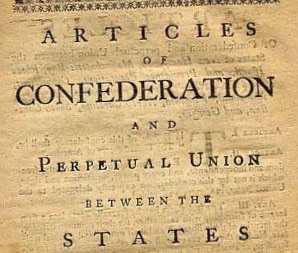
On November 17, 1777, the Articles of Confederation were submitted to the states for ratification.

On that date in 1800, the United States Congress held its first session in Washington, D.C.

Categories
Today

John Bright

On November 16, 1532, Francisco Pizarro and his men captured Inca Emperor Atahualpa at the Battle of Cajamarca.

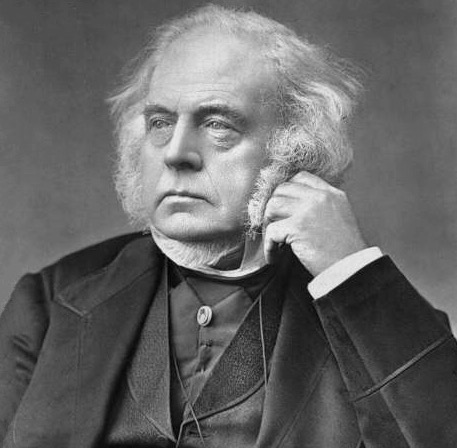
In 1811 on this date, John Bright (pictured above), English academic and politician, Chancellor of the Duchy of Lancaster, was born. Bright (d. 1889), famously worked with Richard Cobden against the Corn Laws (repealed in 1846) as well as for the Cobden–Chevalier Treaty of 1860, which ushered in freer trade and closer interdependence between Britain and France.

Categories
Today

The Original Confederation, Formalized

On November 15, 1777, the Continental Congress approved, and sent to the states for ratification, the “Articles of Confederation — after 16 months of deliberation. The first article gave the official name of the confederacy:

The Stile of this Confederacy shall be
The United States of America.

Categories
Today

PJO!

On November 14, 1918, Czechoslovakia became a republic.

Born on the same date 29 years later — American writer P. J. O’Rourke.

Categories
Today

Citizens Advancing Science

On this day in 1833, Denison Olmsted was alerted by his neighbors to something truly amazing, a night sky filled with shooting stars.

Not just a one or two or a dozen or a hundred: 72,000 or more per hour. Though recognizing where among the constellations meteors came from was ancient knowledge, it had not been recorded by modern-era scientists, at least in this case. What Olmsted noticed was that the meteors were coming from one point in the sky, the constellation Leo. This regular meteor event is now called the Leonid meteor stream.

In the morning, Olmsted wrote a brief report on the meteor storm for the New Haven Daily Herald newspaper, which elicited correspondence from around the country, thus beginning a social storm, in a sense: crowd-sourced science.


November 13 is World Kindness Day, which has been celebrated in various countries since 1998. It is not an official celebratory day of the U.S.A., or of the United Nations. But individuals are free to be kind this day . . . or any day, for that matter.
Categories
Today

Monarchy or Republic

On November 12, 1905, Norwegians established, by referendum, a monarchy — not a republic. Exactly 14 years later, to the day, Austria became a republic.