On March 7, 1644, Massachusetts established the first two-chamber legislature in the American colonies.
One hundred thirty years later, to the day, British forces closed the port of Boston to all commerce.
On March 7, 1644, Massachusetts established the first two-chamber legislature in the American colonies.
One hundred thirty years later, to the day, British forces closed the port of Boston to all commerce.

On March 6, 1967, Soviet Premiere Joseph Stalin’s only daughter, Svetlana Alliluyeva, defected to the United States. She later took the name Lana Peters, upon marriage to William Wesley Peters. The marriage was short-lived.
The March 6 date also marks term limits advocate and initiative organizer Paul Jacob’s birthday. He was born on the anniversary of the births of Michaelangelo, Cryano de Bergerac, and Alan Greenspan. He is also, obviously, the reason this site, ThisIsCommonSense.com, exists. (It continues, however, only through the continued support of readers like you.)
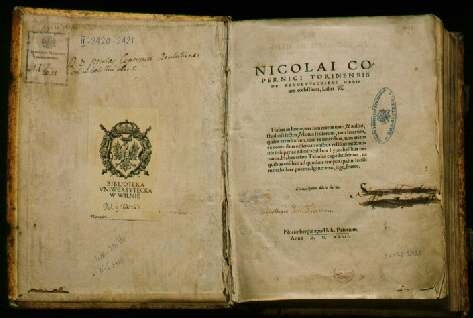
On March 5, 1616, Nicolaus Copernicus’s book, De revolutionibus orbium coelestium, was placed on the Catholic Church’s Index of Forbidden Books. This censorship notwithstanding, the Earth continued to revolve around the Sun. The book had been first published in 1543 in Nuremberg.
| In 1770, the Boston Massacre took place on March 5.
| Joseph Stalin, the longest serving leader of the Soviet Union, died at his Volynskoe dacha in Moscow on this date in 1953, after a cerebral hemorrhage.
| March 5 is magician Penn Jillette’s birthday. He turns 64 today, beginning his 65th year of life.
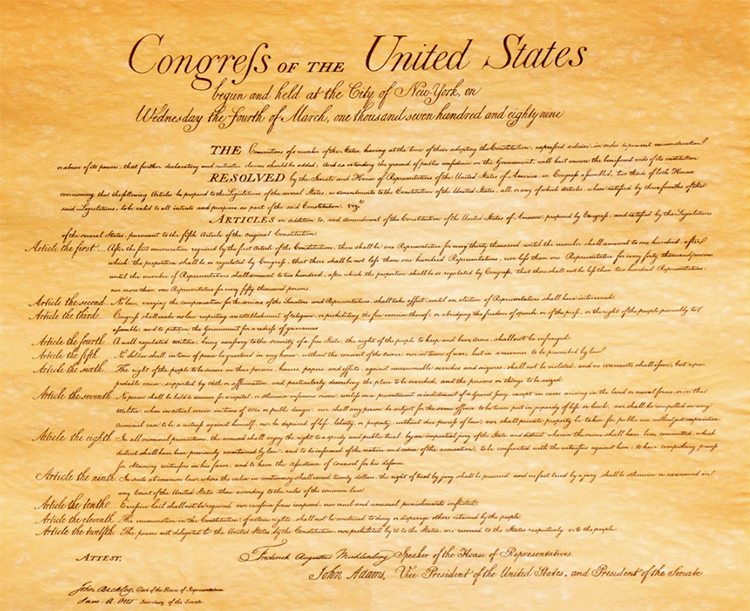
On March 4, 1789, the first bicameral Congress of the United States met in New York, New York, in accordance with the new Constitution.
Two years later on the same date, Vermont was admitted as the fourteenth state of the union.
In a twist in World War II allegiances, Finland declared war on Nazi Germany on March 4, 1945, beginning the Lapland War.
On March 3, 1924, the 407-year-old Islamic caliphate collapsed when Caliph Abdülmecid II of the Ottoman Caliphate was deposed. The last remnant of the old regime gives way to the reformed ofKemal Atatürk.
On the same day, the Free State of Fiume was annexed by the Kingdom of Italy.
On March 3 of 1931, the United States adopted The Star-Spangled Banner as its national anthem.
Mohandas K. Gandhi began his hunger strike in Bombay to protest at the autocratic rule in British India on this day in 1939.
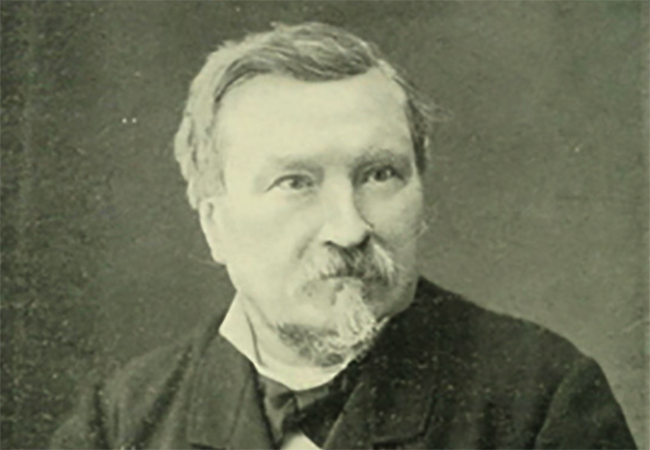
Belgian economist Gustave de Molinari (pictured above) was born on March 3, 1819. Associated with French laissez-faire economists Frédéric Bastiat and Yves Guyot, he was the longest-serving editor of Guillamin’s Journal des économistes. Today chiefly known in the English-speaking world for his authorship of one article, “The Production of Security” (1849), he was, as Ludwig von Mises described, the most productive economist in his school. Despite this, and his worldwide recognition, only one of his many books was translated from the French into English during his lifetime, The Society of To-morrow (1904), his final book.
In the book he advanced the idea of “the free constitution of nationality.”
Molinari died on January 28, 1912.
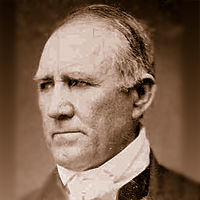
On March 2, 1793, Sam Houston was born.
On March 2, 1926, American economist and political theorist Murray N. Rothbard was born.
As President of the Republic of Texas, Houston (pictured above) cut the size of the Republic’s budget by a whopping amount, including selling the navy for scrap. Rothbard theorized about even more daring — and more permanent — cuts to (and limits upon) government.
On March 2, 1781, the Second Continental Congress convened as the new Congress of the Confederation, under the Articles of Confederation, ratified the day before. The congress elected no new president upon adoption of the Articles. This Confederation Congress oversaw the conclusion of the American Revolution.
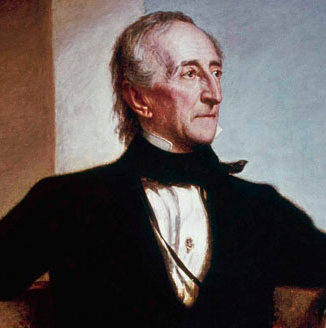
March 1st Firsts (and a 17th and a 37th):
| The first United States census was authorized, in 1790.
| Ohio was admitted as the 17th U.S. state, in 1803.
| President John Tyler [pictured above] signed a bill authorizing the United States to annex the Republic of Texas, in 1845.
| The state of Michigan formally abolished capital punishment, 1847.
| Nebraska became the 37th of the United States, in 1867.
On March 1, 1781, the Continental Congress of the United States adopted the Articles of Confederation. With this, the governing body became known, officially, as United States of America in Congress Assembled, more commonly as the Congress of the Confederation. The first session of this newly styled Confederation Congress took over without a break from the Second Continental Congress, adjourning on November 3. Samuel Huntington and Thomas McKean served as presidents during this first session.
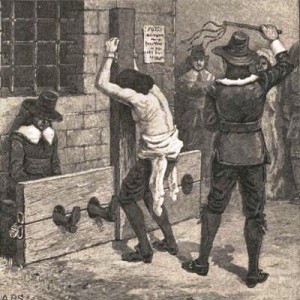
On February 28, 1646, Roger Scott, of Lynn, Massachusetts, was tried for sleeping in church. Awakened in church by a tithingman’s long, knobbed staff hitting him on the head, he struck back at the man, and garnered a whipping as punishment, as well as the dark designation as “a common sleeper at the publick exercise.”
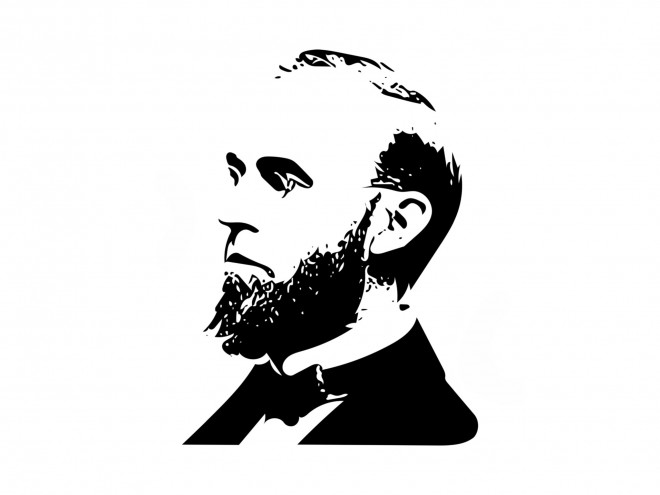
On February 27, 1830, American economist and free trade advocate Arthur Latham Perry was born.
The Twenty-second Amendment (Amendment XXII) of the United States Constitution, which sets a term limit for election and overall time of service to the office of President of the United States, was ratified by the requisite 36 of the then-48 states on February 27, 1951.
Congress had passed the amendment on March 21, 1947.

February 26 marks the Dominican Republic’s Independence Day.