Categories
Today

Typhoid Mary

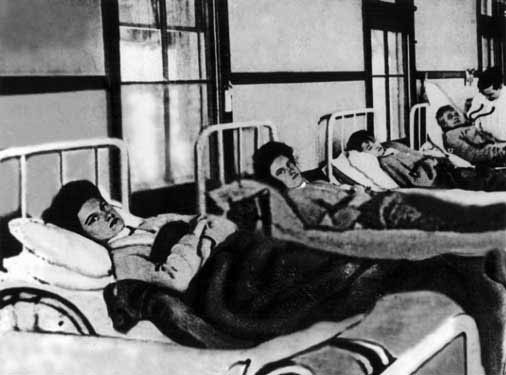
On March 27, 1915, Mary Mallon, popularly and scandalously known as “Typhoid Mary,” was put in quarantine, where she would remain for the rest of her life, over 23 years incarcerated.

Ms. Mallon was the first healthy carrier of disease ever identified in the United States. As an asymptomatic carrier of typhoid, she was a puzzle to science, and, once discovered, an apparent threat to those around her, with at least three deaths attributable to her presence. She did not co-operate with officials, and preferred to work as a cook, which paid higher wages than less dangerous-to-the-public occupations. She had been quarantined once before her final permanent quarantine in a hospital.

The civil liberties aspect to her incarceration loom large, and it is obvious that health officials of her time were not exactly any more respectful of her rights than she was with those of her clients and neighbors. The case was an obvious turning point in American legal practice, and can be categorized along with eugenics and “social hygiene” — alongand with prohibition regarding alcohol and recreational drugs — in the increasing illiberality of legal practice in America in the early part of the 20th century.
Categories
Today

South Korea

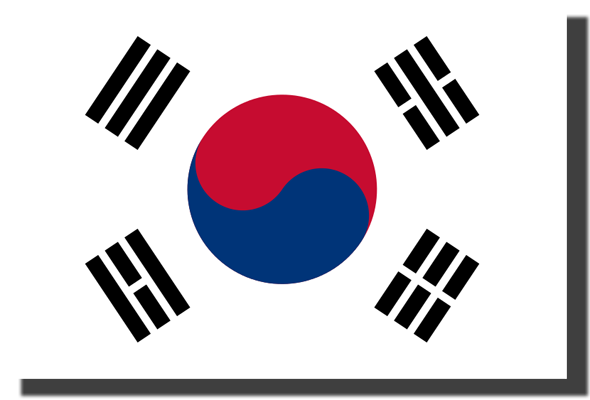
On March 26, 1991, local self-government in South Korea was restored after three decades of centralized control.

Categories
Today

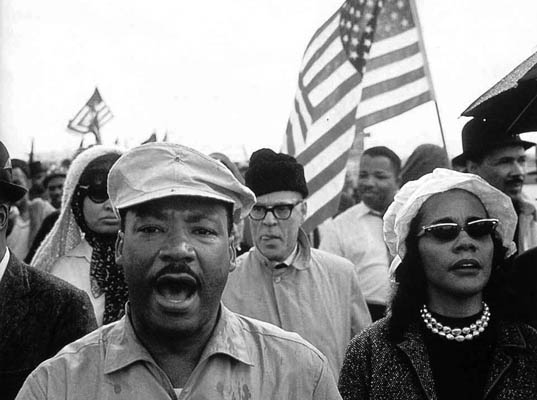
From Selma to Montgomery

On March 25, 1965, civil rights activists led by Martin Luther King, Jr., successfully completed their four-day, 50-mile march from Selma to the capitol in Montgomery, Alabama.

Categories
Today

Intolerable

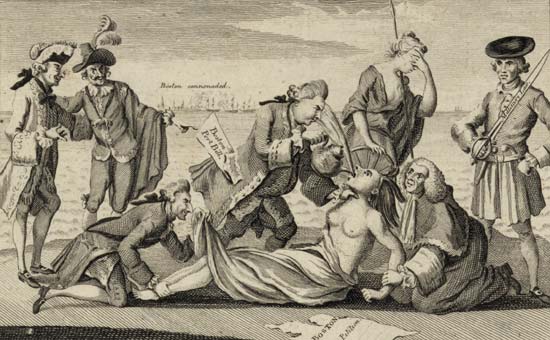
On March 24, 1765, the Kingdom of Great Britain passed the Quartering Act, which required the Thirteen Colonies to house British troops.

On the same date in 1855, slavery was abolished in Venezuela.

Categories
Today

“Give Me Liberty”

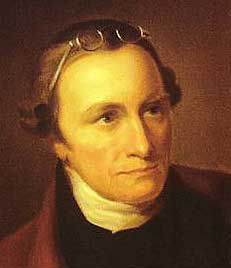
On March 23, 1775, Patrick Henry delivered his “Give me Liberty, or give me Death!” speech at St. John’s Church in Richmond, Virginia.

On this date in 1992, economist and social philosopher Friedrich August von Hayek died.

Categories
Today

Massachusetts Bay Colony

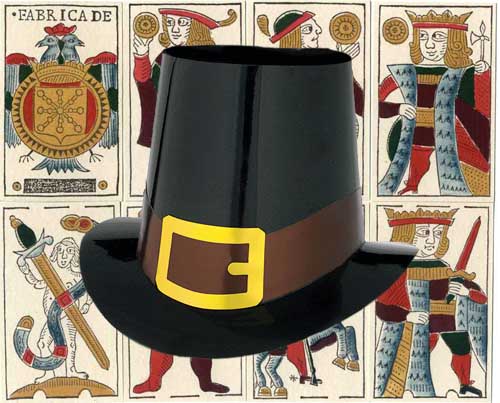
On March 22, 1630, the Massachusetts Bay Colony outlawed the possession of cards, dice, and gaming tables. Exactly eight years later, the colony expelled Anne Hutchinson for religious dissent.

In 1812 on this date, Stephen Pearl Andrews was born. Andrews would go on to become an important American abolitionist, free love advocate, and theorist of “individual sovereignty,” promulgating the reforms of Josiah Warren.

Categories
Today

Term Limits and the Selma March

On March 21, 1965, Dr. Martin Luther King, Jr. led 3,200 people on the start of the third and finally successful civil rights march from Selma to Montgomery, Alabama.

Nearly two decades earlier, the Twenty-second Amendment (Amendment XXII) of the United States Constitution, passed Congress. The date was March 21, 1947. The amendment, ratified on February 27, 1951, set a term limit for election and overall time of service to the office of President of the United States. This was an obvious reaction to Franklin Delano Roosevelt’s more than three terms in office.

The first section of the amendment reads as follows:

No person shall be elected to the office of the President more than twice, and no person who has held the office of President, or acted as President, for more than two years of a term to which some other person was elected President shall be elected to the office of the President more than once. But this Article shall not apply to any person holding the office of President, when this Article was proposed by the Congress, and shall not prevent any person who may be holding the office of President, or acting as President, during the term within which this Article becomes operative from holding the office of President or acting as President during the remainder of such term.

Categories
Today

Uncle Tom’s Cabin

On March 20, 1852, Harriet Beecher Stowe’s anti-slavery novel Uncle Tom’s Cabin was published.

Categories
Today

House of Lords

On March 19, 1649, England’s House of Commons passed an act abolishing the House of Lords, declaring it “useless and dangerous to the people of England.”

This was during Oliver Cromwell’s rule as Lord Protector, after the execution of Charles I. The House of Lords did not again meet until the Convention Parliament of 1660, under the Restoration of the monarchy.

Categories
Today

Sunflower & Hawaii

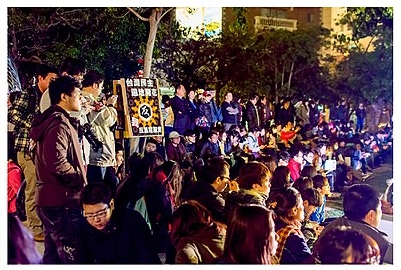
March 18 marks the 7th anniversary of the 2014 Sunflower Student Movement, wherein students occupied the Taiwanese legislature to block a trade agreement between Taiwan and China, which the public came to believe gave too much economic leverage to China, a power that regularly threatens to invade the free and democratic island nation.

The event awakened a deep concern about China’s dangerous encroachment as well as further impressing a “Taiwanese identity.” The protest also is believed to have influenced the 2014 Umbrella movement in Hong Kong as well as leading to electoral victories in Taiwan for the pro-independence Democratic Progressive Party in 2016 and again in 2020, This website salutes the Sunflower Student Movement and hopes this date may be long remembered as the day the modern world first stood up and said “No” to totalitarian China.


On March 18, 1959, President Dwight D. Eisenhower signed a bill enabling Hawaii to become the 50th state in the Union. The official day of statehood was set for (and became) August 21 of that year.

The statehood signing occurred exactly 85 years after The Kingdom of Hawaii formalized its treaty with the U. S. establishing exclusive trading rights.