Categories
Today

At Harpers Ferry

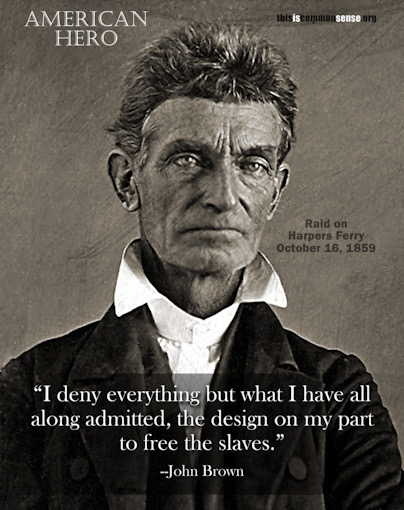
On this day in 1859, abolitionist John Brown led a group of 21 men — 14 white, seven black — on a raid of the federal armory at Harpers Ferry, Virginia (then; since 1863, West Virginia), to capture weapons and initiate a slave revolt in southern states.

Brown’s forces initially captured the armory, which had only one guard on duty that night, but the expected uprising did not occur. Soon the raiders were blocked from any escape by townspeople and local militiamen and then overwhelmed by federal troops sent into the town (commanded by Colonel Robert E. Lee, who would later lead the Confederate armies).

Ten of Brown’s men were killed during the incident; seven were captured, tried, convicted and executed, including John Brown; and five escaped. Two enslaved African-Americans joined Brown’s cause and also died in the fighting. Battling against Brown’s raiders, a Marine and four townspeople lost their lives, including the town’s mayor and a free African-American. 

Though the raid on Harpers Ferry was a failure, it set the states on the road to disunion, war, and the eventual end of slavery. 

“John Brown began the war that ended American slavery and made this a free Republic,” Frederick Douglass would write in remembrance of this event. “Until this blow was struck, the prospect for freedom was dim, shadowy and uncertain. The irrepressible conflict was one of words, votes and compromises. When John Brown stretched forth his arm the sky was cleared. The time for compromises was gone — the armed hosts of freedom stood face to face over the chasm of a broken Union — and the clash of arms was at hand.”


Print out a commemorative poster:
Categories
Today

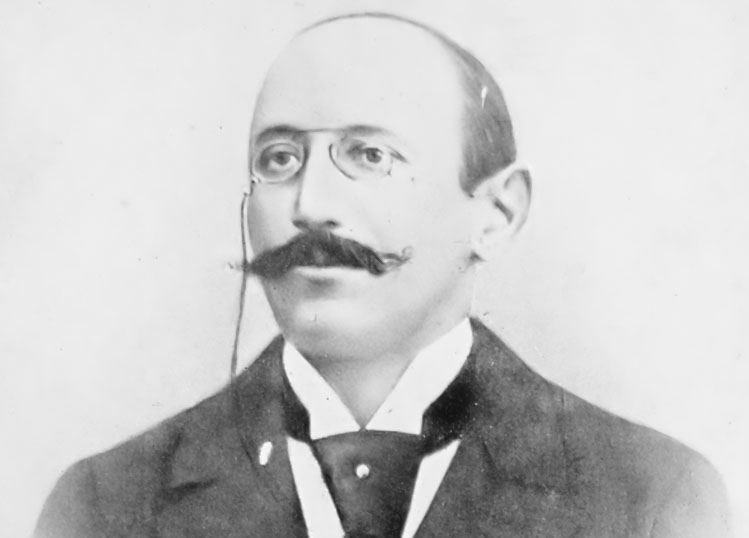
The Dreyfus Affair

On October 15, 1894, Alfred Dreyfus (1859 – 1935) was arrested for spying: The Dreyfus Affair began. And thus began a scandal that brought anti-Semitism into the cultural center.

Categories
Today

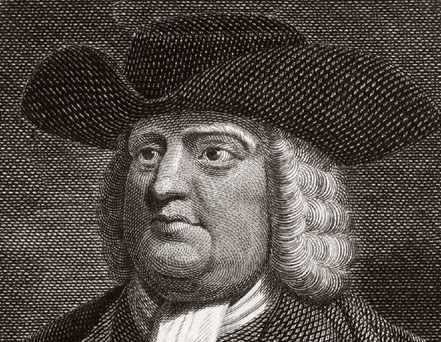
William Penn

On October 14, 1644, Willliam Penn was born. An English real estate entrepreneur, philosopher, and founder of the Province of Pennsylvania (the English North American colony and future Commonwealth of Pennsylvania), he was an early champion of democracy and religious freedom, notable for his good relations and successful treaties with the Lenape Indians. Penn died in 1718.

Categories
Today

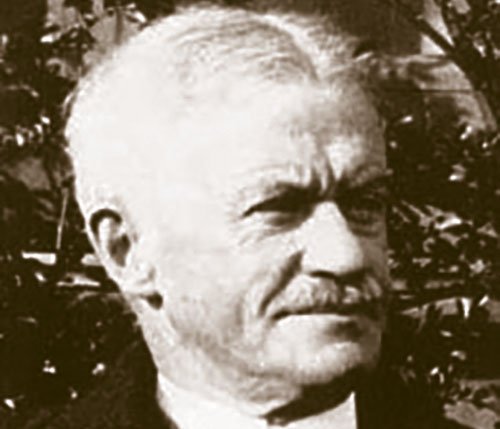
Albert Jay Nock

On October 13, 1870, American social critic and education theorist Albert Jay Nock was born. Nock was the author of a number of books, including Jefferson, the Man and Our Enemy, The State, but was probably most famous for his intellectual autobiography, Memoirs of a Superfluous Man, which was widely read and admired amongst conservatives in the 1950s and ’60s.

Categories
Today

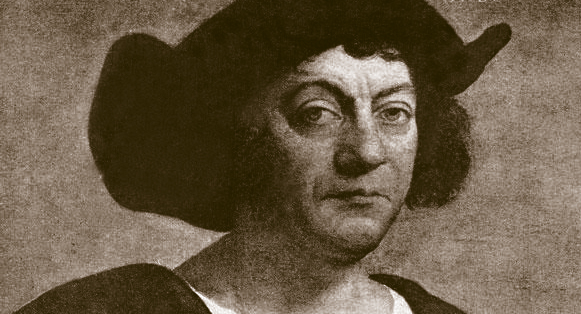
The New World

On October 12, 1492, Christopher Columbus landed in the Bahamas, thinking he had reached “the Indies.”

Exactly two hundred years later, a letter from Massachusetts Governor William Phips ended the Salem Witch Trials.

On this date in 1892, the Pledge of Allegiance was first recited by students in many U.S. public schools, as part of a celebration marking the 400th anniversary of Columbus’s voyage.

The Pledge had been composed that year by Francis Bellamy, a Christian Socialist minister, and was first published in Youth’s Companion magazine, September 8, 1892. The recital was accompanied with a salute to the flag known as the Bellamy salute. During World War II, the salute was replaced with a hand-over-heart gesture because the original form (described in detail by Bellamy) involved stretching the arm out towards the flag in a manner that resembled the later Nazi salute. The original form of the Pledge was somewhat less involved than later versions:

I pledge allegiance to my Flag and the republic for which it stands, one nation indivisible, with liberty and justice for all.

In October an editorial addition occurred, the word “to” prefixing “the republic.”

Categories
Today

The Revolution Remembered

October 11, 1890, marks the founding of the Daughters of the American Revolution.

On the same date in 1976, President Gerald R. Ford approved a congressional joint resolution Public Law 94–479 to appoint, posthumously, George Washington to the grade of General of the Armies of the United States, as part of the bicentennial celebrations.

John J. Pershing (1860 – 1948) is the only other American to attain this high title, and the only one to achieve it while alive.

Categories
Today

Atlas?

On October 10, 1957, Ayn Rand’s dystopian/utopian novel Atlas Shrugged was published. Written to expound and defend an individualist, freedom/free-market point of view, it is one of the most influential and literarily successful didactic novels ever written.


On October 10, 1973, Austrian-born American economist, Ludwig von Mises* (pictured above) died.

Two-hundred fifty-nine years earlier, the French law-maker and Jansenist Pierre le Pesant, sieur de Boisguilbert died.

Both economists were known for their defenses of freer markets: le Pesant for pioneering the critique of mercantilism, arguing that a nation’s wealth consisted in what its people produce and trade; Mises for systematizing economic theory and advancing the critique of both socialism and latter-day mercantilism (what he called “interventionism”).


In January 1958, following the publication of Atlas Shrugged, Mises wrote Ayn Rand a letter of congratulations.

Categories
Today

Banished

On October 9, 1635, Protestant theologian Roger Williams was banished from the Massachusetts Bay Colony as a religious dissident after he spoke out against punishments for religious offenses and giving away Native American land. He moved south, founding Providence Plantations, where he worked for separation of church and state, the rights of aboriginal Americans, and against slavery.

Categories
Today

Missing Day(s)

The date October 8, 1582, does not exist in the records of Italy, Poland, Portugal and Spain, the result of that year’s implementation of the Gregorian calendar.

Fearing a Catholic plot, Protestant countries adopted the more accurate calendar much later. By the time Britain and its colonies got on board in 1752, eleven days had to be “disappeared.” This caused riots in some places, as people suspected some horrible chicanery — and in actual fact the inspiration for the “Give us our eleven days” protest had something to do with taxes, so it might not have been as idiotic as it now seems.


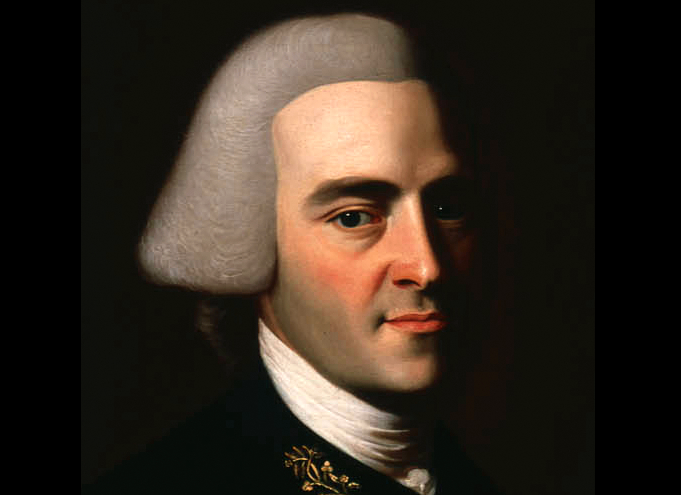
On October 8, 1793, American merchant, president of the Second Continental Congress (1775–1777) and first and third Governor of the Commonwealth of Massachusetts, John Hancock (b. 1737), died.

Categories
Today

George Mason

On October 7, 1691, the charter for the Province of Massachusetts Bay was issued.

Also on a seventh day of the tenth month, King George III issued the Royal Proclamation of 1763, which closed Indigenous lands in North America north and west of the Alleghenies to white settlements.


On October 7, 1792, George Mason — “The Father of the Bill of Rights” — died. He had drafted the Virginia Declaration of Rights in 1776, and, at the time of the drafting and ratification of the Constitution, had insisted on the addition of articles to solidify state’s and individual rights within the new order.

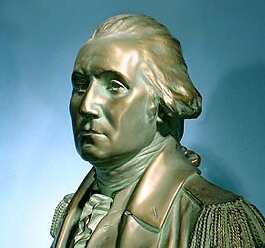
George Mason (pictured) has been honored in numerous ways, including by the United States Postal Service with an 18¢ Great Americans series postage stamp; a bas-relief in the Chamber of the U.S. House of Representatives as one of 23 honoring great lawmakers; and with an annual award named for him presented to a person who has made significant, lasting contribution to the practice of journalism in the Commonwealth, awarded by the Society of Professional Journalists, Virginia Pro Chapter.


On October 7, 2003, California Governor Gray Davis was recalled and Arnold Schwarzenegger voted into Davis’s previous gubernatorial spot.