Categories
Today

Christmas Warfare

On Christmas Day in 1776, George Washington and the Continental Army crossed the Delaware River at night to attack, the next day, the Hessian forces serving Great Britain at Trenton, New Jersey.

United States President Andrew Johnson granted an unconditional pardon to all Confederate veterans on Christmas Day in 1868.

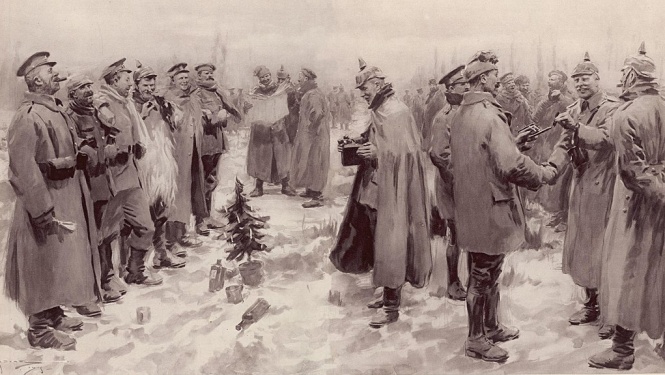
A series of unofficial truces occurred across the Western Front to celebrate Christmas in 1914. The image, at top, illustrates the event: “British and German Soldiers Arm-in-Arm Exchanging Headgear: A Christmas Truce between Opposing Trenches” with a sub caption explaining “Saxons and Anglo-Saxons fraternising on the field of battle at the season of peace and goodwill: Officers and men from the German and British trenches meet and greet one another — A German officer photographing a group of foes and friends.” Originally published in The Illustrated London News, January 9, 1915.
Categories
Today

Home Rule

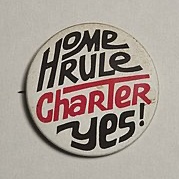
On December 24, 1973, the District of Columbia Home Rule Act was passed, allowing residents of Washington, D.C., to elect their own local government.

Categories
Today

A Resignation

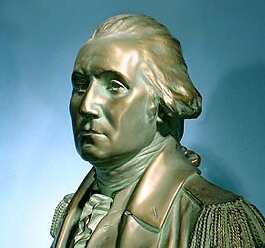
On December 23, 1783, George Washington resigned as commander-in-chief of the Continental Army, at the Maryland State House in Annapolis, Maryland.

Categories
Today

Dictator Overthrown

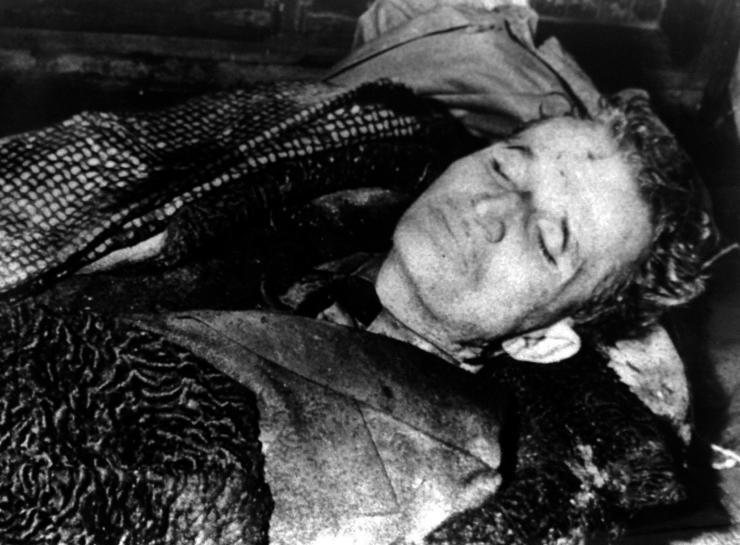
On December 22, 1989, Communist President of Romania Nicolae Ceaușescu was overthrown by Ion Iliescu after days of bloody confrontations. The deposed dictator and his wife fled Bucharest with a helicopter as protesters erupted in cheers.

The couple was quickly caught and, on Christmas day, tried by a military tribunal and executed by firing squad.

Categories
Today

Rock & Rebellion

On December 21, 1620, William Bradford and the Mayflower Pilgrims landed on what is now known as Plymouth Rock in Plymouth, Massachusetts.

American settlers in Nacogdoches, Mexican Texas, declared their independence on December 21, 1826, starting the Fredonian Rebellion.

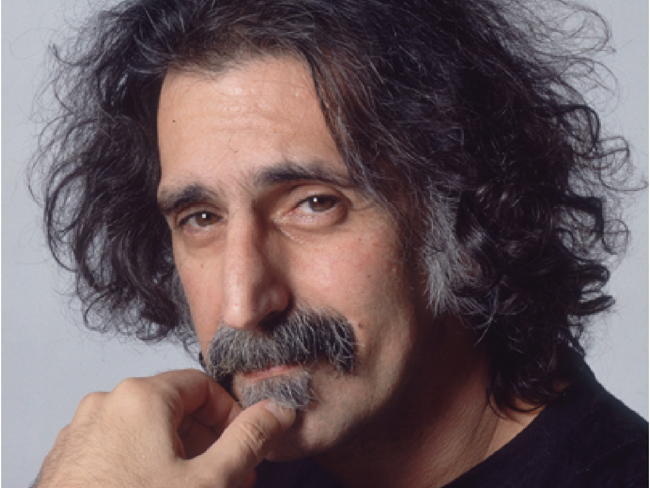
Avant-garde rock ’n’ roll guitarist, band leader, and composer Frank Zappa was born on this date in 1940. In 1985, Zappa testified before the United States Senate Commerce, Technology, and Transportation committee, attacking the Parents Music Resource Center or PMRC, a music organization co-founded by Tipper Gore, wife of then-senator Al Gore. Zappa was a passionate advocate for freedom of speech, self-education, political participation and the abolition of censorship. Describing his political views, Frank Zappa categorized himself as a “practical conservative,” or “independent.” He died in 1993.

Categories
Today

Diplomat, Spy

On December 20, 1740, Arthur Lee — Revolutionary Era diplomat, spy, and Virginia delegate to the Continental Congress — was born. He practiced law in London from 1770 to 1776, where he wrote polemics against slavery and in defense of the American colonies’ resistance to the Townshend acts and other tyrannical British policies.

He was brother to Richard Henry Lee and Francis Lightfoot Lee.

Categories
Today

American Crises

On December 19, 1776, Tom Paine published one of a series of pamphlets in the Pennsylvania Journal titled The American Crisis. Exactly one year later, George Washington’s Continental Army went into winter quarters at Valley Forge, Pennsylvania.

On December 19, 1828, Vice President of the United States John C. Calhoun penned the South Carolina Exposition and Protest, arguing against the Tariff of 1828, a key moment in what became known as the Nullification Crisis.

Categories
Today

Thanksgiving in December

On December 18, 1777, the United States celebrated its first official Thanksgiving, marking the then-recent October victory by the Americans over General John Burgoyne in the Battle of Saratoga.

Categories
Today

Official Recognition

On December 17, 1777, France formally recognized the United States of America.

The 17th of December, 1819, was the day Simon Bolivar declared the independence of the Republic of Gran Colombia in Angostura.

Categories
Today

The Convention Parliament

On December 16, 1689, England’s Convention Parliament began, not only transferring power from one king to another, but establishing procedures and rights.