Categories
Thought

Lucian of Samosata

For the discovery of truth, your one and only sure or well-founded hope is the possession of this power: you must be able to judge and sift truth from falsehood; you must have the assayer’s sense for sound and true or forged coin. . . .

Lucian, in his dialogue Hermotimus.
Categories
Thought

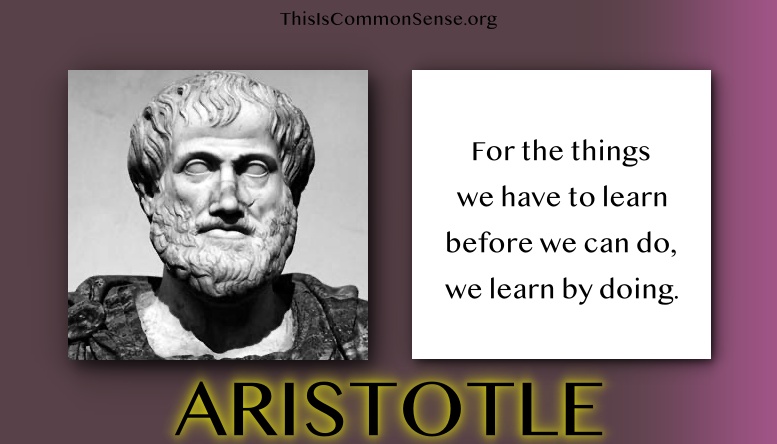
Aristotle

For the things we have to learn before we can do, we learn by doing.

Aristotle, Nicomachean Ethics, Book II, 1103a.33.
Categories
Thought

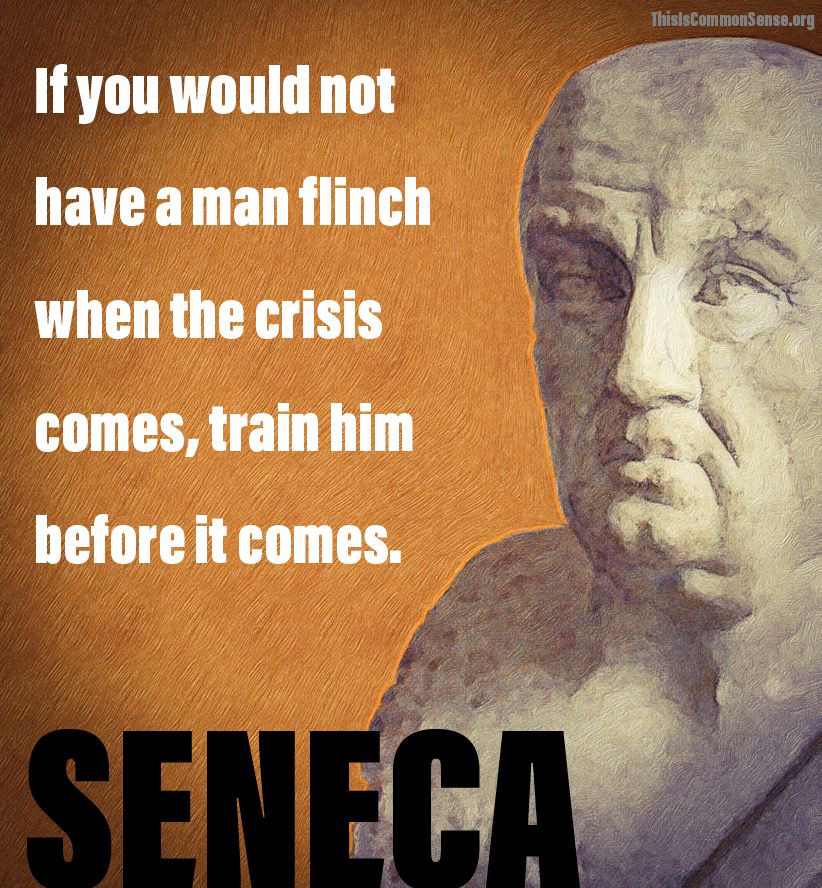
Seneca

If you would not have a man flinch when the crisis comes, train him before it comes.

Seneca the Younger, Letter XVII of Epistulae Morales ad Lucilium (Moral Letters to Lucilius).
Categories
Thought

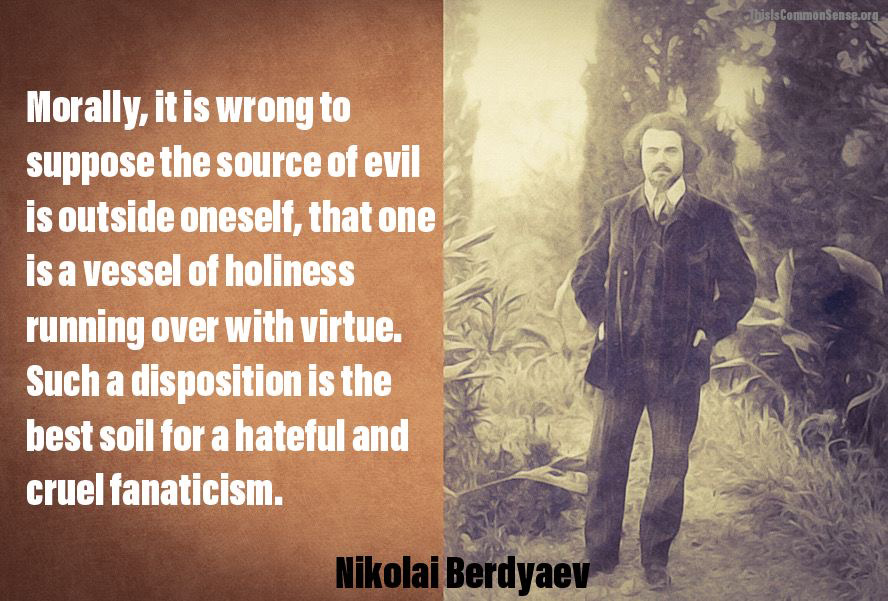
Nikolai Berdyaev

Morally, it is wrong to suppose the source of evil is outside oneself, that one is a vessel of holiness running over with virtue. Such a disposition is the best soil for a hateful and cruel fanaticism. It is as wrong to impute every wickedness to Jews, Freemasons, “intellectuals,” as it is to blame all crimes on the bourgeoisie, the nobility, and the powers that were. No; the root of evil is in me as well, and I must take my share of the responsibility and the blame.

Nikolai Berdyaev, The End of Our Time (1919; Donald Atwater, trans., 1933).
Categories
Thought

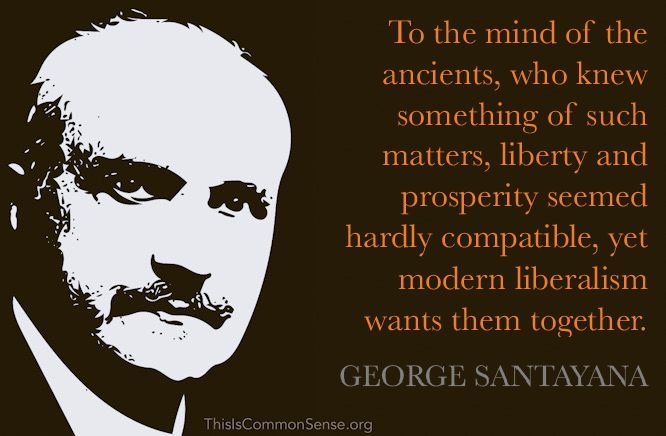
George Santayana

To the mind of the ancients, who knew something of such matters, liberty and prosperity seemed hardly compatible, yet modern liberalism wants them together.

George Santayana, “The Irony of Liberalism,” Soliloquies in England and Later Soliloquies (1922).
Categories
Thought

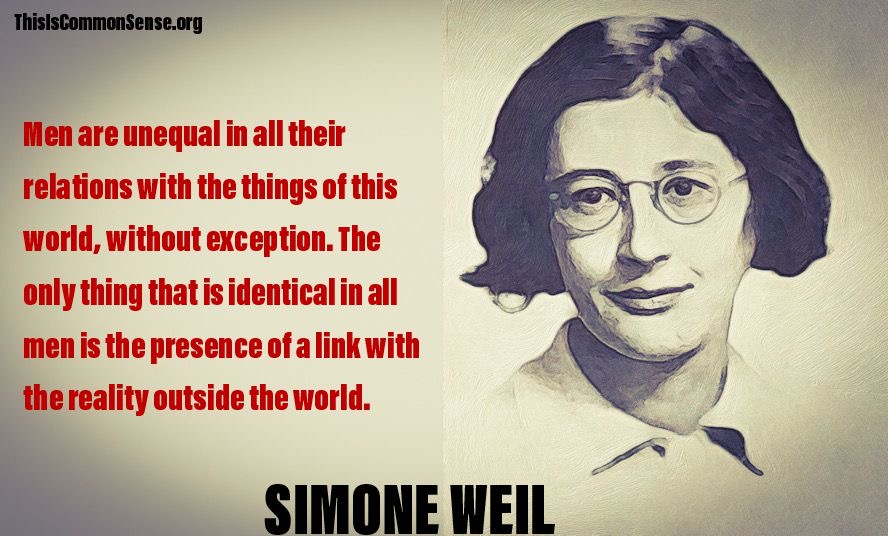
Simone Weil

Men are unequal in all their relations with the things of this world, without exception. The only thing that is identical in all men is the presence of a link with the reality outside the world. 

Simone Weil, Draft for a Statement of Human Obligation (1943).
Categories
Thought

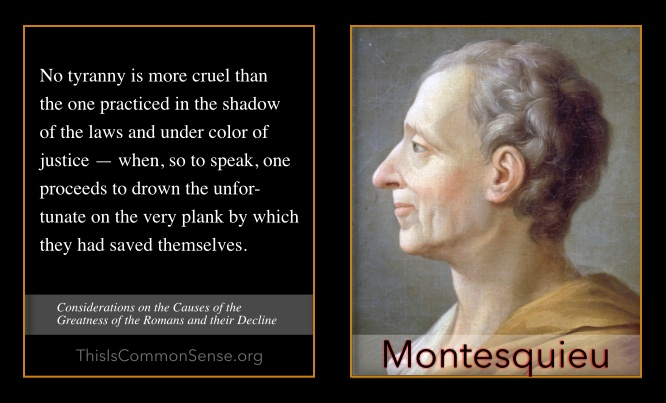
Montesquieu

Il n’y a point de plus cruelle tyrannie que celle que l’on exerce à l’ombre
des lois et avec les couleurs de la justice, lorsqu’on va, pour ainsi dire,
noyer des malheureux sur la planche même sur laquelle ils s’étaient sauvés.

No tyranny is more cruel than the one practiced in the shadow of the laws and under color of justice — when, so to speak, one proceeds to drown the unfortunate on the very plank by which they had saved themselves.

Charles-Louis de Secondat, Baron de La Brède et de Montesquieu, Considerations on the Causes of the Greatness of the Romans and their Decline (1734), p. 89.
Categories
Thought

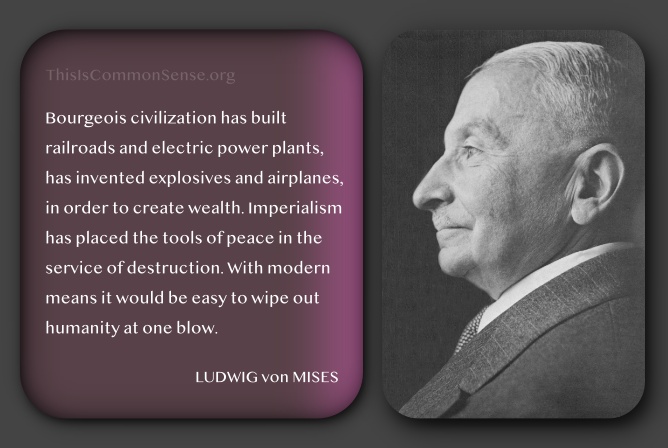
Ludwig von Mises


Bourgeois civilization has built railroads and electric power plants, has invented explosives and airplanes, in order to create wealth. Imperialism has placed the tools of peace in the service of destruction. With modern means it would be easy to wipe out humanity at one blow.

Ludwig Edler von Mises, Nation, State and Economy (1919; 1983, Leland B. Yeager, trans.), p. 252.
Categories
Thought

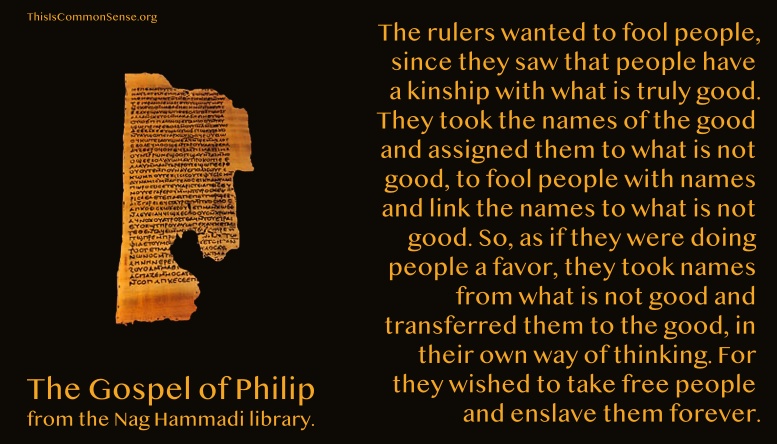
The Gospel of Philip

The rulers wanted to fool people, since they saw that people have a kinship with what is truly good. They took the names of the good and assigned them to what is not good, to fool people with names and link the names to what is not good. So, as if they were doing people a favor, they took names from what is not good and transferred them to the good, in their own way of thinking. For they wished to take free people and enslave them forever.

Excerpt from The Gospel of Philip as translated by M. Meyer, in The Nag Hammadi Scriptures (2007), p. 163
Categories
Thought

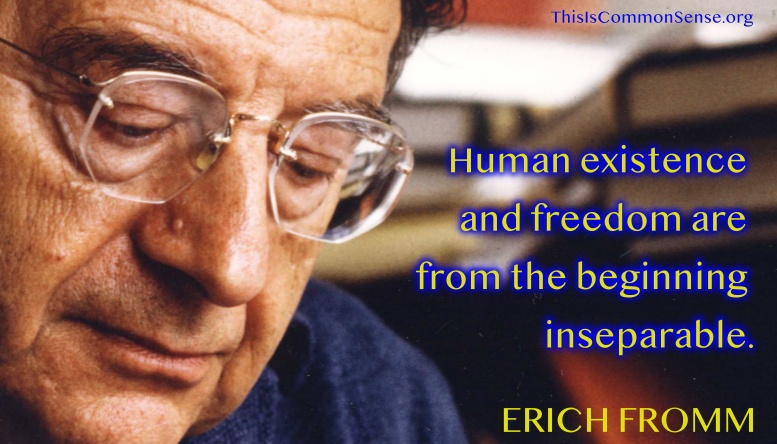
Erich Fromm

Human existence begins when the lack of fixation of action by instincts exceeds a certain point; when the adaptation to nature loses its coercive character, when the way to act is no longer fixed by heredtiarily given mechanisms. In other works, human existence and freedom are from the beginning inseparable.

Erich Fromm, Escape from Freedom (1941), Chapter Two: “The Emergence of the Individual and the Ambiguity of Freedom.”