Usually, so far as improvement in the people’s economic conditions is concerned, humanitarians simply play the role of the busybody.
Vilfredo Pareto, Manual of Political Economy (1971, Ann S. Schwier, trans. from the French edition of 1927), p. 301.
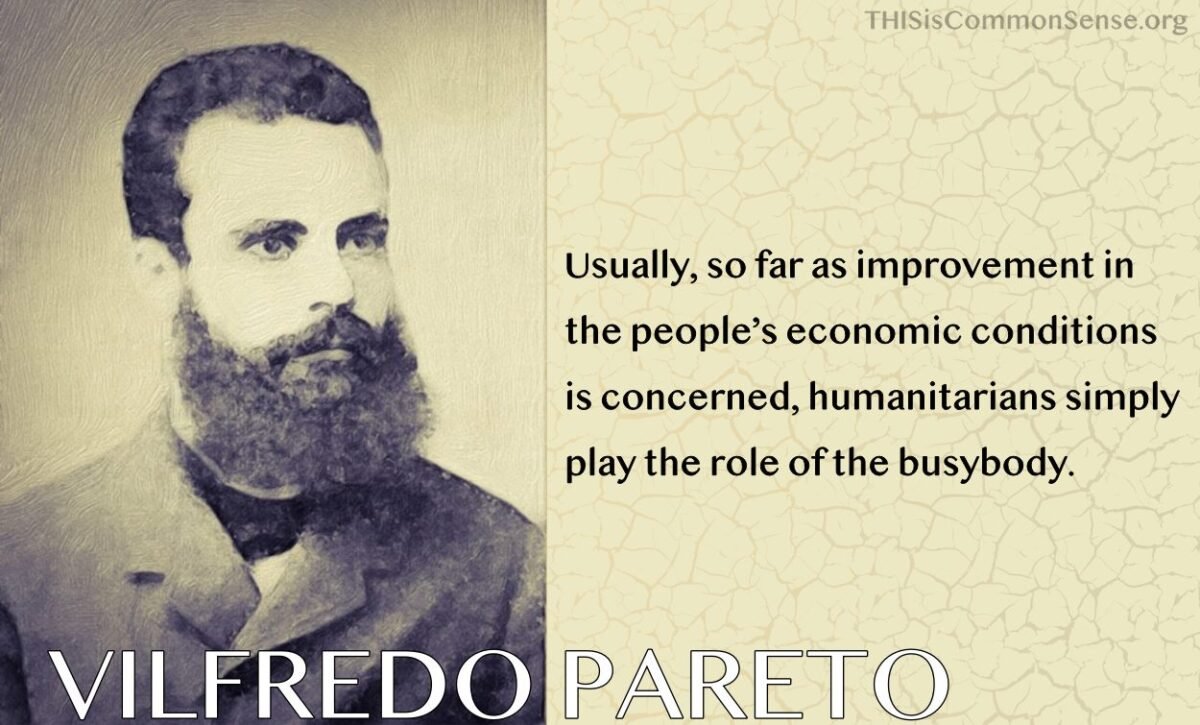
Usually, so far as improvement in the people’s economic conditions is concerned, humanitarians simply play the role of the busybody.
Vilfredo Pareto, Manual of Political Economy (1971, Ann S. Schwier, trans. from the French edition of 1927), p. 301.
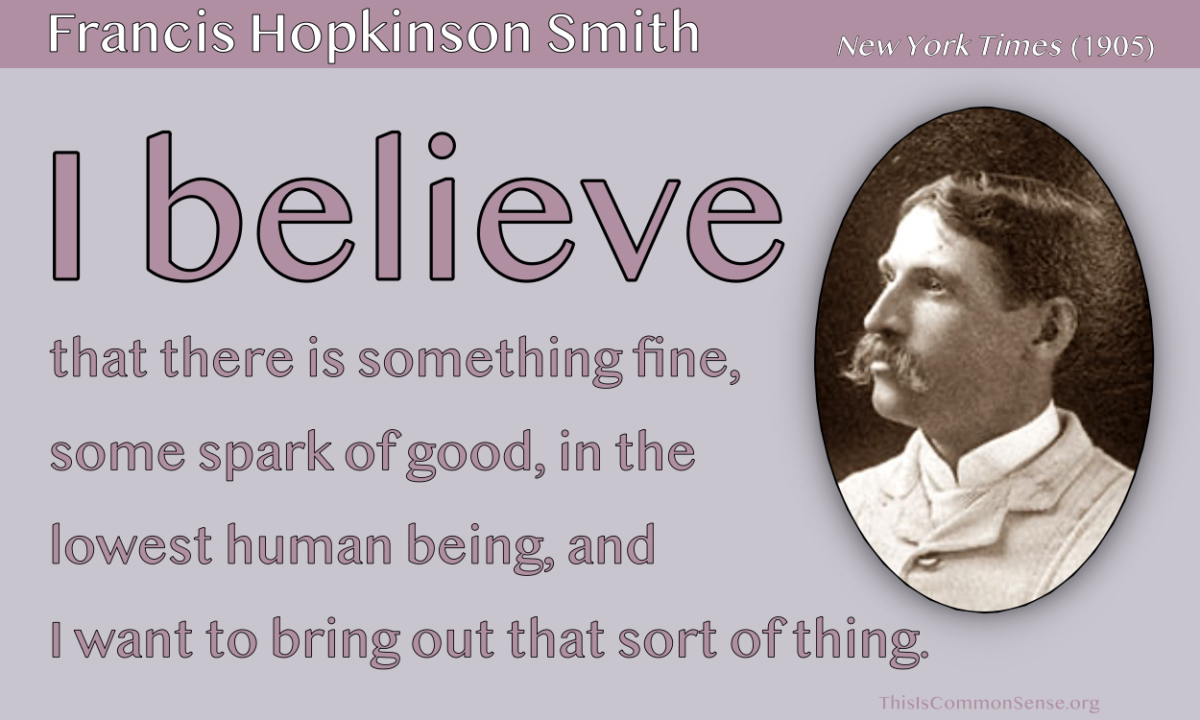
I believe that there is something fine, some spark of good, in the lowest human being, and I want to bring out that sort of thing.
Francis Hopkinson Smith, discussing his goal in fiction writing in a New York Times interview, January 29, 1905. Smith, in addition to writing novels such as Col. Carter of Cartersville (1891) and Peter: A Novel of Which He Is Not the Hero (1908), designed the base of the Statue of Liberty, among other public projects.
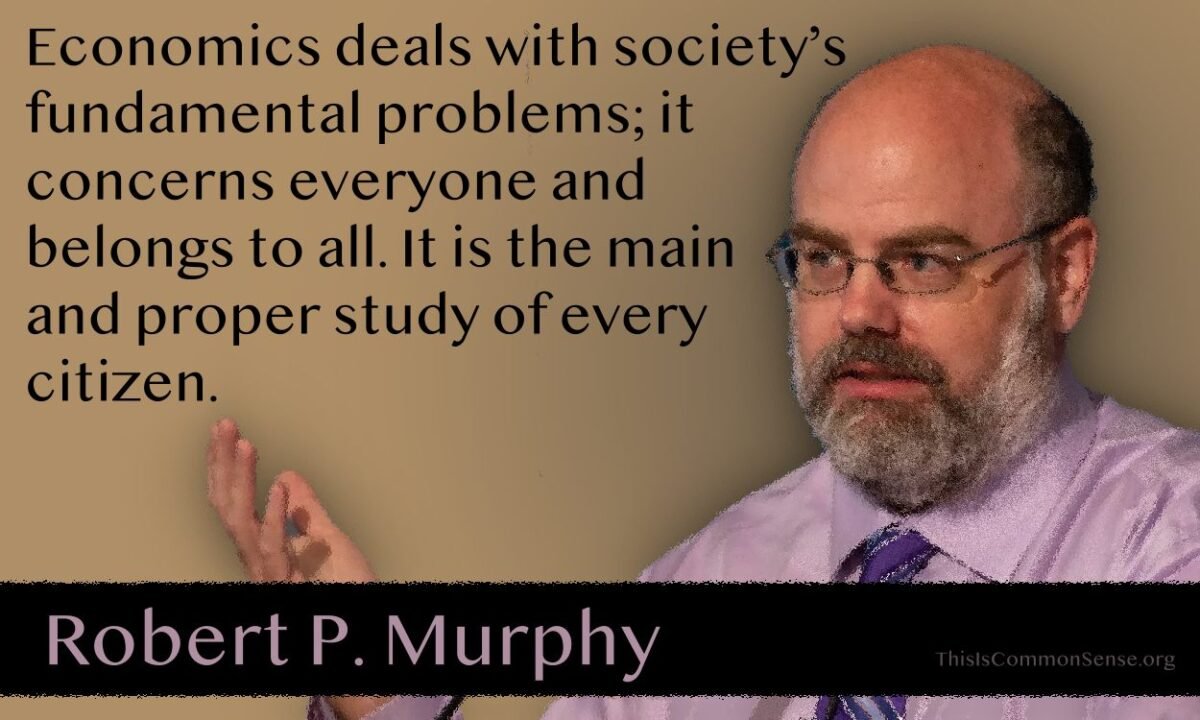
Economics deals with society’s fundamental problems; it concerns everyone and belongs to all. It is the main and proper study of every citizen.
Robert P. Murphy, Ph.D., Choice: Cooperation, Enterprise, and Human Action (2015).
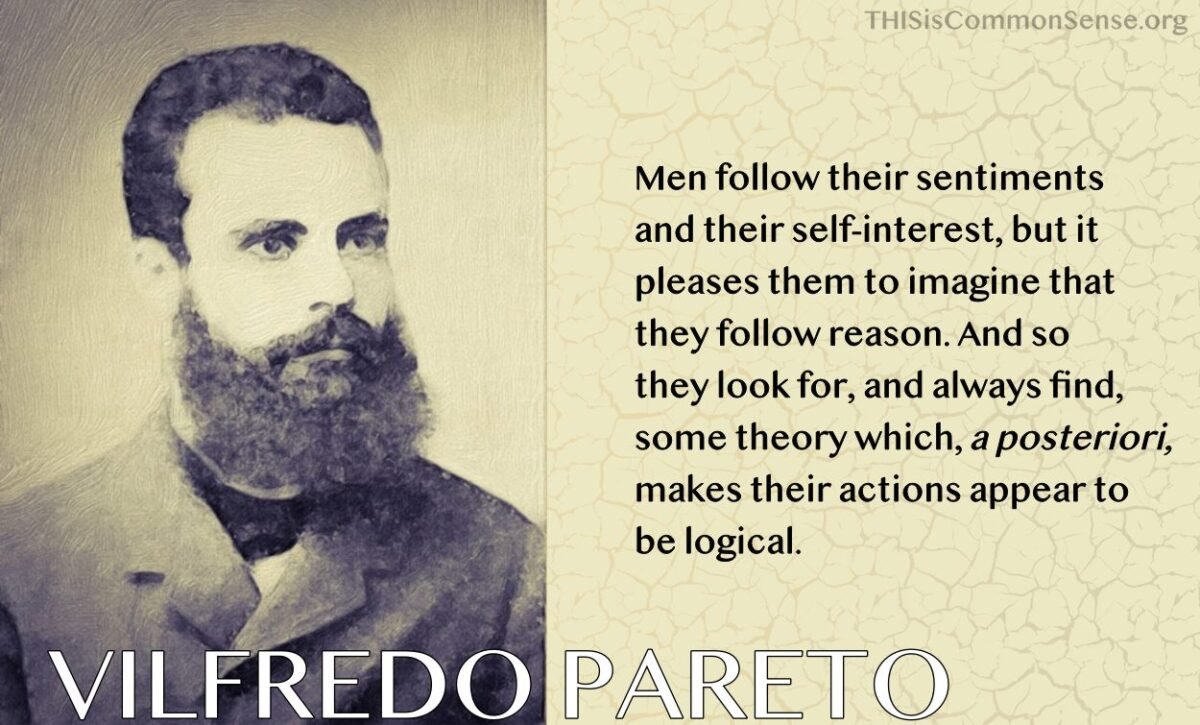
Men follow their sentiments and their self-interest, but it pleases them to imagine that they follow reason. And so they look for, and always find, some theory which, a posteriori, makes their actions appear to be logical.
Vilfredo Pareto, Manual of Political Economy: A Critical and Variorum Edition (), p. 95.
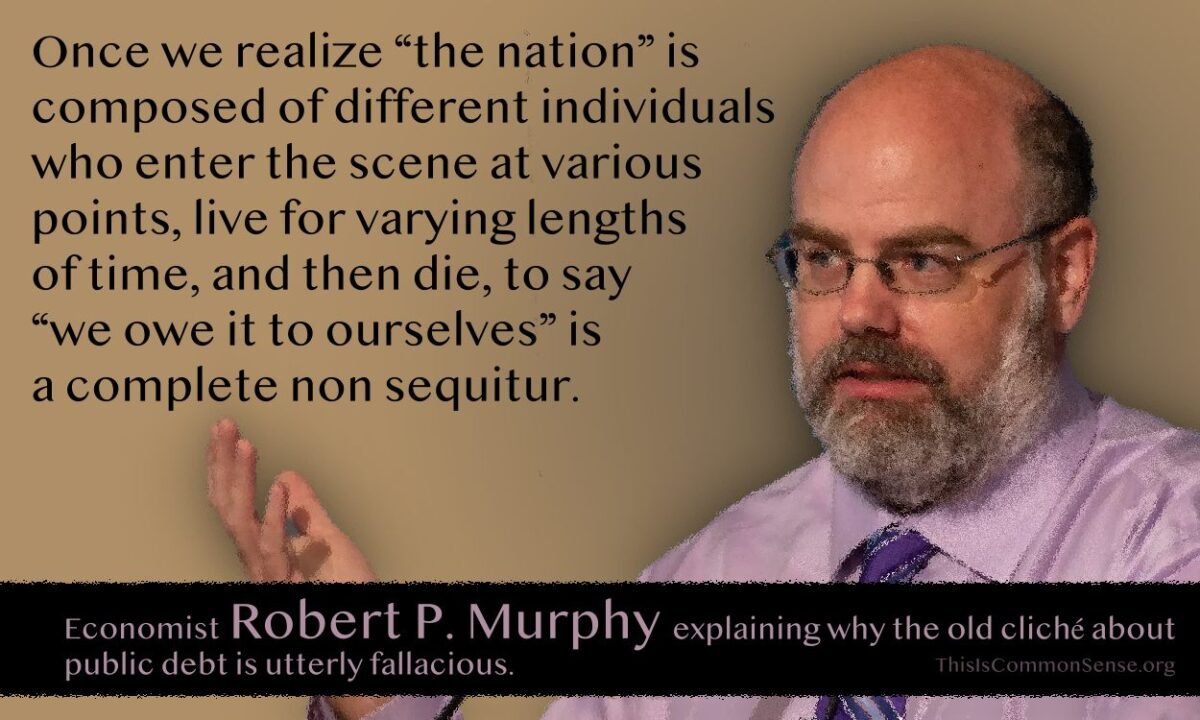
Once we realize “the nation” is composed of different individuals who enter the scene at various points, live for varying lengths of time, and then die, to say “we owe it to ourselves” is a complete non sequitur.
Robert P. Murphy, Ph.D., “Debt Can’t Burden Future Generations?” in Contra Krugman: Smashing the Errors of America’s Most Famous Keynesian (2018), p. 469.
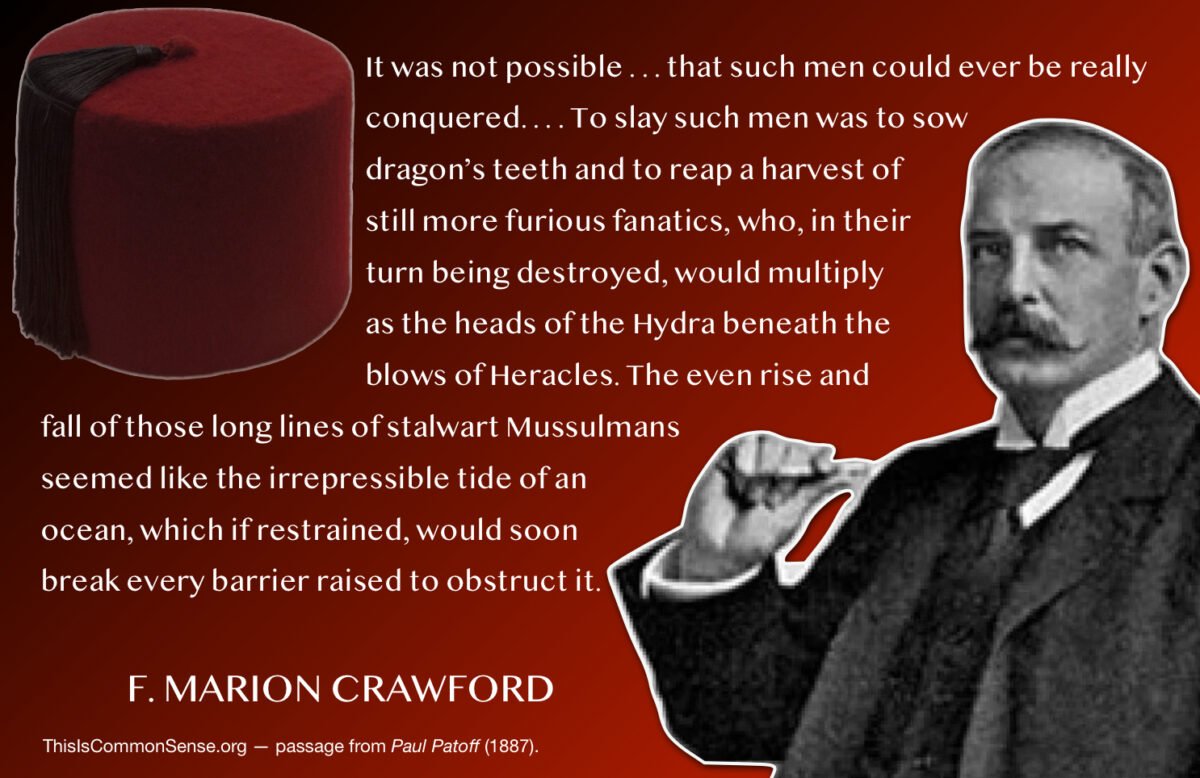
Alexander Patoff stood by his brother’s side, watching the ceremony with intense interest. He hated the Turks and despised their faith, but what he now saw appealed to the Orientalism of his nature. Himself capable of the most distant extremes of feeling, sensitive, passionate, and accustomed to delight in strong impressions, he could not fail to be moved by the profound solemnity of the scene and by the indescribable wildness of the Imam’s chant. Paul, too, was silent, and, though far less able to feel such emotions than his elder brother, the sight of such unanimous and heart-felt devotion called up strange trains of thought in his mind, and forced him to speculate upon the qualities and the character which still survived in these hereditary enemies of his nation. It was not possible, he said to himself, that such men could ever be really conquered. They might be driven from the capital of the East by overwhelming force, but they would soon rally in greater numbers on the Asian shore. They might be crushed for a moment, but they could never be kept under, nor really dominated. Their religion might be oppressed and condemned by the oppressor, but it was of the sort to gain new strength at every fresh persecution. To slay such men was to sow dragon’s teeth and to reap a harvest of still more furious fanatics, who, in their turn being destroyed, would multiply as the heads of the Hydra beneath the blows of Heracles. The even rise and fall of those long lines of stalwart Mussulmans seemed like the irrepressible tide of an ocean, which if restrained, would soon break every barrier raised to obstruct it.
Francis Marion Crawford, a passage from his 1887 novel Paul Patoff, Chapter Two.
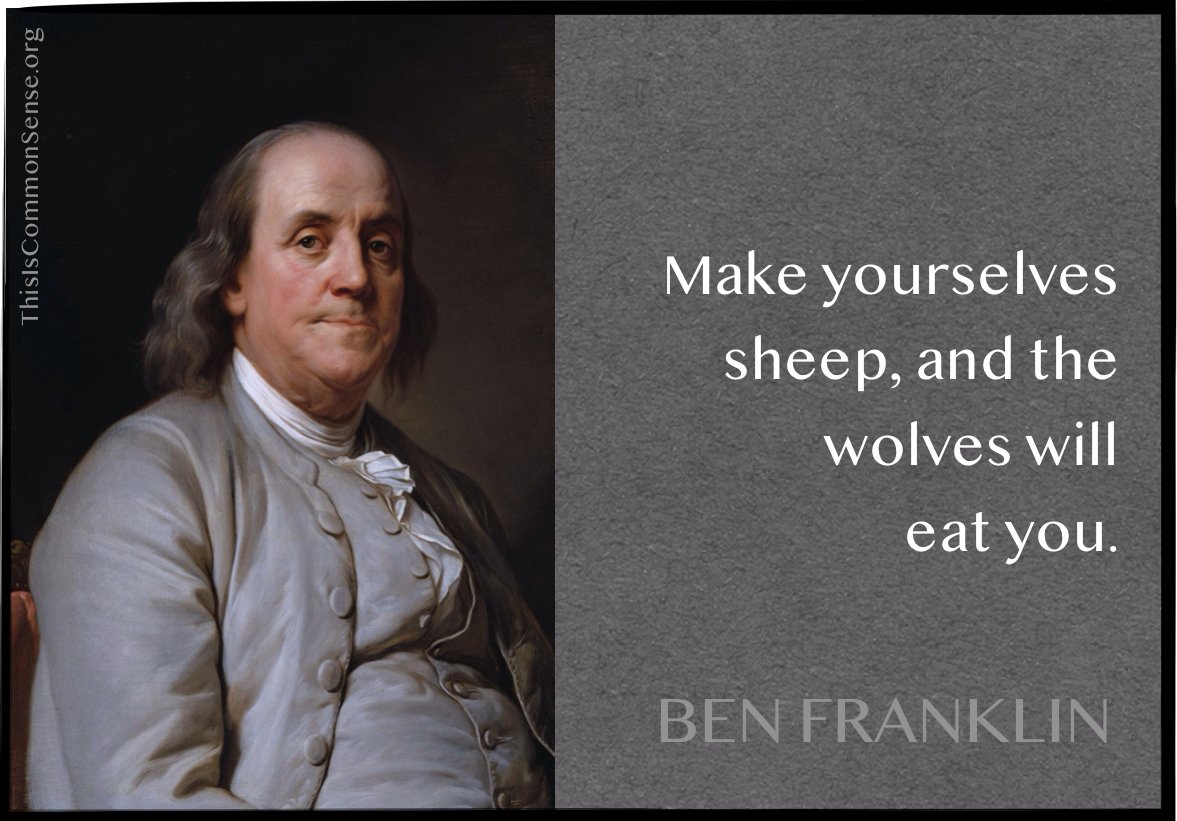
Make yourselves sheep, and the wolves will eat you.
Benjamin Franklin, letter to Thomas Cushing (1773).
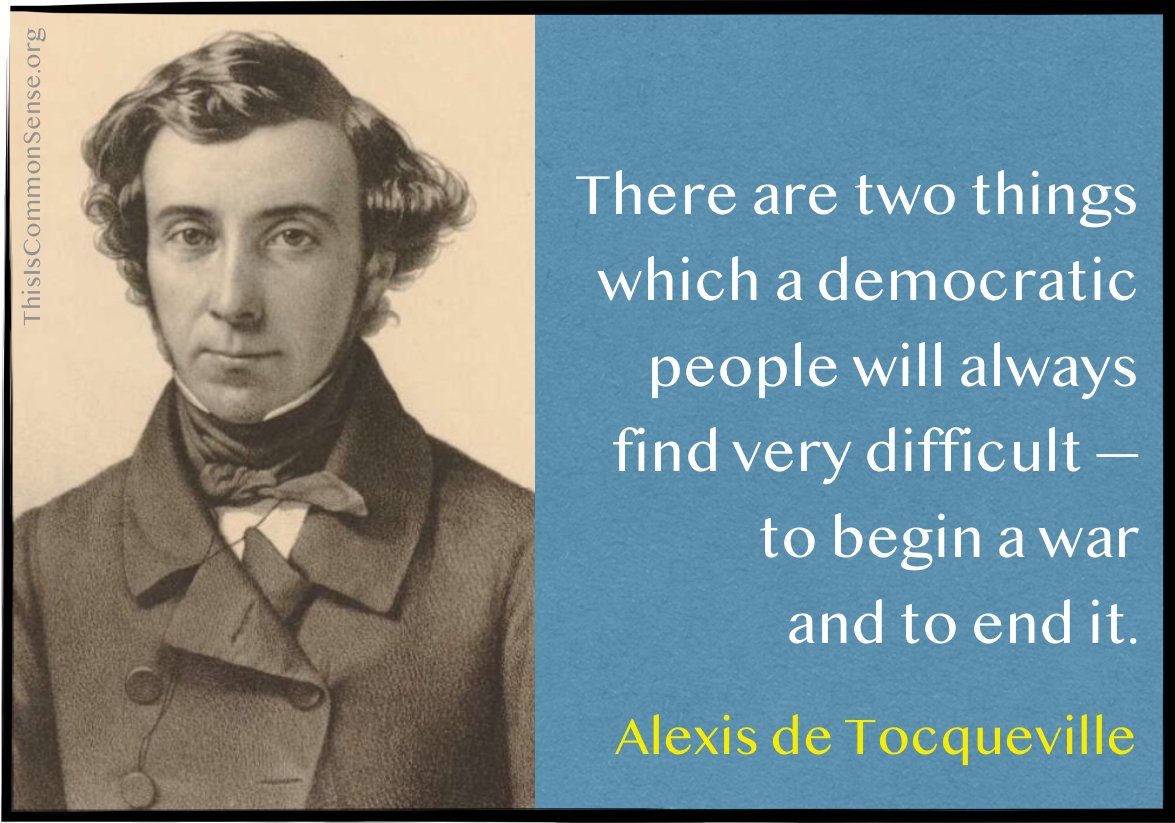
There are two things which a democratic people will always find very difficult — to begin a war and to end it.
Alexis de Tocqueville, Democracy in America, Vol. II (1840), Book Three, Chapter XXII.
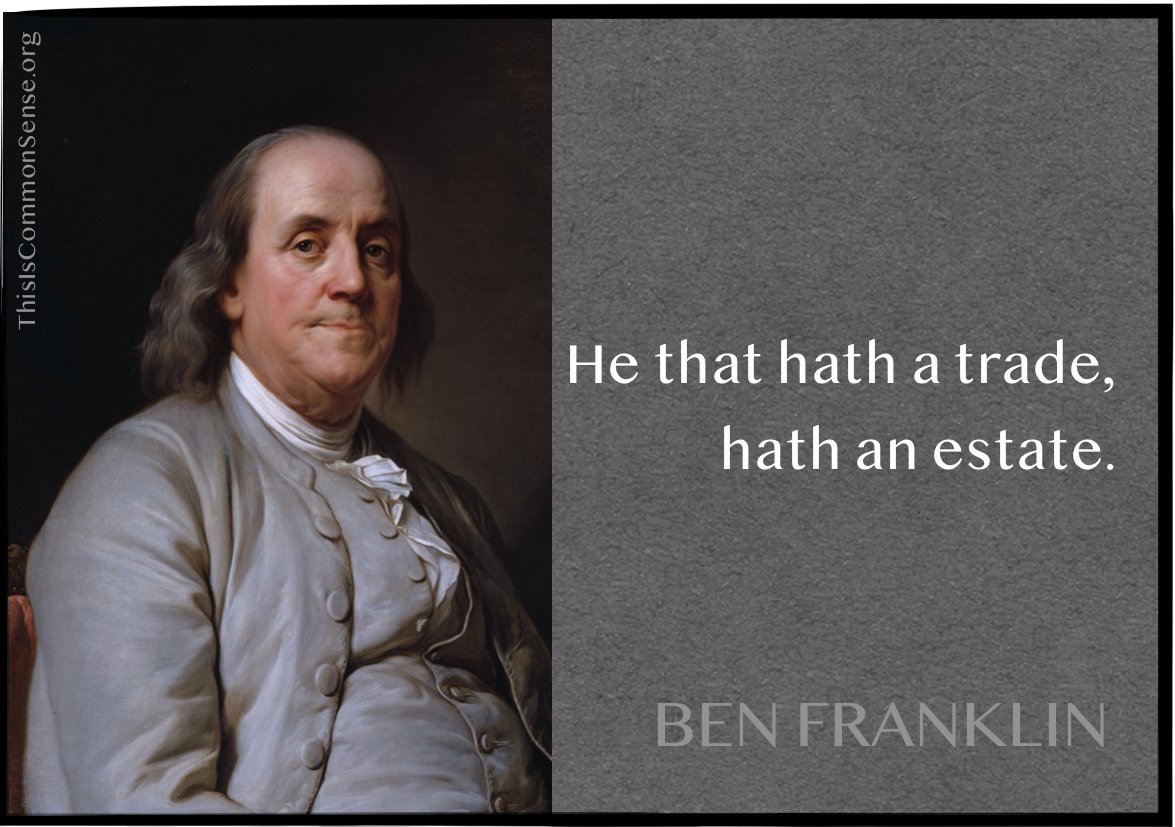
He that hath a trade, hath an estate.
Benjamin Franklin, in Poor Richard’s Almanack (1772).
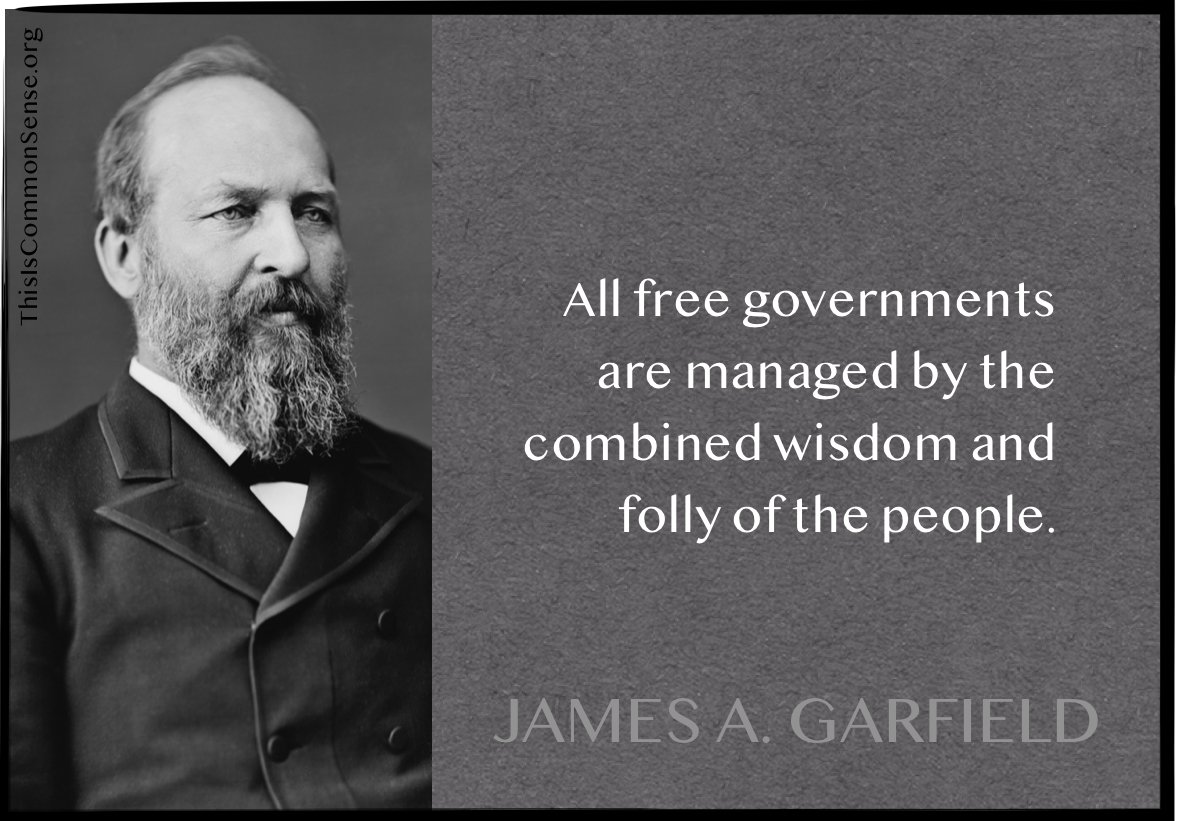
All free governments are managed by the combined wisdom and folly of the people.
James A. Garfield, 20th president of the United States, as quoted in Many Thoughts of Many Minds: A Treasury of Quotations from the Literature of Every Land and Every Age (1896), edited by Louis Klopsch, p. 116.