La liberté n’est pas un échange, c’est la liberté.
Freedom is not an exchange — it is freedom.
André Malraux, La condition humaine [Man’s Fate] (1933).
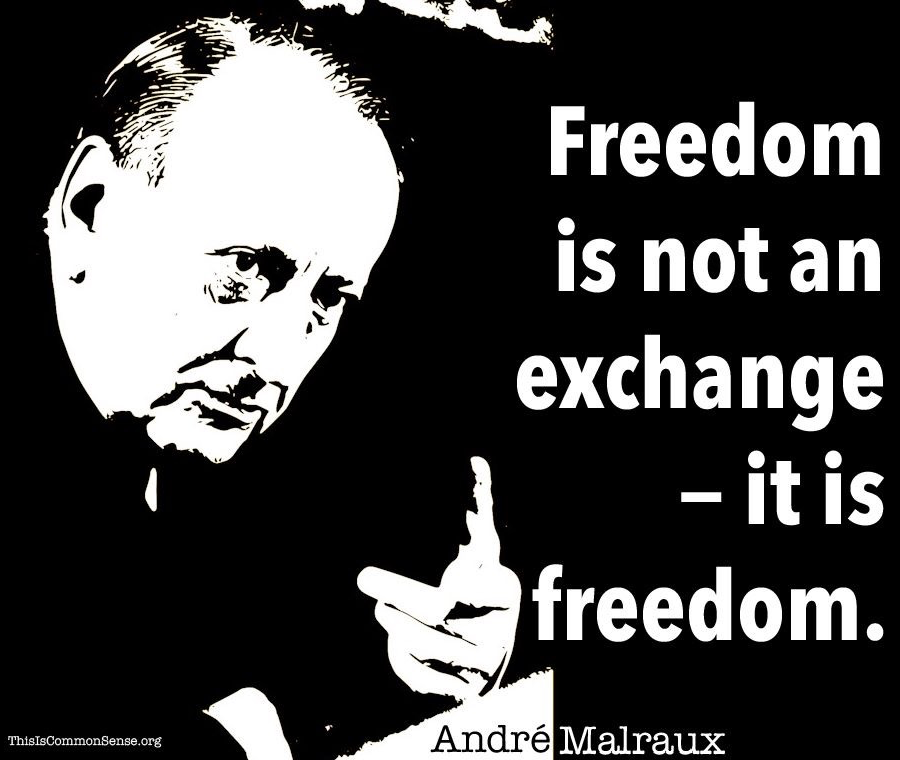
La liberté n’est pas un échange, c’est la liberté.
Freedom is not an exchange — it is freedom.
André Malraux, La condition humaine [Man’s Fate] (1933).
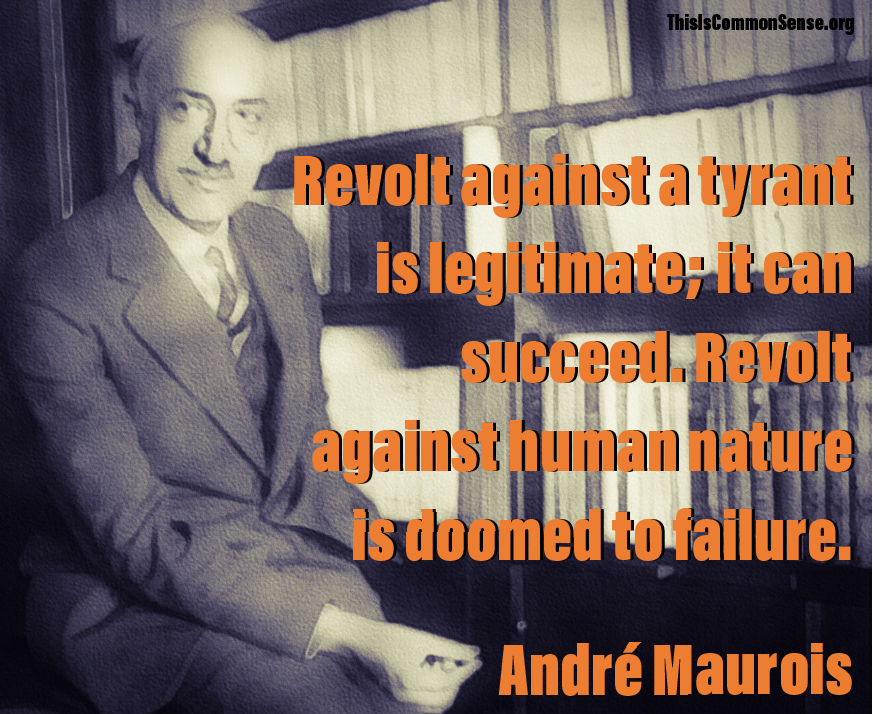
Revolt against a tyrant is legitimate; it can succeed. Revolt against human nature is doomed to failure.
André Maurois, Un Art de Vivre (The Art of Living) (1939).
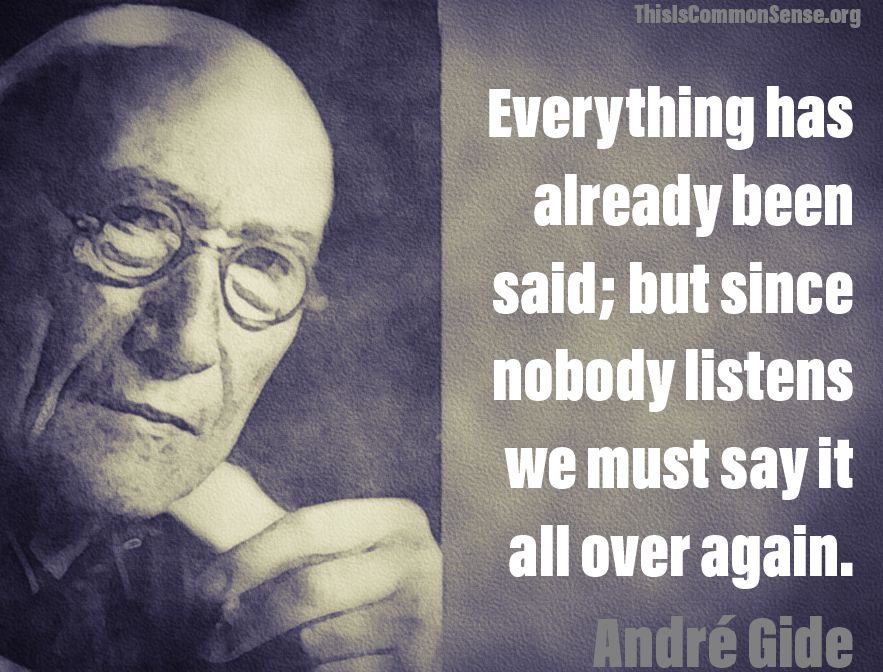
Toutes choses sont dites déjà; mais comme
personne n’écoute, il faut toujours recommencer.
Everything has already been said; but since nobody listens we must say it all over again.
André Gide, Le Traité du Narcisse (Théorie du Symbole).
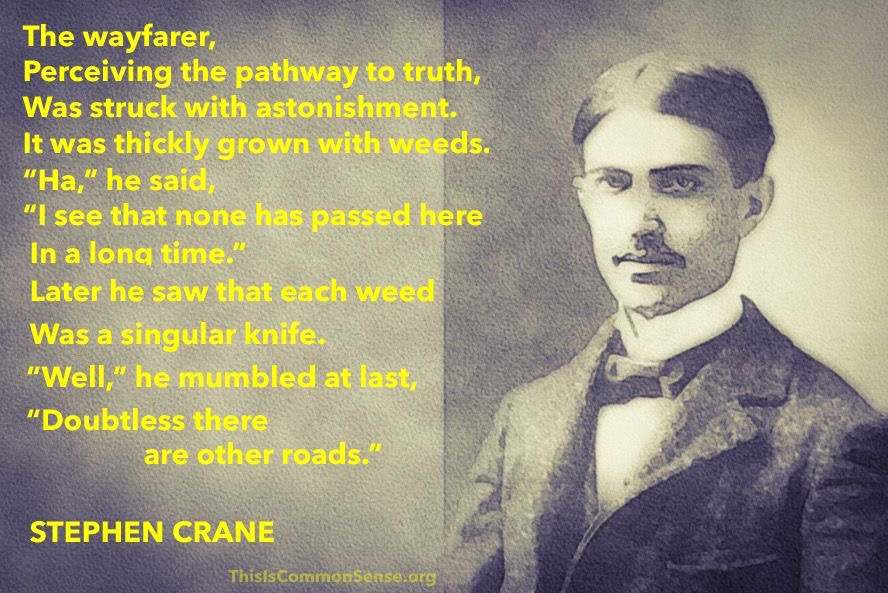
The wayfarer,
Stephen Crane, from War Is Kind and Other Lines (1899).
Perceiving the pathway to truth,
Was struck with astonishment.
It was thickly grown with weeds.
“Ha,” he said,
“I see that none has passed here
In a long time.”
Later he saw that each weed
Was a singular knife.
“Well,” he mumbled at last,
“Doubtless there are other roads.”
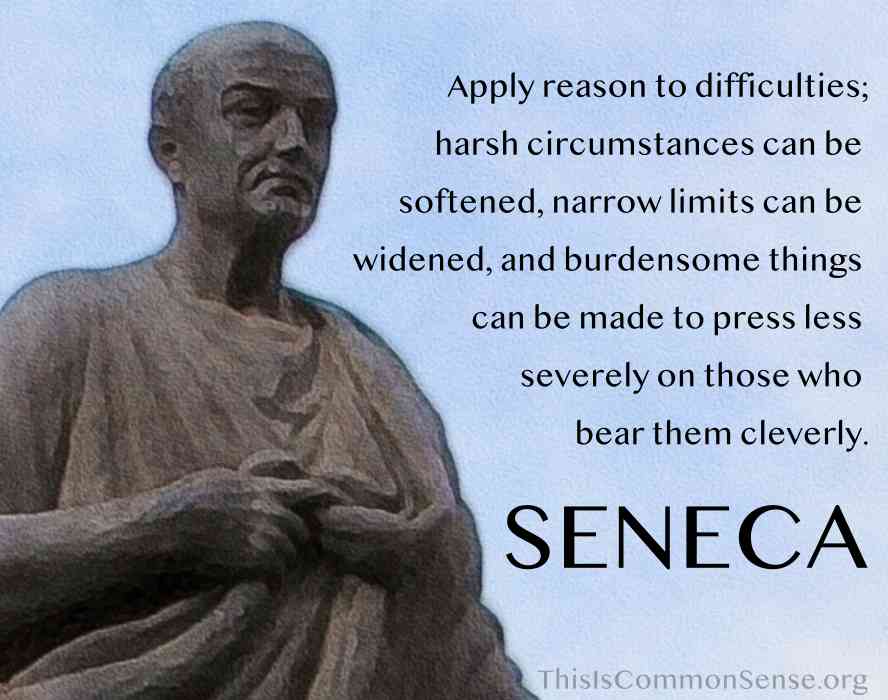
Apply reason to difficulties; harsh circumstances can be softened, narrow limits can be widened, and burdensome things can be made to press less severely on those who bear them cleverly.
Seneca, epistle to Serenus — translated and published as Tranquillity of Mind and Providence (1900) by William Bell Langsdorf.
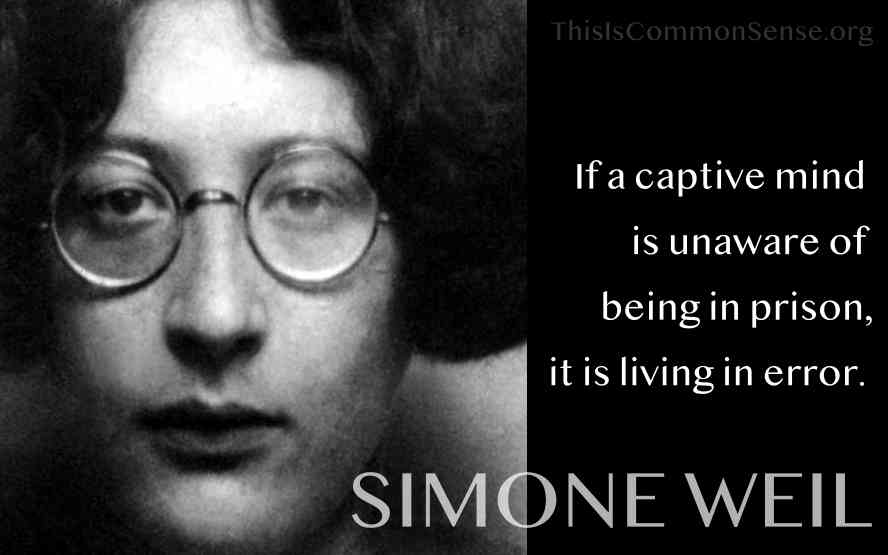
If a captive mind is unaware of being in prison, it is living in error. If it has recognized the fact, even for the tenth of a second, and then quickly forgotten it in order to avoid suffering, it is living in falsehood. Men of the most brilliant intelligence can be born, live and die in error and falsehood. In them, intelligence is neither a good, nor even an asset. The difference between more or less intelligent men is like the difference between criminals condemned to life imprisonment in smaller or larger cells. The intelligent man who is proud of his intelligence is like a condemned man who is proud of his large cell.
Simone Weil, Human Personality (1943), p. 69.
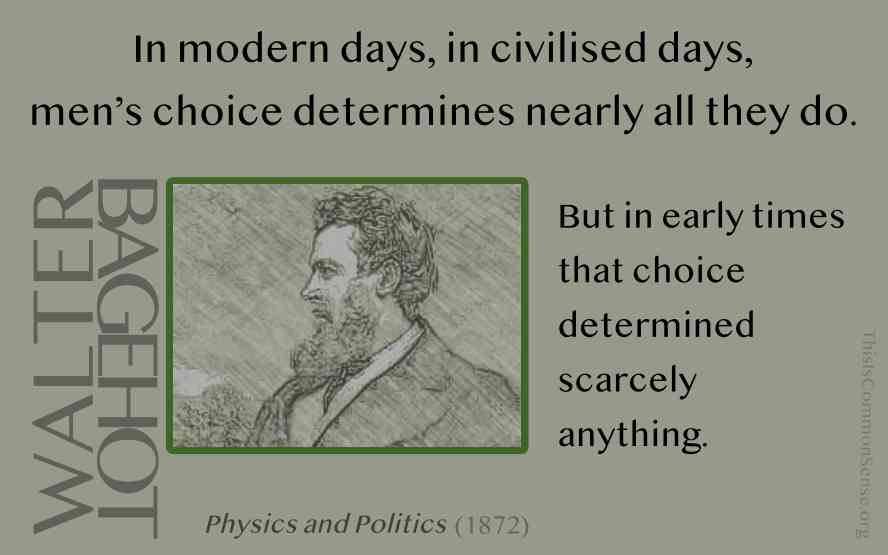
In modern days, in civilised days, men’s choice determines nearly all they do. But in early times that choice determined scarcely anything.
Walter Bagehot, Physics and Politics (1872), p. 29.
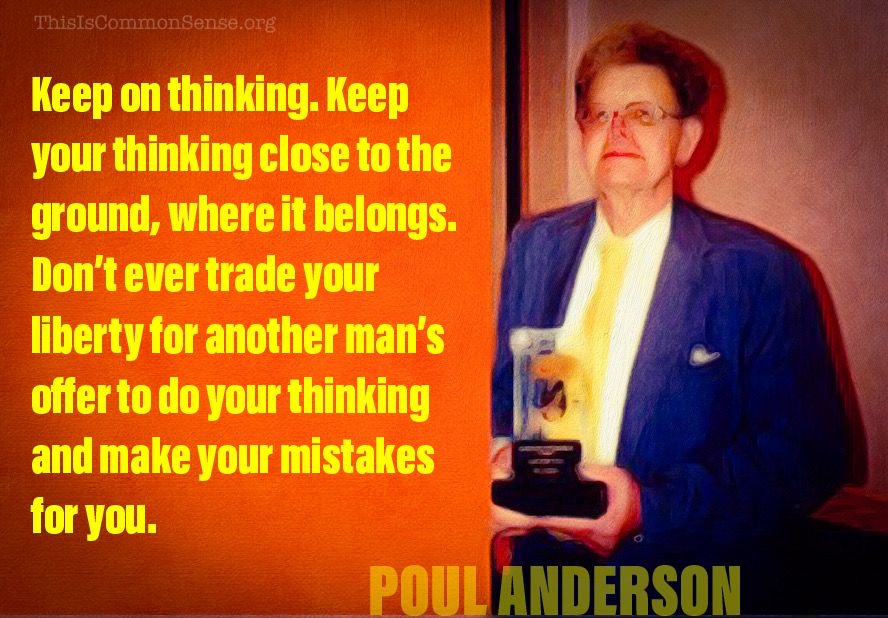
Poul Anderson, Brain Wave (1954), Chapter 3 (p. 25).
Keep on thinking. Keep your thinking close to the ground, where it belongs. Don’t ever trade your liberty for another man’s offer to do your thinking and make your mistakes for you.

It is not religion but revolution which is the opium of the people.
Simone Weil, Gravity and Grace (1947; 1972), p. 140.
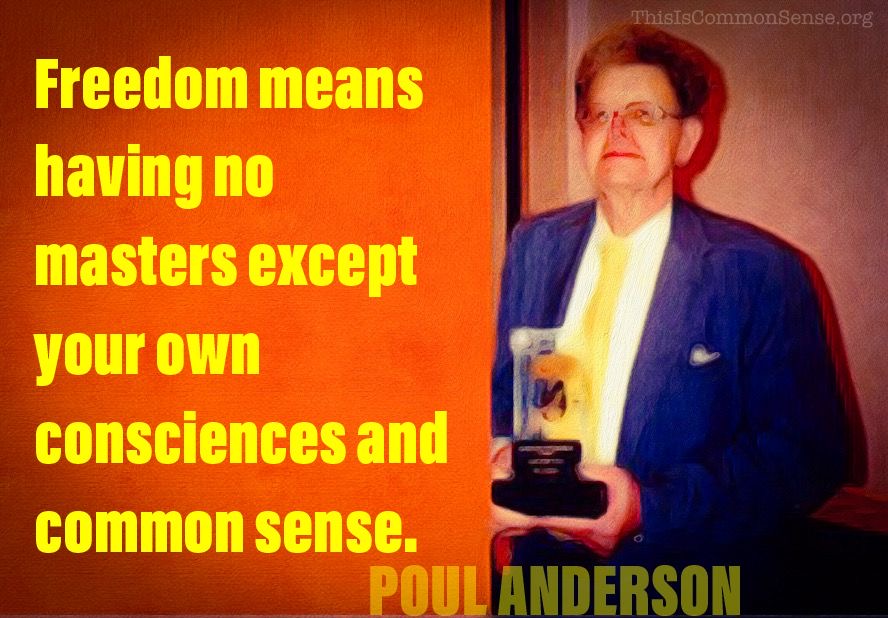
[F]reedom means having no masters except your own consciences and common sense.
Poul Anderson, The Stars Are Also Fire (1994), p. 16.