Take nothing on its looks; take everything on evidence. There’s no better rule.
Mr. Jaggers in Charles Dickens’s Great Expectations (1860-61), Chapter 40.
Categories
Charles Dickens
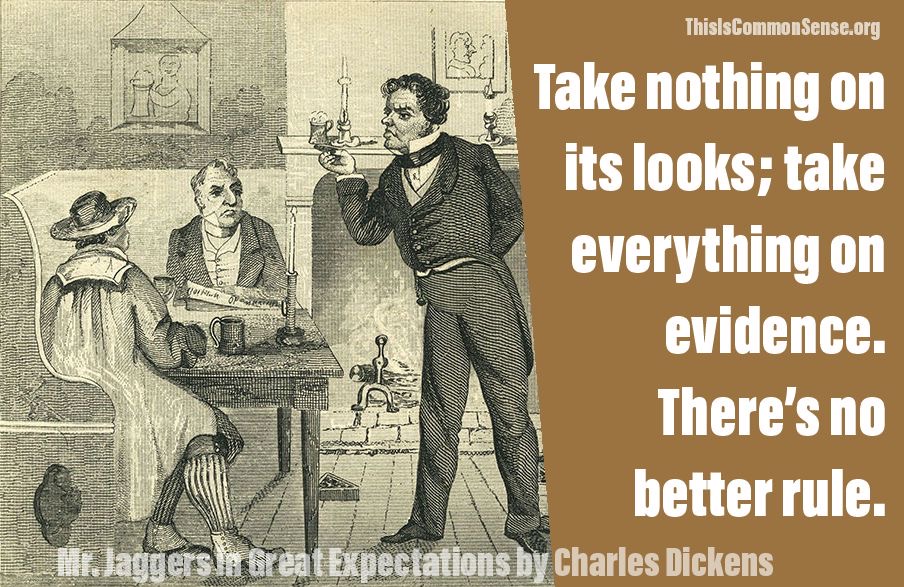
Take nothing on its looks; take everything on evidence. There’s no better rule.
Mr. Jaggers in Charles Dickens’s Great Expectations (1860-61), Chapter 40.
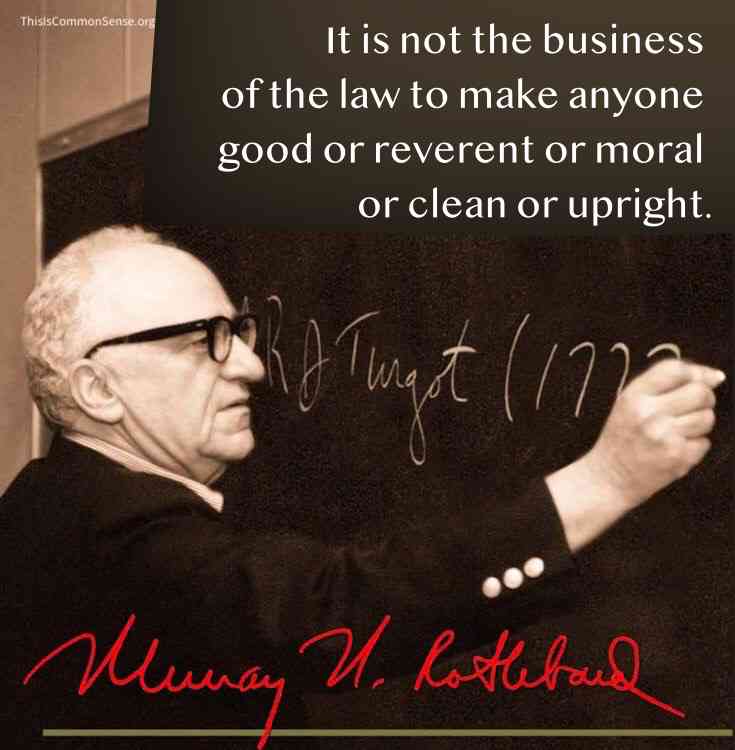
It is not the business of the law to make anyone good or reverent or moral or clean or upright.
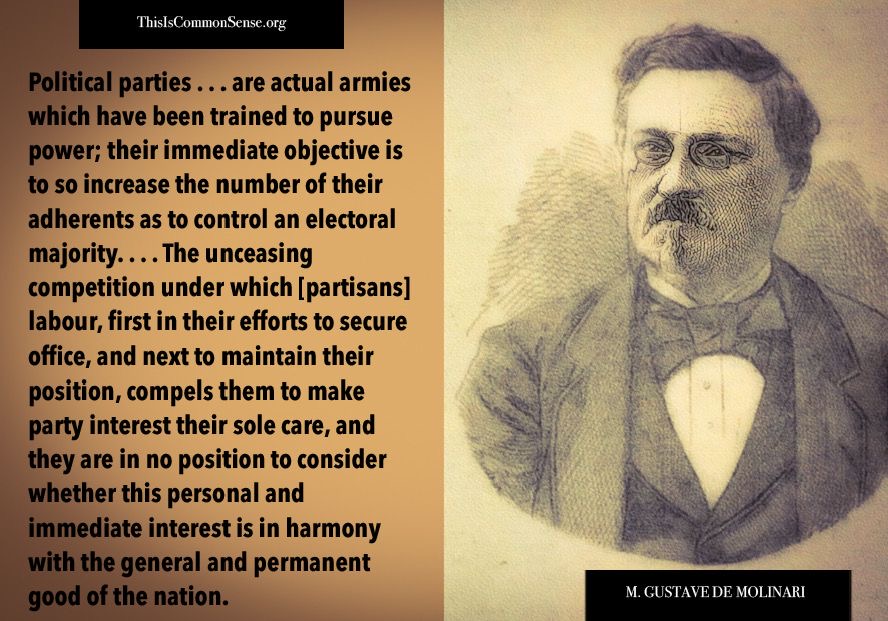
Gustave de Molinari, The Society of To-morrow (1904).
These associations, or political parties, are actual armies which have been trained to pursue power; their immediate objective is to so increase the number of their adherents as to control an electoral majority. Influential electors are for this purpose promised such or such share in the profits which will follow success, but such promises — generally place or privilege — are redeemable only by a multiplication of ‘places,’ which involves a corresponding increase of national enterprises, whether of war or of peace. It is nothing to a politician that the result is increased charges and heavier drains on the vital energy of the people. The unceasing competition under which they labour, first in their efforts to secure office, and next to maintain their position, compels them to make party interest their sole care, and they are in no position to consider whether this personal and immediate interest is in harmony with the general and permanent good of the nation.
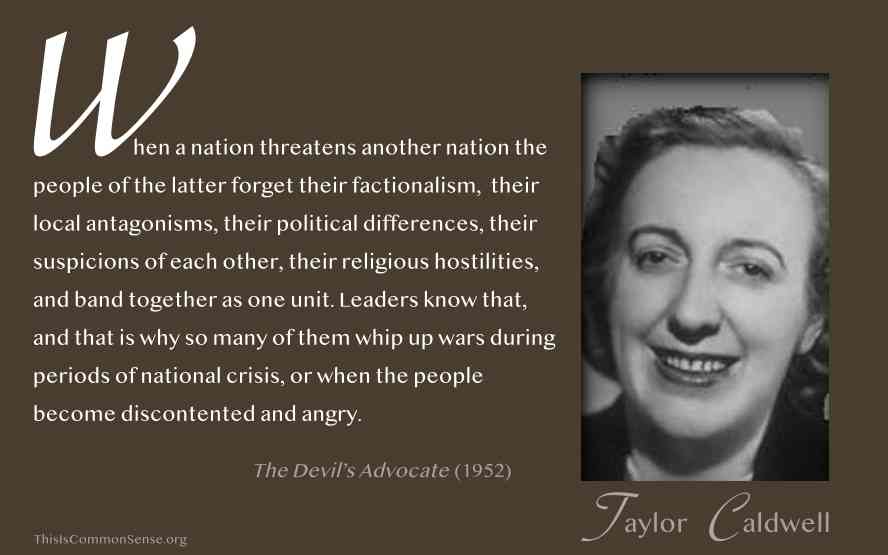
You see, when a nation threatens another nation the people of the latter forget their factionalism, their local antagonisms, their political differences, their suspicions of each other, their religious hostilities, and band together as one unit. Leaders know that, and that is why so many of them whip up wars during periods of national crisis, or when the people become discontented and angry. The leaders stigmatize the enemy with every vice they can think of, every evil and human depravity. They stimulate their people’s natural fear of all other men by channeling it into a defined fear of just certain men, or nations. Attacking another nation, then, acts as a sort of catharsis, temporarily, on men’s fear of their immediate neighbors. This is the explanation of all wars, all racial and religious hatreds, all massacres, and all attempts at genocide.
Taylor Caldwell, The Devil’s Advocate (1952).
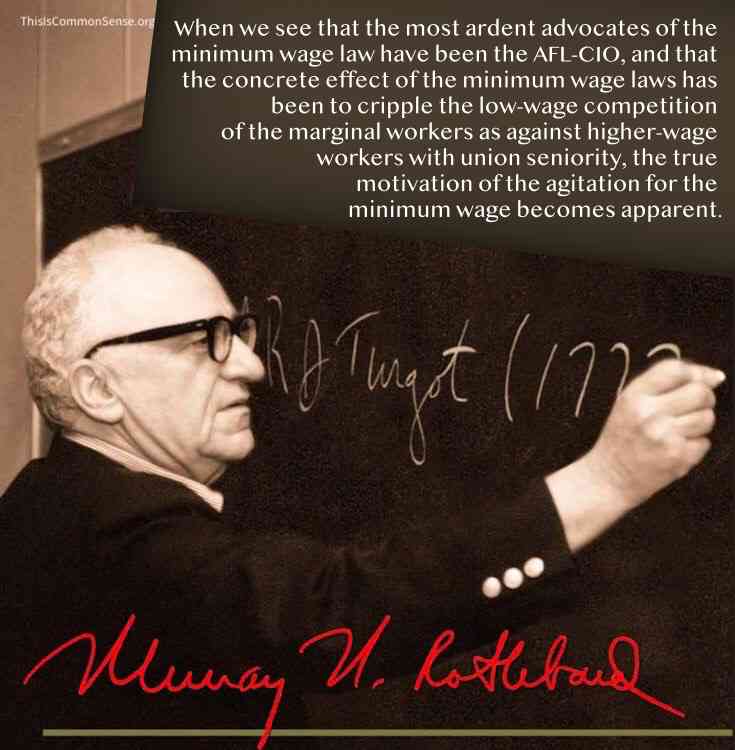
When we see that the most ardent advocates of the minimum wage law have been the AFL-CIO, and that the concrete effect of the minimum wage laws has been to cripple the low-wage competition of the marginal workers as against higher-wage workers with union seniority, the true motivation of the agitation for the minimum wage becomes apparent.
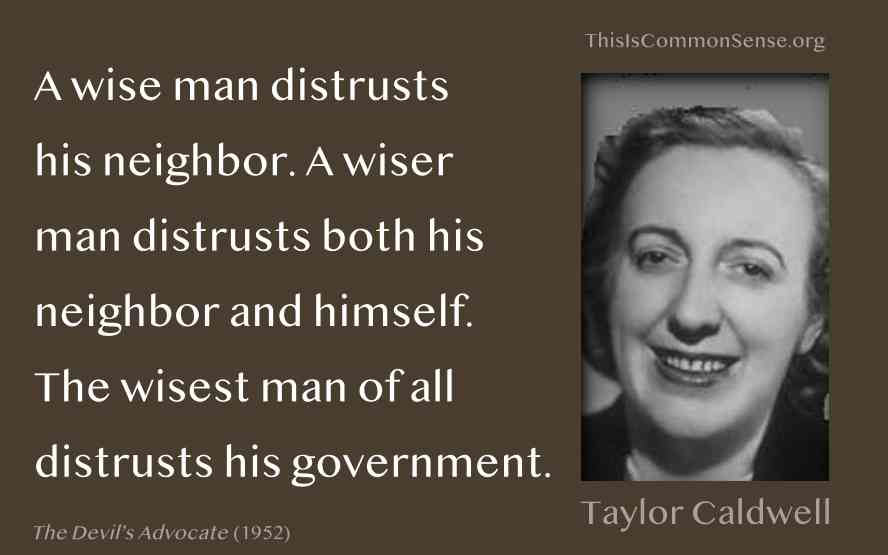
A wise man distrusts his neighbor. A wiser man distrusts both his neighbor and himself. The wisest man of all distrusts his government.
Taylor Caldwell, The Devil’s Advocate (1952).
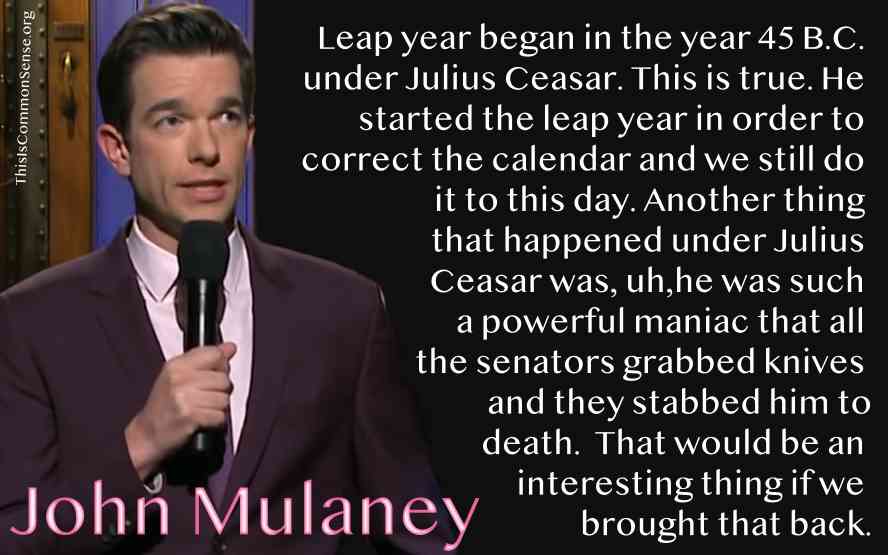
Leap year began in the year 45 B.C. under Julius Ceasar. This is true. He started the leap year in order to correct the calendar and we still do it to this day. Another thing that happened under Julius Ceasar was, uh, he was such a powerful maniac that all the senators grabbed knives and they stabbed him to death. That would be an interesting thing if we brought that back.
John Mulaney, Saturday Night Live monologue for February 29, 2020.
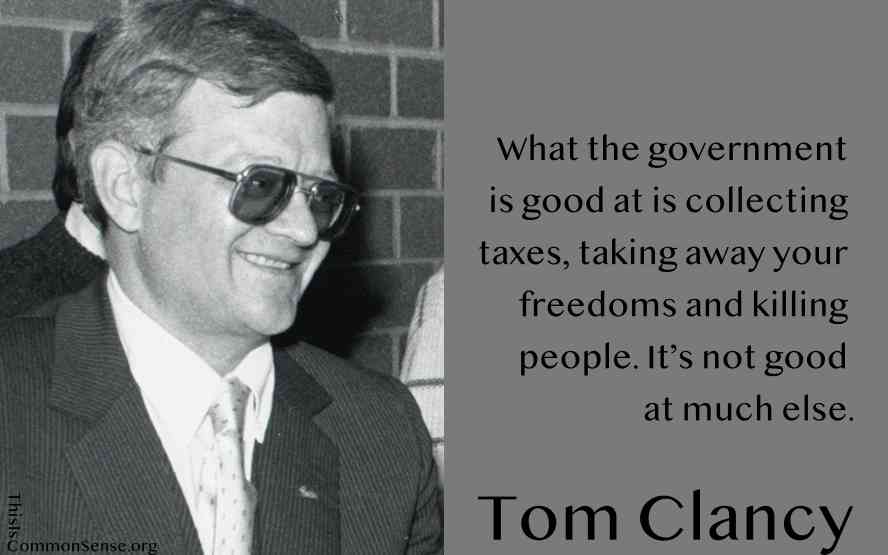
What the government is good at is collecting taxes, taking away your freedoms and killing people. It’s not good at much else.
Thriller-writer Tom Clancy, Kudlow & Cramer interview (September 2, 2003).
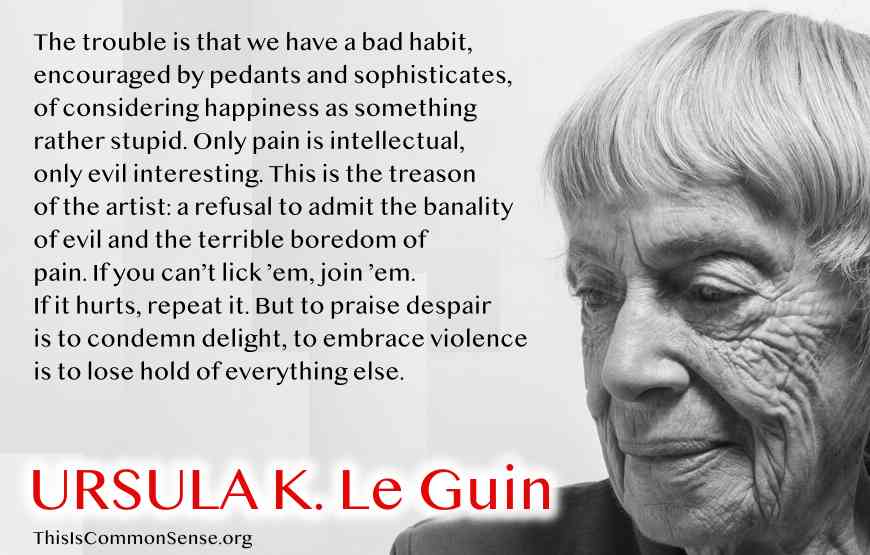
The trouble is that we have a bad habit, encouraged by pedants and sophisticates, of considering happiness as something rather stupid. Only pain is intellectual, only evil interesting. This is the treason of the artist: a refusal to admit the banality of evil and the terrible boredom of pain. If you can’t lick ’em, join ’em. If it hurts, repeat it. But to praise despair is to condemn delight, to embrace violence is to lose hold of everything else.
Ursula K. Le Guin, The Ones Who Walk Away from Omelas in New Dimensions 3, Robert Silverberg, editor.
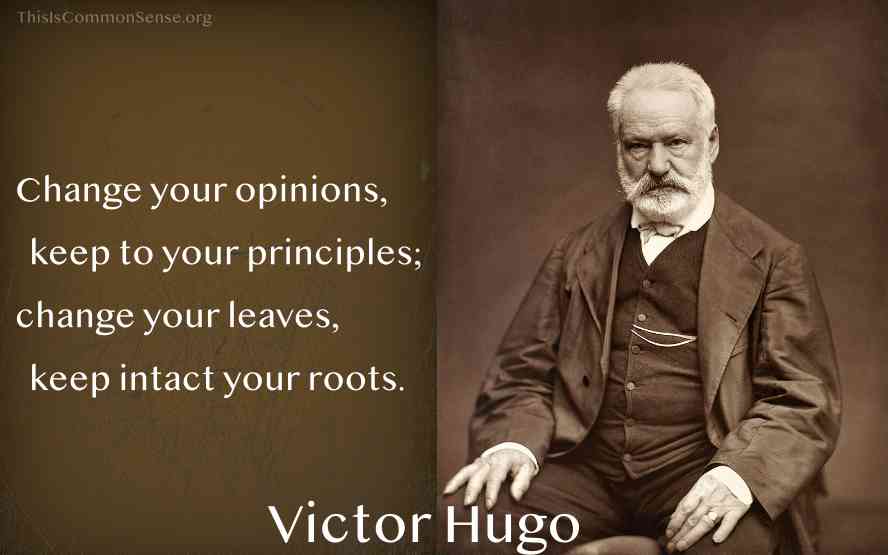
Change your opinions, keep to your principles; change your leaves, keep intact your roots.
Victor Hugo, “Thoughts,” Postscriptum de ma vie, in Victor Hugo’s Intellectual Autobiography, Funk and Wagnalls (1907) as translated by Lorenzo O’Rourke.