Categories
Thought

Robert Sheckley

It is not very logical to look over the attributes you possess and then declare that they are the most important attributes in the universe.

Robert Sheckley, “In a Land of Clear Colors,” published in Thomas M. Disch, editor, New Constellations: An Anthology of Tomorrow’s Mythologies (1976), p. 87.
Categories
Thought

Paul Ricœur

If it is true that there is always more than one way of construing a text, it is not true that all interpretations are equal.

Paul Ricœur, “Interpretation Theory: Discourse and the Surplus of Meaning” (1976), p. 79.
Categories
Thought

Edward de Bono

There isn’t just one point; it takes time to learn. You don’t have to be intelligent, but I think you have to be open to possibilities and willing to explore. The only stupid people are those who are arrogant and closed off.

Edward de Bono, as interviewed by Angela Balakrishnan in “Edward de Bono: ‘Iraq? They just need to think it through,’” The Guardian (Monday, April 23, 2007).
Categories
Thought

Iris Murdoch

Happiness is a matter of one’s most ordinary everyday mode of consciousness being busy and lively and unconcerned with self. To be damned is for one’s ordinary everyday mode of consciousness to be unremitting agonising preoccupation with self.

Iris Murdoch, The Nice and the Good (1968).
Categories
Thought

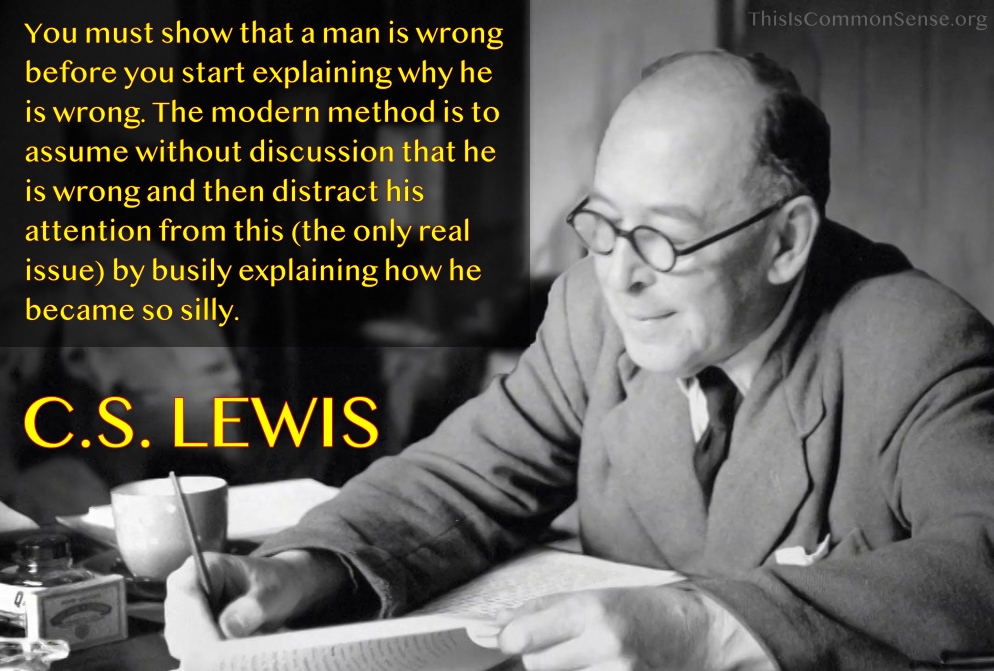
C. S. Lewis

You must show that a man is wrong before you start explaining why he is wrong. The modern method is to assume without discussion that he is wrong and then distract his attention from this (the only real issue) by busily explaining how he became so silly.

C. S. Lewis, “Bulverism,” reprinted in God in the Dock (1970).
Categories
Thought

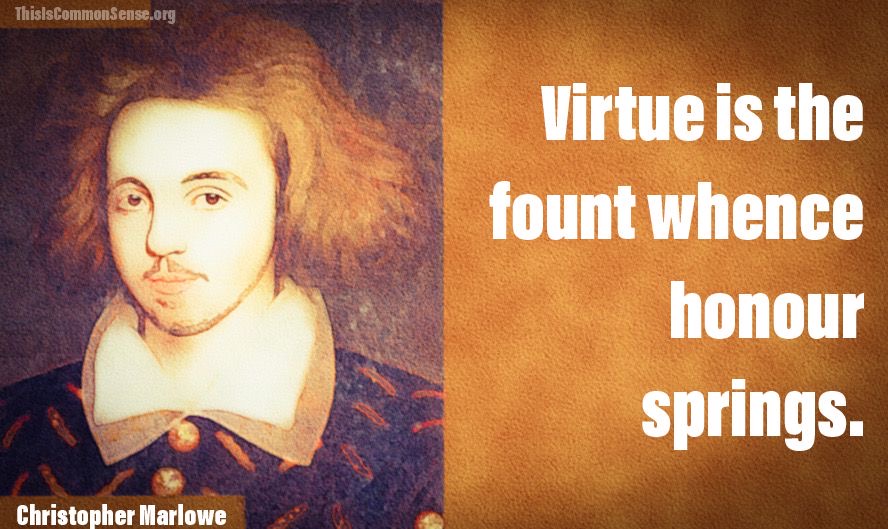
Kit Marlowe

Virtue is the fount whence honour springs.

Christopher Marlowe’s Tamburlaine the Great, Part I. IV. iv.
Categories
Thought

Edward de Bono

You cannot dig a hole in a different place by digging the same hole deeper.

Edward de Bono, Lateral Thinking : Creativity Step by Step (1970), p. 8.
Categories
Thought

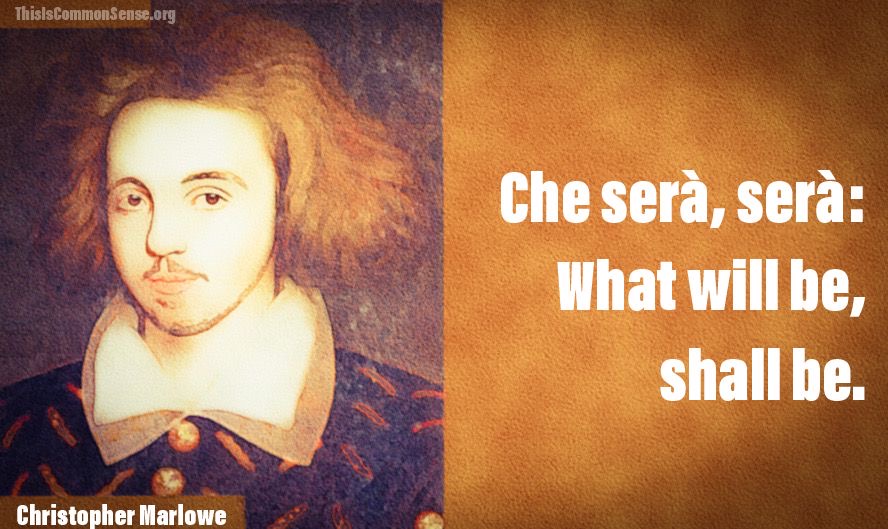
Kit Marlowe

Che serà, serà:
What will be, shall be.

Christopher Marlowe’s Faustus, Act I, scene i, lines 47–58.
Categories
Thought

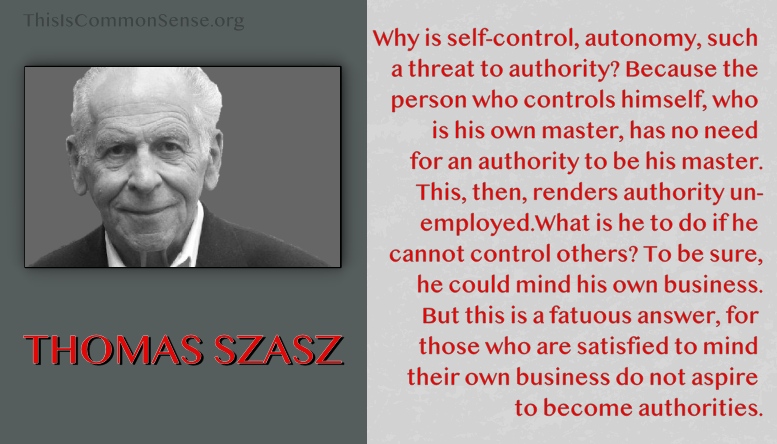
Thomas Szasz

Why is self-control, autonomy, such a threat to authority? Because the person who controls himself, who is his own master, has no need for an authority to be his master. This, then, renders authority unemployed. What is he to do if he cannot control others? To be sure, he could mind his own business. But this is a fatuous answer, for those who are satisfied to mind their own business do not aspire to become authorities.

Thomas Szasz, Ceremonial Chemistry (1974; Revised edition, 1985) p. 175.
Categories
Thought

Leszek Kołakowski

A modern philosopher who has never once suspected himself of being a charlatan must be such a shallow mind that his work is probably not worth reading.

Leszek Kołakowski, Metaphysical Horror (1988).