Ethics is the triumph of freedom over facticity.
Simone de Beauvoir, The Ethics of Ambiguity (1948), p. 44.
Categories
Simone de Beauvoir
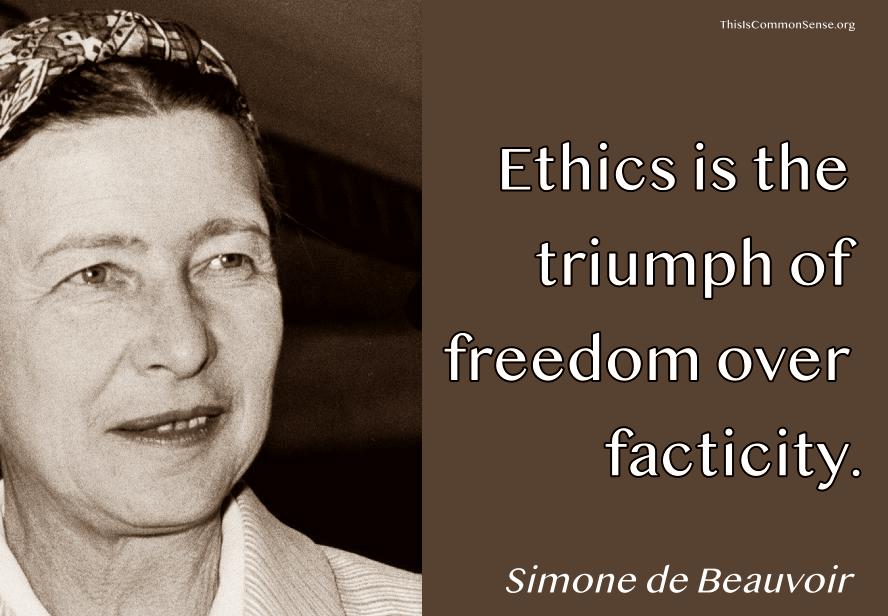
Ethics is the triumph of freedom over facticity.
Simone de Beauvoir, The Ethics of Ambiguity (1948), p. 44.
Poverty is the lack of many things, but avarice is the lack of all things.
Publilius Syrus, from the Sententiae.
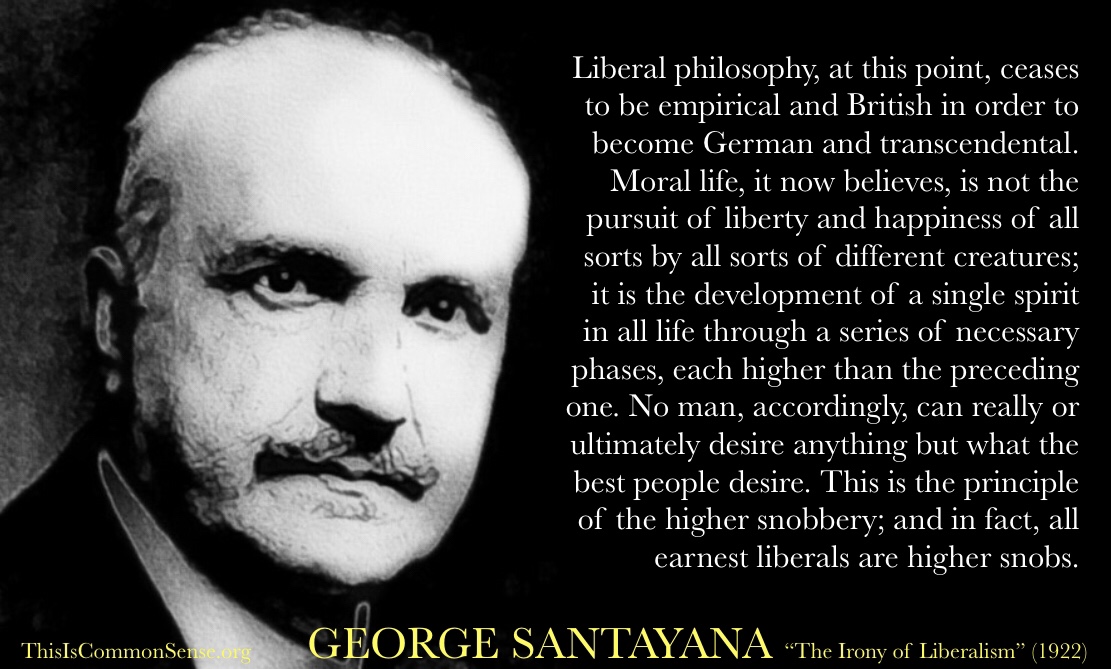
Liberal philosophy, at this point, ceases to be empirical and British in order to become German and transcendental. Moral life, it now believes, is not the pursuit of liberty and happiness of all sorts by all sorts of different creatures; it is the development of a single spirit in all life through a series of necessary phases, each higher than the preceding one. No man, accordingly, can really or ultimately desire anything but what the best people desire. This is the principle of the higher snobbery; and in fact, all earnest liberals are higher snobs.
George Santayana, “The Irony of Liberalism,” Soliloquies in England and Later Soliloquies (1922).
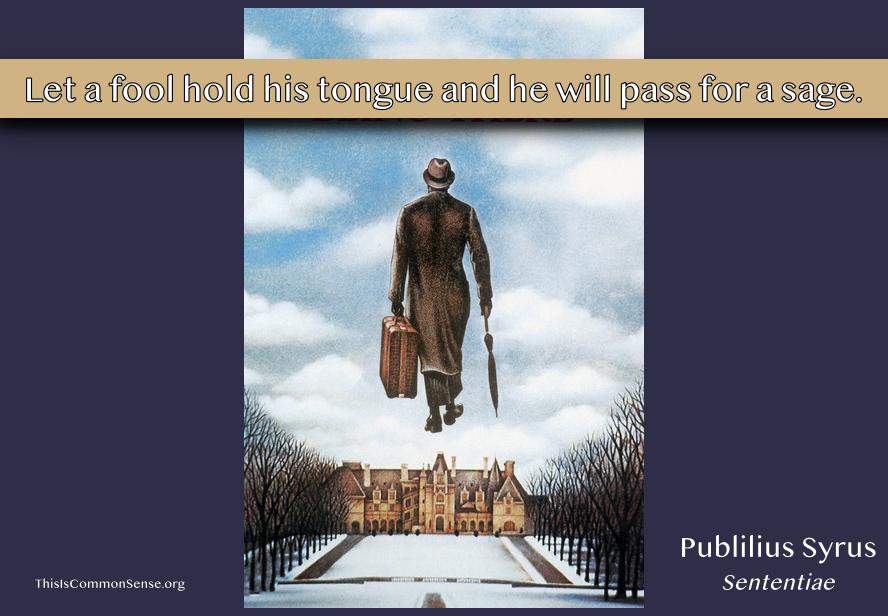
Let a fool hold his tongue and he will pass for a sage.
Publilius Syrus, from the Sententiae. Image from the movie “Being There” (1979), from the novel by Jerzy Kosinski.
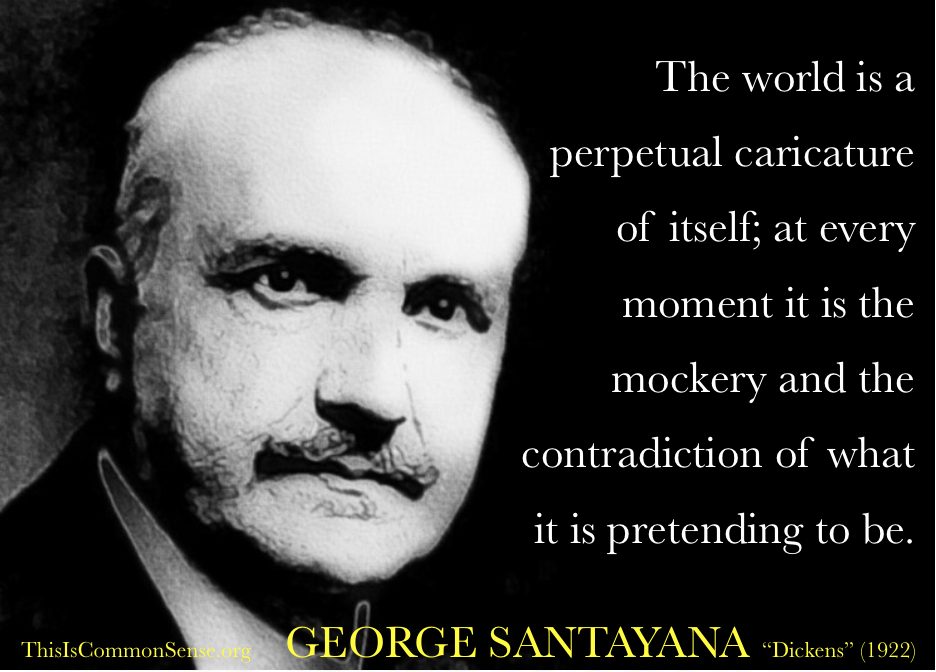
The world is a perpetual caricature of itself; at every moment it is the mockery and the contradiction of what it is pretending to be.
George Santayana, “Dickens,” Soliloquies in England and Later Soliloquies (1922).
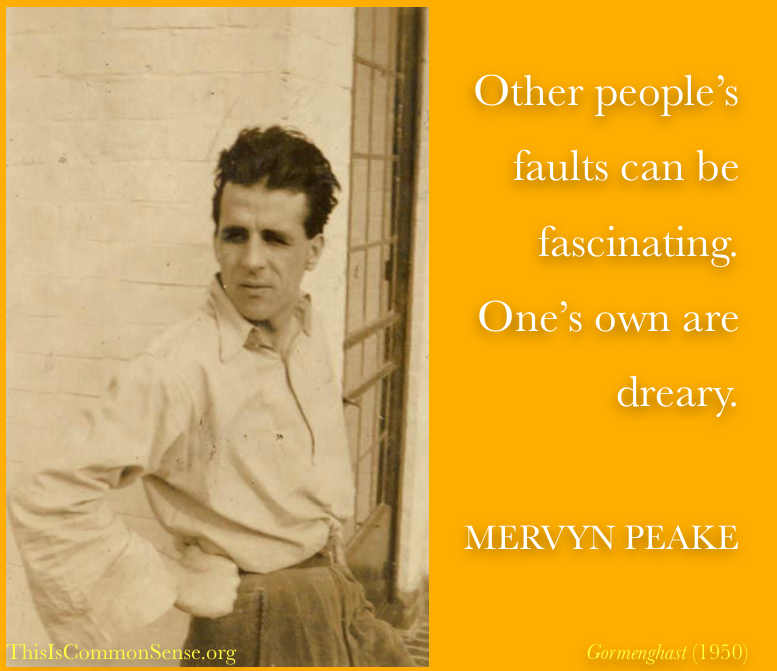
Other people’s faults can be fascinating. One’s own are dreary.
Mervyn Peake, Gormenghast (1950), Chapter 48.
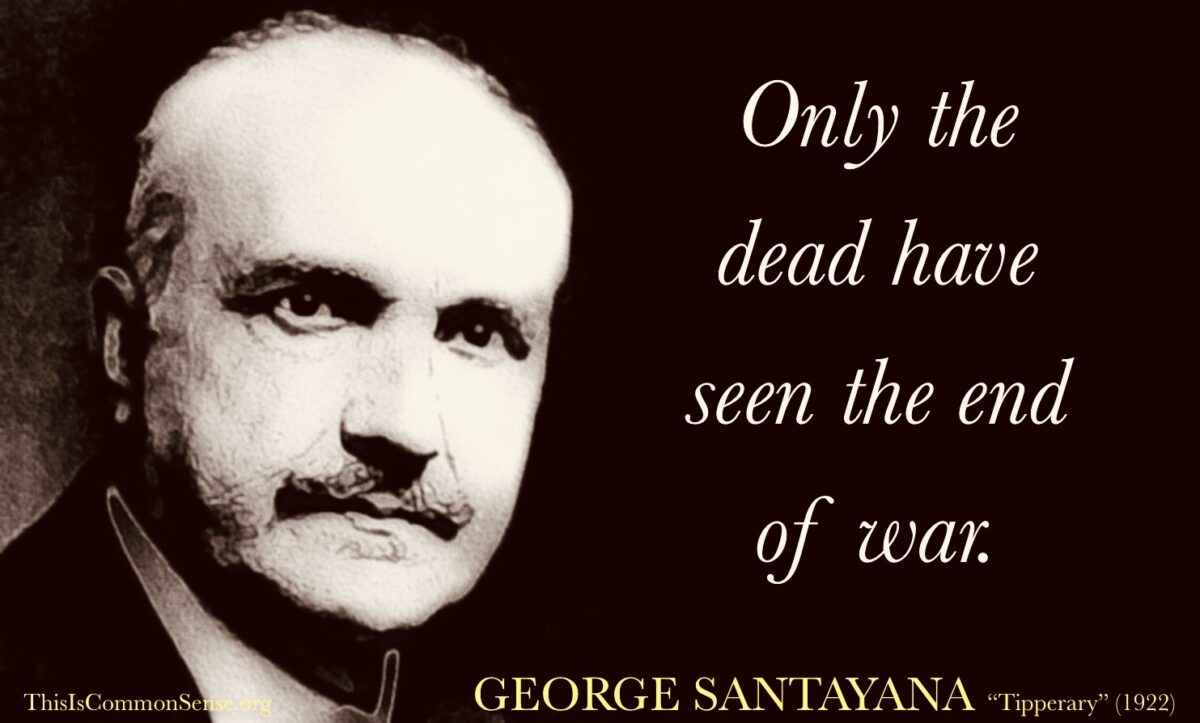
Only the dead have seen the end of war.
George Santayana, “Tipperary,” Soliloquies in England and Later Soliloquies (1922).
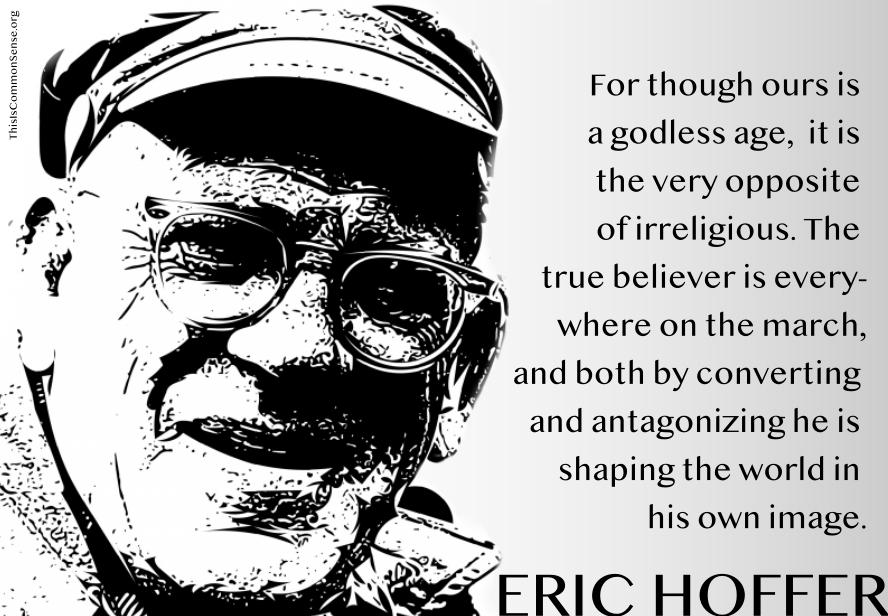
Eric Hoffer, The True Believer: Thoughts on the Nature of Mass Movements (1951), pp. 10-11.
For though ours is a godless age, it is the very opposite of irreligious. The true believer is everywhere on the march, and both by converting and antagonizing he is shaping the world in his own image.
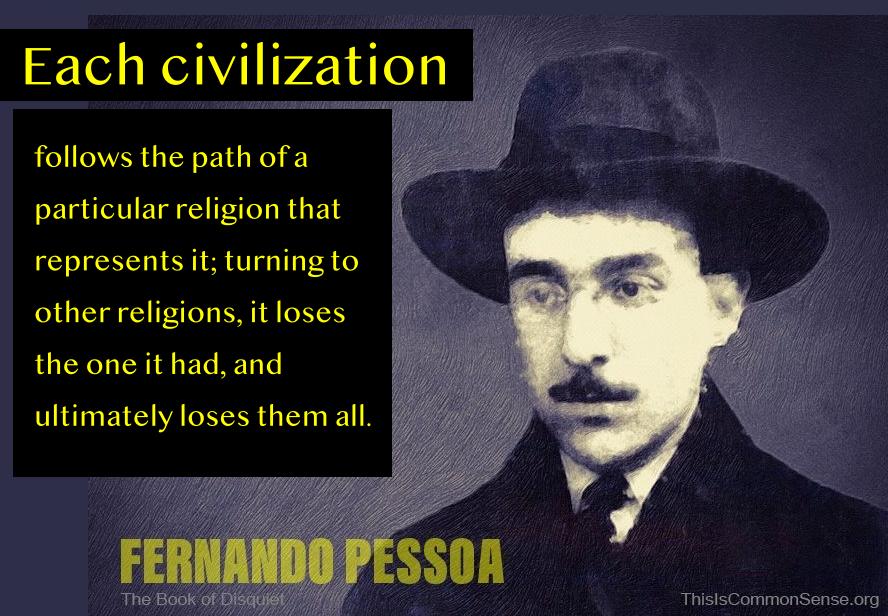
Each civilization follows the path of a particular religion that represents it; turning to other religions, it loses the one it had, and ultimately loses them all.
Fernando Pessoa (1888–1935), The Book of Disquiet (Livro do Desassossego: Composto por Bernardo Soares, ajudante de guarda-livros na cidade de Lisboa; translated by Richard Zenith based on the 1998 Assírio & Alvim edition, edited by Richard Zenith), §306.
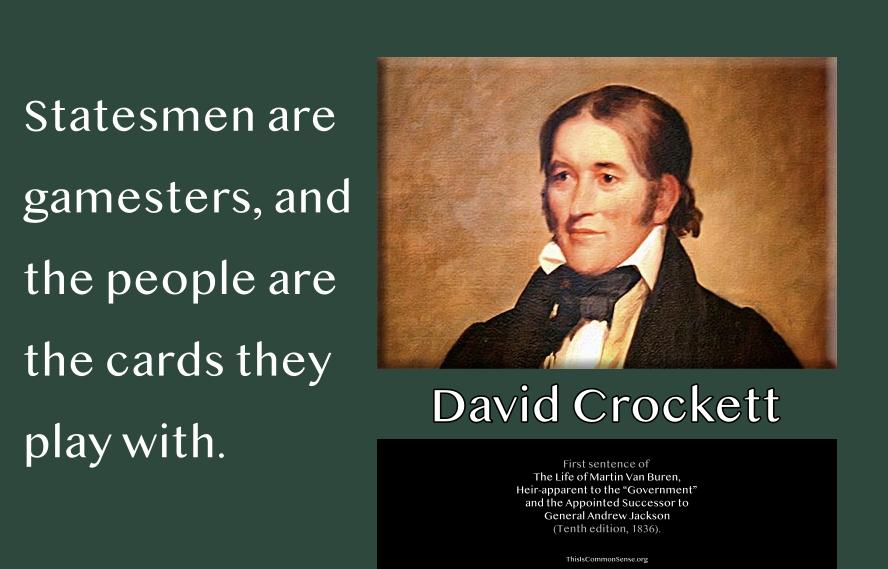
Statesmen are gamesters, and the people are the cards they play with.
David Crockett, first sentence of The Life of Martin Van Buren, Heir-apparent to the “Government” and the Appointed Successor to General Andrew Jackson (Tenth edition, 1836).