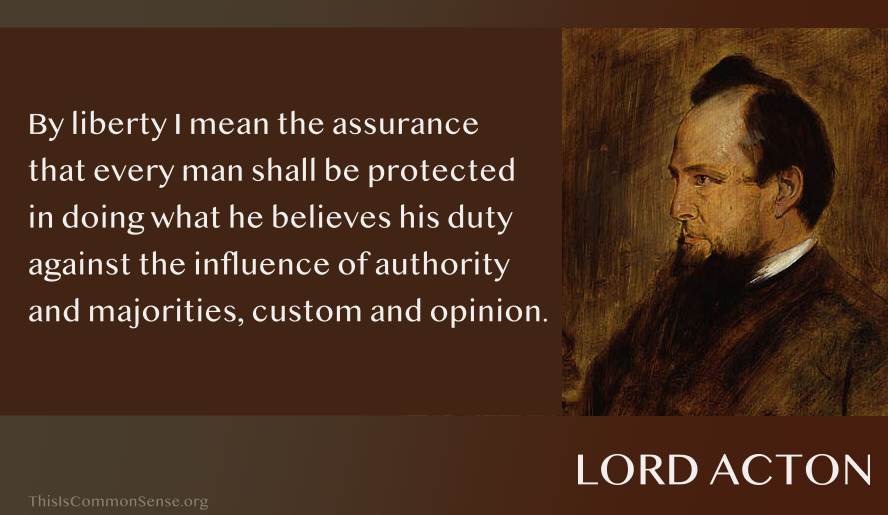
By liberty I mean the assurance that every man shall be protected in doing what he believes his duty against the influence of authority and majorities, custom and opinion.
Lord Acton, The History of Freedom in Antiquity (1877).
Lord Acton
By liberty I mean the assurance that every man shall be protected in doing what he believes his duty against the influence of authority and majorities, custom and opinion.
Lord Acton, The History of Freedom in Antiquity (1877).
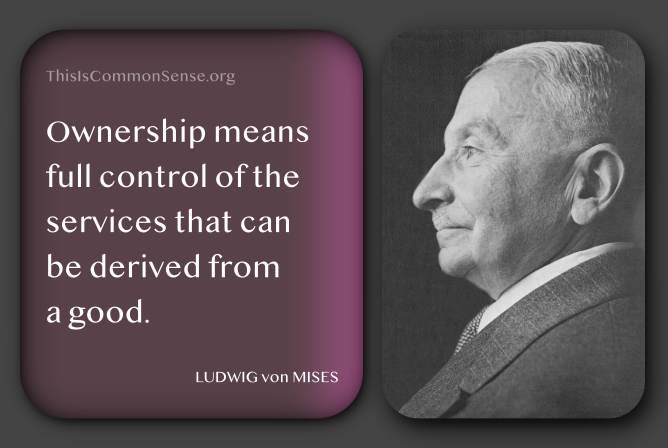
Ownership means full control of the services that can be derived from a good. This catallactic notion of ownership and property rights is not to be confused with the legal definition of ownership and property rights as stated in the laws of various countries. It was the idea of legislators and courts to define the legal concept of property in such a way as to give to the proprietor full protection by the governmental apparatus of coercion and compulsion, and to prevent anybody from encroaching upon his rights. As far as this purpose was adequately realized, the legal concept of property rights corresponded to the catallactic concept.
Ludwig von Mises (1881–1973), Human Action: A Treatise on Economics, Scholar’s Edition (1998), first edition published in 1949. “Catallactic” derives from “Catallactics,” a term invented by Richard Whately (1787–1863) as an improvement on “Political Economy”; “catallactic” means “pertaining to exchanges” (trade).
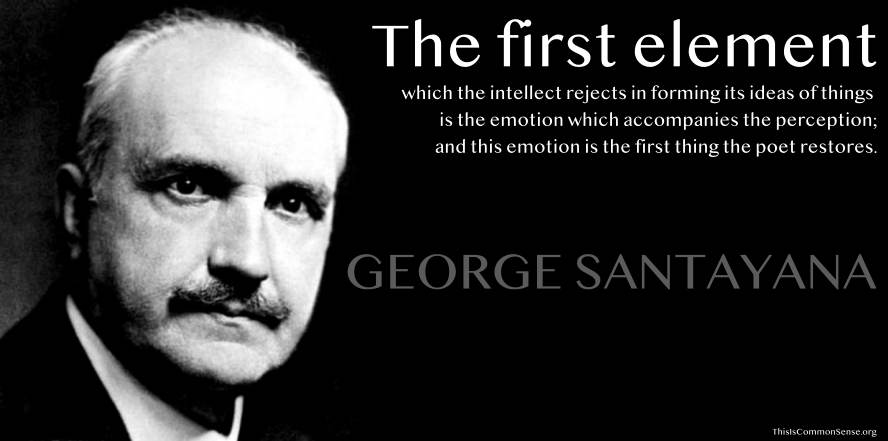
Out of the neglected riches of this dream the poet fetches his wares. He dips into the chaos that underlies the rational shell of the world and brings up some superfluous image, some emotion dropped by the way, and reattaches it to the present object; he reinstates things unnecessary, he emphasizes things ignored, he paints in again into the landscape the tints which the intellect has allowed to fade from it. If he seems sometimes to obscure a fact, it is only because he is restoring an experience. The first element which the intellect rejects in forming its ideas of things is the emotion which accompanies the perception; and this emotion is the first thing the poet restores.
George Santayana, “The Elements of Poetry,” in L. Pearsall Smith, editor, Little Essays Drawn from the Writings of George Santayana, as reprinted in Modern Essays (1921), Christopher Morley, editor.
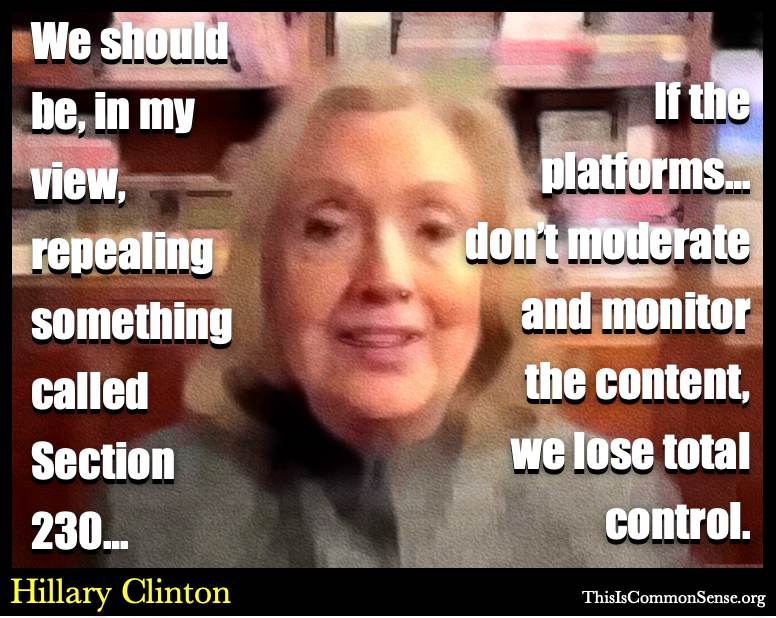
We should be, in my view, repealing something called Section 230, which gave, you know, platforms on the internet immunity because they were thought to be just pass-throughs, that they shouldn’t be judged for the content that is posted.
But we now know that that was an overly simple view, that if the platforms, whether it’s Facebook or Twitter/X or Instagram or TikTok, whatever they are, if they don’t moderate and monitor the content, we lose total control.
Hillary Clinton, talking to Smerconish on CNN about the need for online censorship,
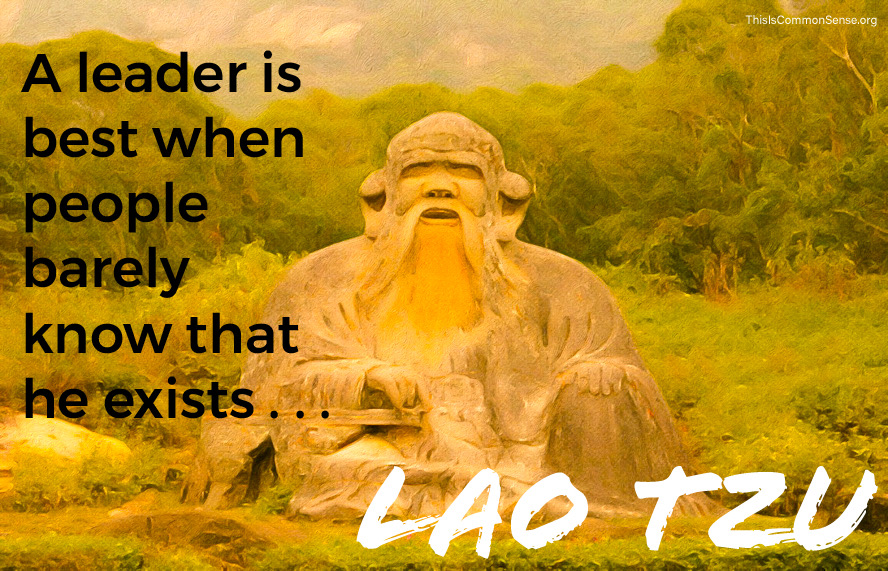
A leader is best when people barely know that he exists,
Lao Tzu, Tao Te Ching, chapter 17.
not so good when people obey and acclaim him,
worst when they despise him.
Fail to honor people,
They fail to honor you.
But of a good leader, who talks little,
when his work is done, his aims fulfilled,
they will all say,
‘We did this ourselves.’
Now this conjunction of an immense military establishment and a large arms industry is new in the American experience. The total influence — economic, political, even spiritual — is felt in every city, every Statehouse, every office of the Federal government. We recognize the imperative need for this development. Yet we must not fail to comprehend its grave implications. Our toil, resources, and livelihood are all involved. So is the very structure of our society. In the councils of government, we must guard against the acquisition of unwarranted influence, whether sought or unsought, by the military-industrial complex. The potential for the disastrous rise of misplaced power exists and will persist. We must never let the weight of this combination endanger our liberties or democratic processes. We should take nothing for granted. Only an alert and knowledgeable citizenry can compel the proper meshing of the huge industrial and military machinery of defense with our peaceful methods and goals, so that security and liberty may prosper together.
President Dwight D. Eisenhower, Farewell Address (January 17, 1961).
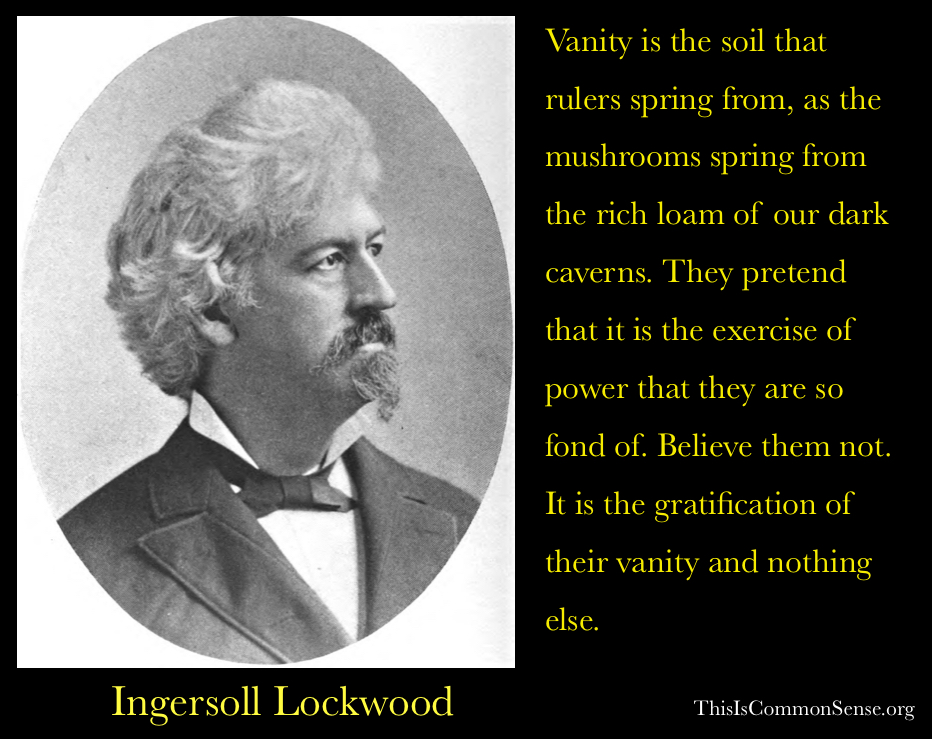
Vanity is the soil that rulers spring from, as the mushrooms spring from the rich loam of our dark caverns. They pretend that it is the exercise of power that they are so fond of. Believe them not. It is the gratification of their vanity and nothing else.
Ingersoll Lockwood, Baron Trump’s Marvelous Underground Journey (1889).
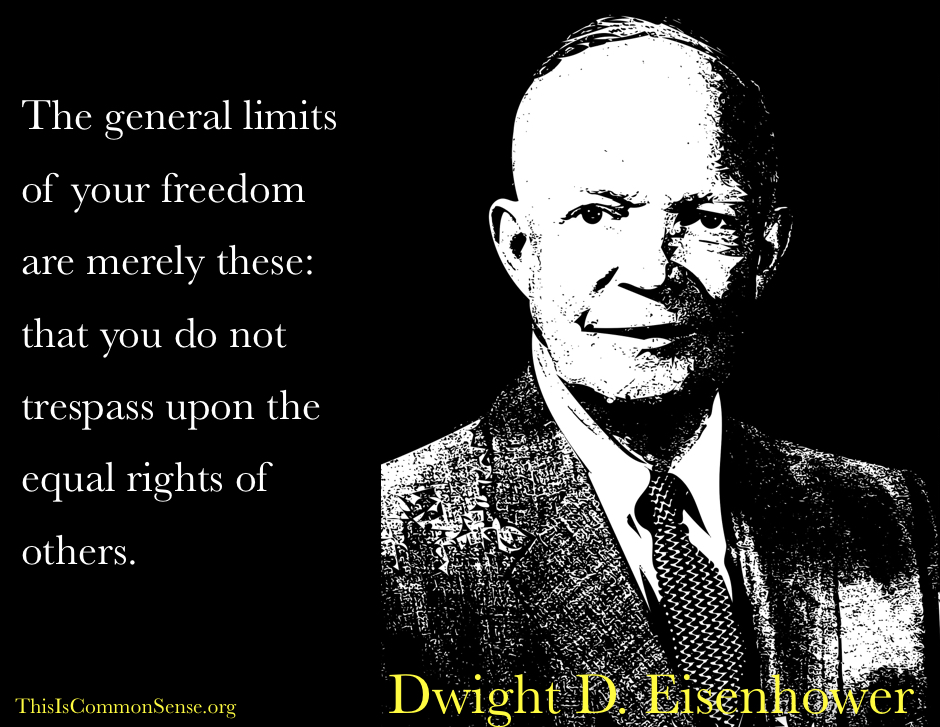
The general limits of your freedom are merely these: that you do not trespass upon the equal rights of others.
President Dwight D. Eisenhower, remarks to the National Society of the Daughters of the American Revolution (April 22, 1954).
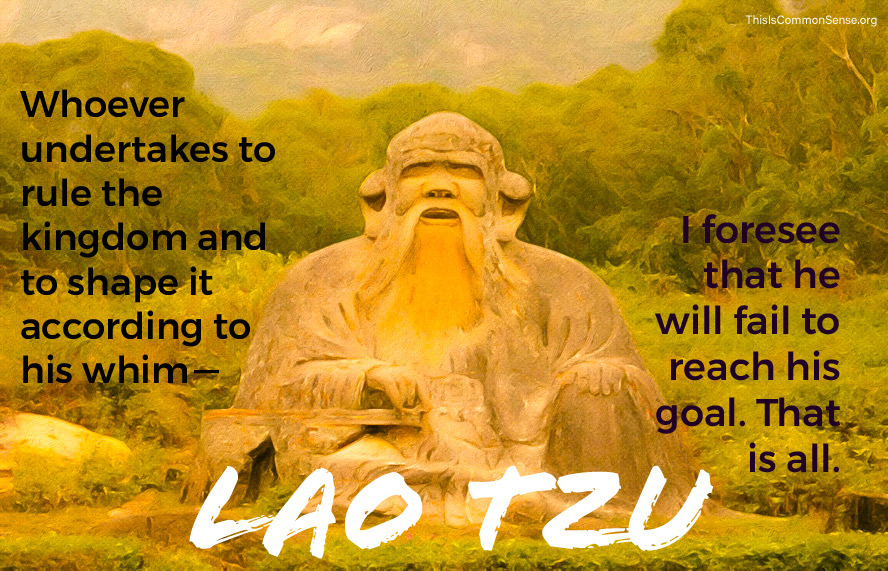
Whoever undertakes to rule the kingdom and to shape it according to his whim — I foresee that he will fail to reach his goal. That is all.The kingdom is a living being. It cannot be constructed, in truth! He who tries to manipulate it will spoil it, he who tries to put it under his power will lose it.
Therefore: Some creatures go out in front, others follow, some have warm breath, others cold, some are strong, some weak, some attain abundance, other succumb.
The wise man will accordingly forswear excess, he will avoid arrogance and not overreach.
Lao Tzu, as quoted in the second of the Six Pamphlets of the “White Rose” Students.
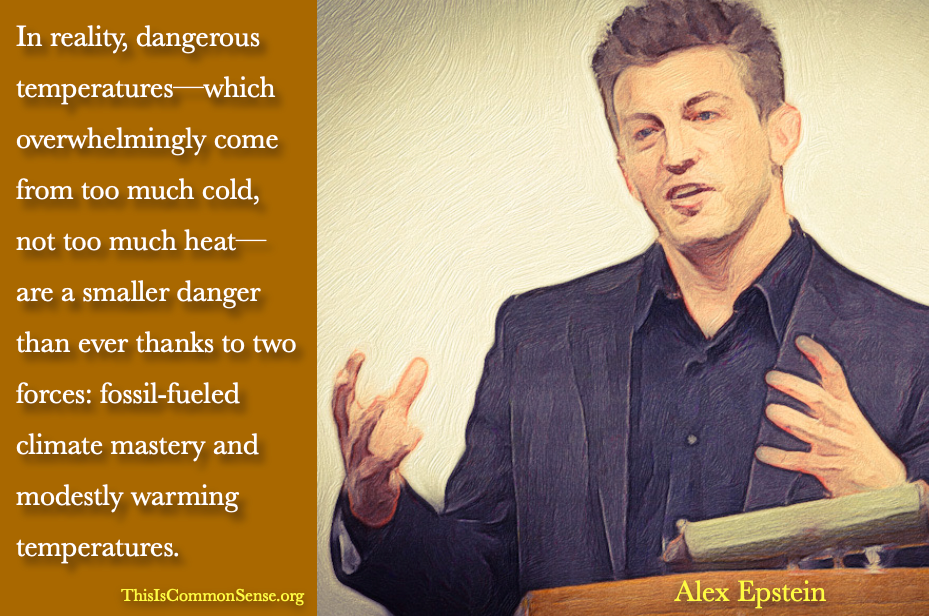
In reality, dangerous temperatures — which overwhelmingly come from too much cold, not too much heat — are a smaller danger than ever thanks to two forces: fossil-fueled climate mastery and modestly warming temperatures. Contrary to the portrayal of the unimpacted global climate system as a delicate nurturer that will be ruined by a few degrees of warming, most climates have a dynamic range of often-dangerous temperatures — which are largely more dangerous at the cold end than at the warm end.
Alex Epstein, Fossil Future: Why Global Human Flourishing Requires More Oil, Coal, and Natural Gas — Not Less (2022).