I have no patriotism, for patriotism, as I see it, is often an arbitrary veneration of real estate above principles.
George Jean Nathan, Testament of a Critic (1931), p. 16.
Categories
George Jean Nathan
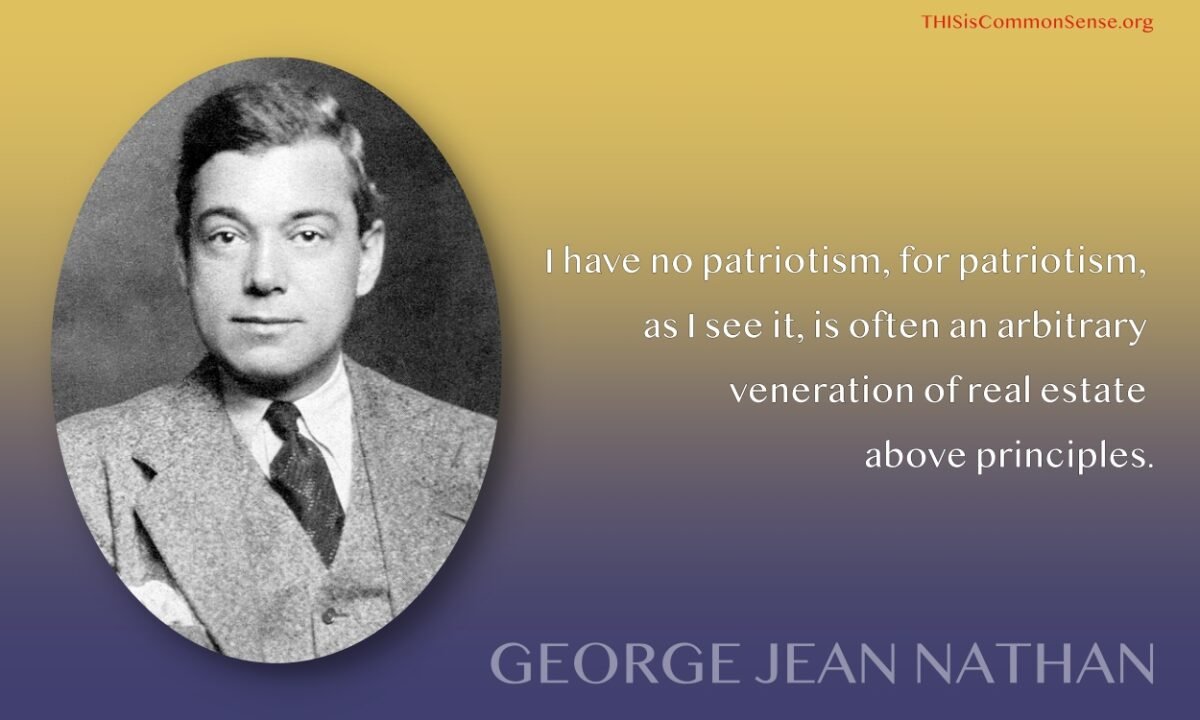
I have no patriotism, for patriotism, as I see it, is often an arbitrary veneration of real estate above principles.
George Jean Nathan, Testament of a Critic (1931), p. 16.
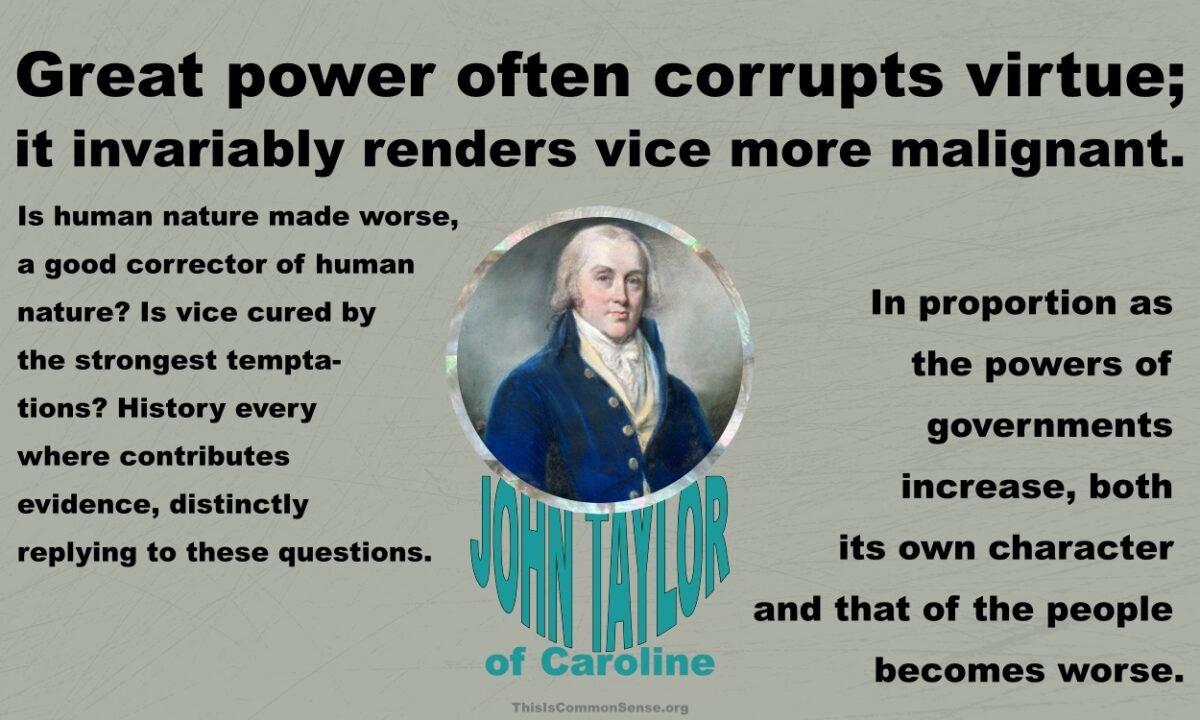
Great power often corrupts virtue; it invariably renders vice more malignant. Is human nature made worse, a good corrector of human nature? Is vice cured by the strongest temptations? History every where contributes evidence, distinctly replying to these questions. In proportion as the powers of governments increase, both its own character and that of the people becomes worse.
John Taylor of Caroline, An Inquiry into the Principles and Policy of the Government of the United States (Fredericksburg, VA.: Green and Cady, 1814).
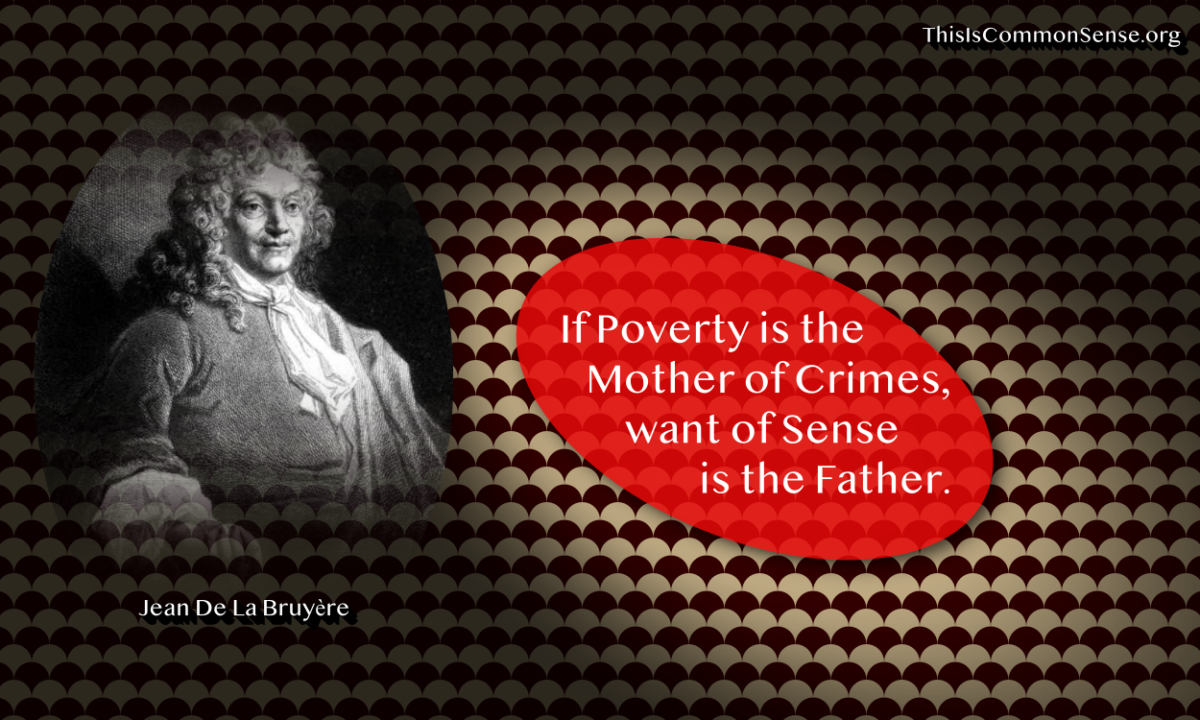
If Poverty is the Mother of Crimes, want of Sense is the Father.
Jean De La Bruyère, The Characters; or, Manners of the Present Age (Henri Van Laun, translator, 1885), Vol. II, Ch. II.
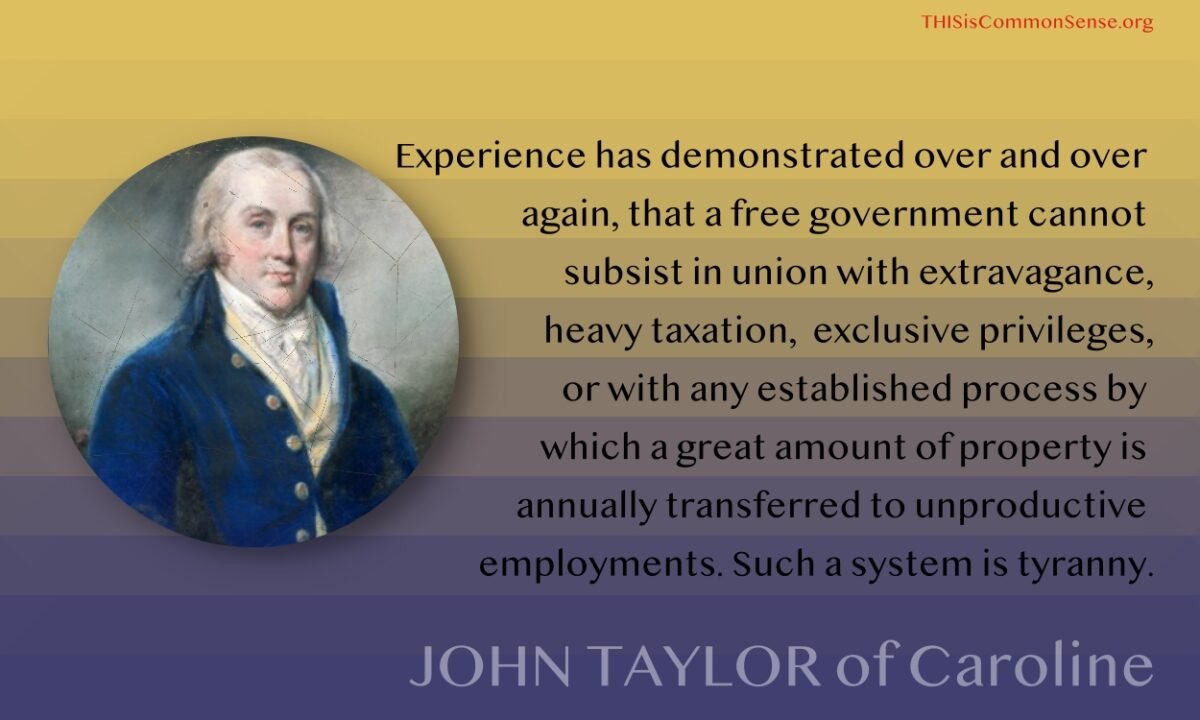
Experience has demonstrated over and over again, that a free government cannot subsist in union with extravagance, heavy taxation, exclusive privileges, or with any established process by which a great amount of property is annually transferred to unproductive employments. Such a system is tyranny. How then can it harmonise or live in the same country with liberty? But liberty is always addressed by it, as if she was vain, foolish, and even blind; as if she was only fortune. A free government can only be made lasting by frugality and justice.
John Taylor of Caroline, Tyranny Unmasked (1821), Section III.
No man can think clearly when his fists are clenched.
George Jean Nathan, The Smart Set (August 1922).
Socialism is the theory that the desire of one man to get something he hasn’t got is more pleasing to a just God than the desire of some other man to keep what he has got.
H. L. Mencken, A Little Book in C Major (1916).

The appearance of virtue may be useful to the guilty; but it is less useful than virtue itself, and is frequently a snare to others.
John Taylor of Caroline, An Inquiry into the Principles and Policy of the Government of the United States (Fredericksburg, VA.: Green and Cady, 1814).
Marxism is not dead and it’s not an economic theory. What’s happened is that Marxists realize what the track record of Marxism is around the world, so they don’t want to call themselves Marxists any more. They have found new titles — things that, frankly, sound benign and you almost feel guilty being against: “social justice.” Who can be against “social justice”? But that’s the terminology they come up with. “Equity.” Equity — who can be against “equity”?
Marco Rubio, in a speech at the Faith & Freedom Coalition’s “Road to Majority” conference in Kissimmee, Florida (June 2021), as posted by The Hill on YouTube.
Δειλαί τοι δειλῶν γε καὶ ἐγγύαι ἐγγυάασθαι.
A bad man’s bond is bad security.
Homer, The Odyssey, Book VIII (Samuel Butler, trans., The Odyssey of Homer, Rendered Into English Prose, 1900), Book VIII. This is variously translated; see a past quotation here.
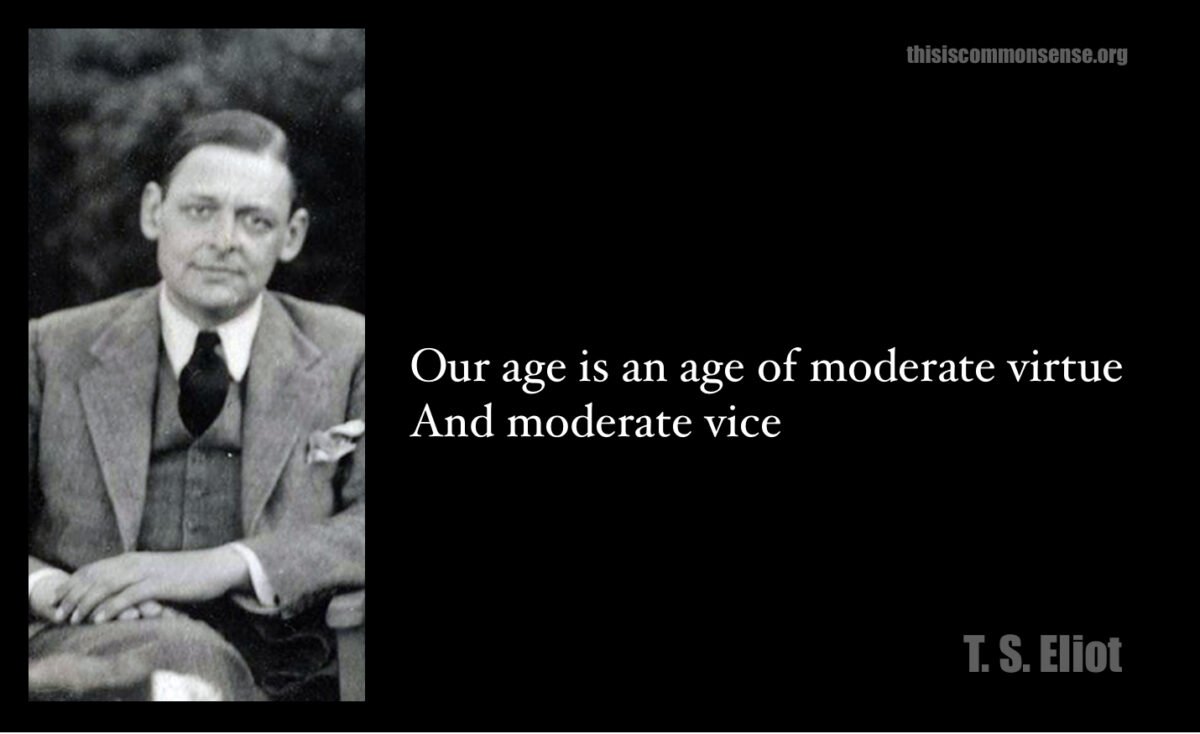
Our age is an age of moderate virtue
Thomas Stearns Eliot, Choruses from The Rock (1934), VIII.
And moderate vice