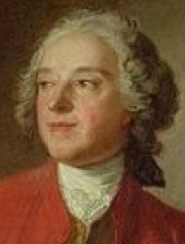
 If censorship reigns, there cannot be sincere flattery, and only small men are afraid of small writings.
Categories
If censorship reigns, there cannot be sincere flattery, and only small men are afraid of small writings.
 Society is purely and solely a continual series of exchanges. It is never anything else, in any epoch of its duration, from its commencement the most unformed, to its greatest perfection. And this is the greatest eulogy we can give to it, for exchange is an admirable transaction, in which the two contracting parties always both gain; consequently society is an uninterrupted succession of advantages, unceasingly renewed for all its members.
I force myself to laugh at everything, for fear of having to cry.
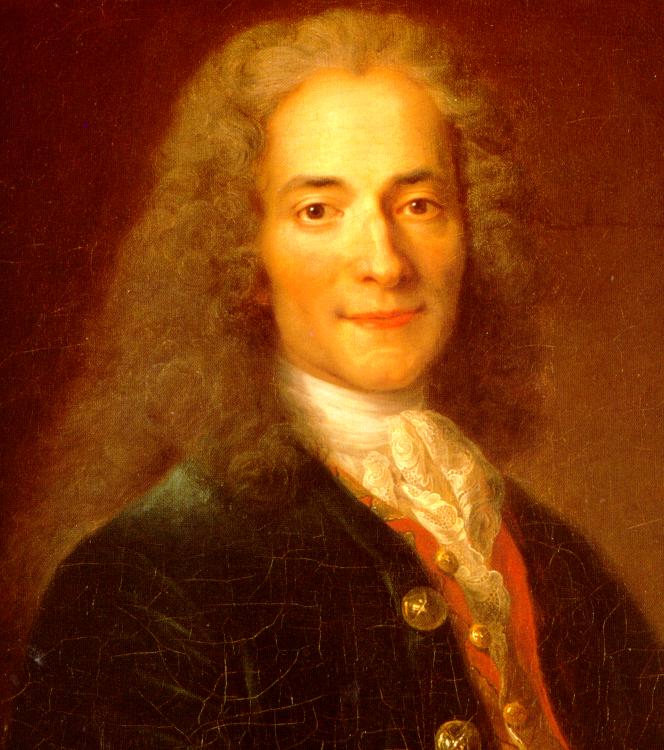 It is forbidden to kill; therefore all murderers are punished unless they kill in large numbers and to the sound of trumpets.
Almost everything is imitation. The idea of The Persian Letters was taken from The Turkish Spy. Boiardo imitated Pulci, Ariosto imitated Boiardo. The most original minds borrowed from one another. Michel Cervantes makes his Don Quixote a fool; but pray is Orlando any other? It would puzzle one to decide whether knight errantry has been made more ridiculous by the grotesque painting of Cervantes, than by the luxuriant imagination of Ariosto. Metastasio has taken the greatest part of his operas from our French tragedies. Several English writers have copied us without saying one word of the matter. It is with books as with the fire in our hearths; we go to a neighbor to get the embers and light it when we return home, pass it on to others, and it belongs to everyone.
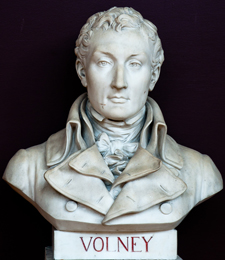 All the social virtues are only the habitude of actions useful to society and to the individual who practices them; That they refer to the physical object of man’s preservation; That nature having implanted in us the want of that preservation, has made a law to us of all its consequences, and a crime of everything that deviates from it; That we carry in us the seed of every virtue, and of every perfection; That it only requires to be developed; That we are only happy inasmuch as we observe the rules established by nature for the end of our preservation; And that all wisdom, all perfection, all law, all virtue, all philosophy, consist in the practice of these axioms founded on our own organization:
Preserve thyself; Instruct thyself; Moderate thyself; Live for thy fellow citizens, that they may live for thee.
 Vices are those acts by which a man harms himself or his property. Crimes are those acts by which one man harms the person or property of another. Vices are simply the errors which a man makes in his search after his own happiness. Unlike crimes, they imply no malice toward others, and no interference with their persons or property. In vices, the very essence of crime—that is, the design to injure the person or property of another—is wanting. It is a maxim of the law that there can be no crime without criminal intent; that is, without the intent to invade the person or property of another. But no one ever practices a vice with any such criminal intent. He practices his vice for his own happiness solely, and not from any malice toward others. Unless this clear distinction between vices and crimes be made and recognized by the laws, there can be on earth no such thing as individual right, liberty, or property, and the corresponding coequal rights of another man to the control of his own person and property.
 A famous theorem in economics states that a competitive enterprise economy will produce the largest possible income from a given stock of resources. No real economy meets the exact conditions of the theorem, and all real economies will fall short of the ideal economy—a difference called “market failure.” In my view, however, the degree of “market failure” for the American economy is much smaller than the “political failure” arising from the imperfections of economic policies found in real political systems. The merits of laissez-faire rest less on its famous theoretical foundations than on its advantages over the actual performance of rival forms of economic organization.
Q. Are courage and strength of body and mind virtues in the law of nature?
Constantin-François de Chassebœuf (1757–1820), Comte de Volney, The Law of Nature, Chapter VIII.
A. Yes, and most important virtues; for they are the efficacious and indispensable means of attending to our preservation and welfare. The courageous and strong man repulses oppression, defends his life, his liberty, and his property; by his labor he procures himself an abundant subsistence, which he enjoys in tranquillity and peace of mind. If he falls into misfortunes, from which his prudence could not protect him, he supports them with fortitude and resignation; and it is for this reason that the ancient moralists have reckoned strength and courage among the four principal virtues.”
A Swedish physicist can not discuss his work with fifty people unless he goes abroad. A Swedish economist can get opinions and instructions in his native language from thousands upon thousands of his fellow citizens.