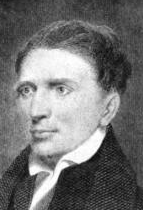
 It ought to be one of the leading objects of the democracy of this country for many years to come to diminish the power of the general and several state governments, not to increase it.
Categories
It ought to be one of the leading objects of the democracy of this country for many years to come to diminish the power of the general and several state governments, not to increase it.
 Two things in America are astonishing: the changeableness of most human behavior and the strange stability of certain principles. Men are constantly on the move, but the spirit of humanity seems almost unmoved.
As a general rule, the prosperity of rational men depends on themselves. Their talents and their virtues shape their fortunes. They are therefore the best judges of their own affairs, and should be permitted to seek their own happiness in their own way, untrammelled by the capricious interference of legislative bungling, so long as they do not violate the equal rights of others, nor transgress the general laws for the security of person and property.
This power of regulating—of increasing or diminishing the profits of labour and the value of property of all kinds and degrees, by direct legislation, in a great measure destroys the essential object of all civil compacts, which, as we said before, is to make the social a counterpoise to the selfish feeling. By thus operating directly on the latter, by offering one class a bounty and another a discouragement, they involve the selfish feeling in every struggle of party for the ascendancy, and give to the force of political rivalry all the bitterest excitement of personal interests conflicting with each other. Why is it that parties now exhibit excitement aggravated to a degree dangerous to the existence of the Union and to the peace of society? Is it not that by frequent exercises of partial legislation, almost every man’s personal interests have become deeply involved in the result of the contest? In common times, the strife of parties is the mere struggle of ambitious leaders for power; now they are deadly contests of the whole mass of the people, whose pecuniary interests are implicated in the event, because the Government has usurped and exercised the power of legislating on their private affairs.
The fundamental principle of all governments is the protection of person and property from domestic and foreign enemies; in other words, to defend the weak against the strong. By establishing the social feeling in a community, it was intended to counteract that selfish feeling, which, in its proper exercise, is the parent of all worldly good, and, in its excesses, the root of all evil. The functions of Government, when confined to their proper sphere of action, are therefore restricted to the making of general laws, uniform and universal in their operation, for these purposes, and for no other.
In the exercise of this power of intermeddling with the private pursuits and individual occupations of the citizen, a Government may at pleasure elevate one class and depress another; it may one day legislate exclusively for the farmer, the next for the mechanic, and the third for the manufacturer, who all thus become the mere puppets of legislative cobbling and tinkering, instead of independent citizens, relying on their own resources for their prosperity. It assumes the functions which belong alone to an overruling Providence, and affects to become the universal dispenser of good and evil.
Whenever a Government assumes the power of discriminating between the different classes of the community, it becomes, in effect, the arbiter of their prosperity, and exercises a power not contemplated by any intelligent people in delegating their sovereignty to their rulers. It then becomes the great regulator of the profits of every species of industry, and reduces men from a dependence on their own exertions, to a dependence on the caprices of their Government. Governments possess no delegated right to tamper with individual industry a single hair’s-breadth beyond what is essential to protect the rights of person and property.
 At last, my friends, I am come amongst you. And I am come… “unmuzzled.”
I am certain, from experience, of the immense advantage of strict account-keeping in early life. It is just like learning the grammar then, which when once learned need not be referred to afterwards.
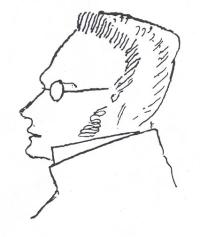 If one awakens in men the idea of freedom then the free men will incessantly go on to free themselves; if on the contrary, one only educates them, then they will at all times accommodate themselves to circumstance in the most highly educated and elegant manner and degenerate into subservient cringing souls.