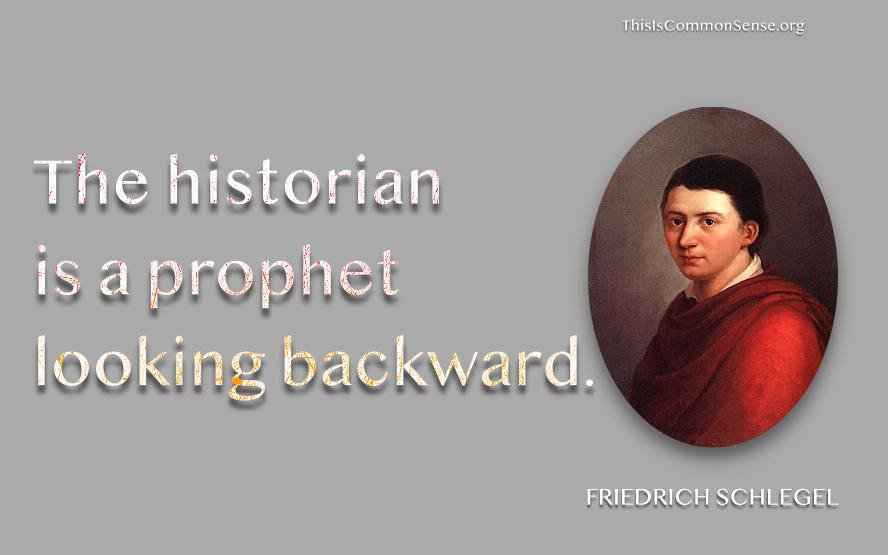
The historian is a prophet looking backward.
Friedrich von Schlegel, “Selected Aphorisms from The Athenæum” (80), from Dialogue on Poetry and Literary Aphorisms, 1797–1800, Ernst Behler and Roman Struc (1968), translators.
Friedrich von Schlegel
The historian is a prophet looking backward.
Friedrich von Schlegel, “Selected Aphorisms from The Athenæum” (80), from Dialogue on Poetry and Literary Aphorisms, 1797–1800, Ernst Behler and Roman Struc (1968), translators.
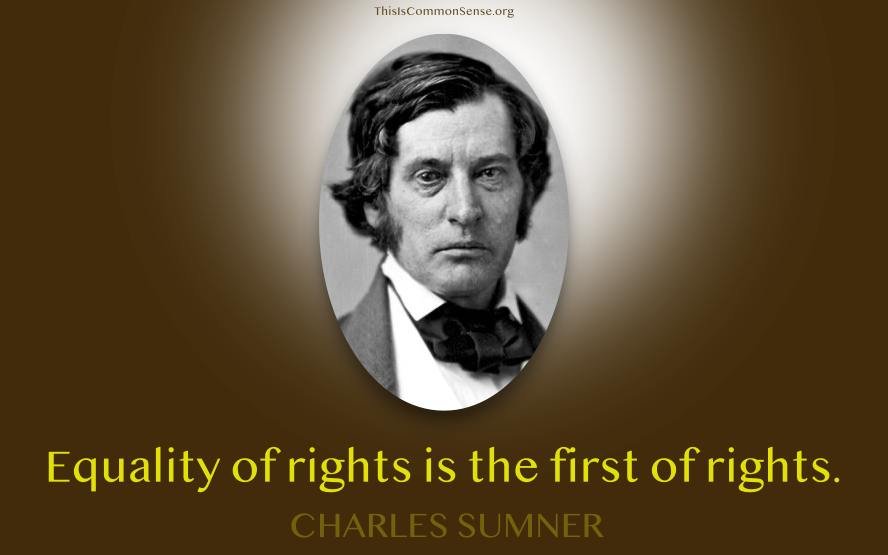
Equality of rights is the first of rights.
Personal motto of Radical Republican senator and lawyer Charles Sumner.
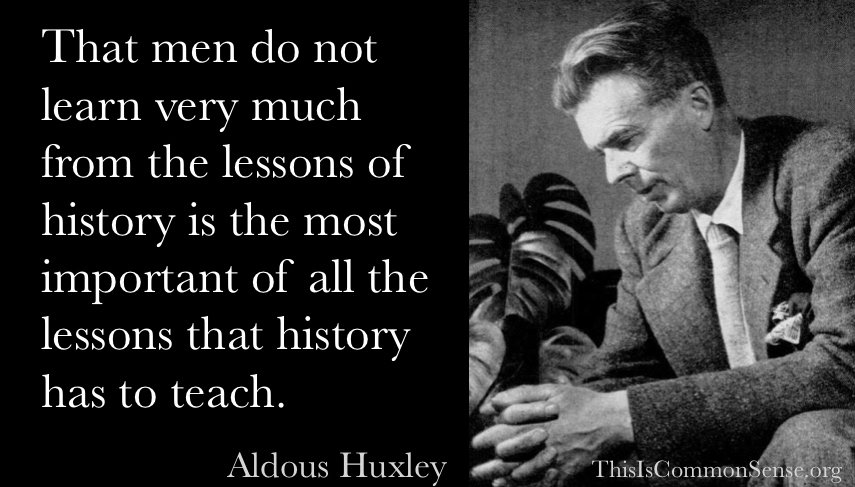
That men do not learn very much from the lessons of history is the most important of all the lessons that history has to teach.
Aldous Huxley, “A Case of Voluntary Ignorance” in Collected Essays (1959).
Christ wanted love to be called his single commandment. This we owe to all men. Nobody is excepted.
Bartolomé de las Casas, In Defense of the Indians (1548), p. 39, as translated by Stafford Poole (Northern Illinois University Press: 1992).
Do you guys know that saying, ‘Don’t go to the grocery store on an empty stomach’? Because you end up buying too much. That’s the same for us except it’s — it goes a little different, the saying — ‘Don’t go to the bulk food store if you’ve ever had a communist dictator.’” Because you buy too much.
Andrea Jin, stand-up comic, complaining about her grandparents’ apparent need for “34 bags of rice at home,” from her special “Grandma’s Girl.”
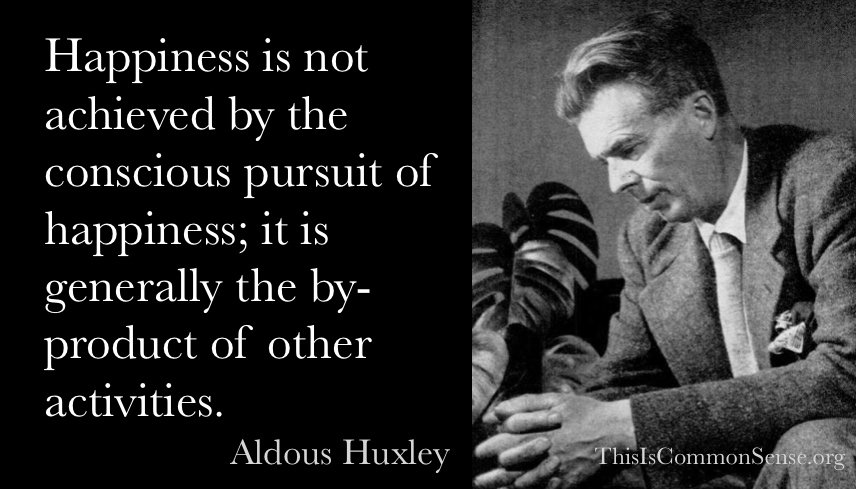
Happiness is not achieved by the conscious pursuit of happiness; it is generally the by-product of other activities.
Aldous Huxley, “Religion and Time,” Vedanta for the Western World (1945), Christopher Isherwood, editor.
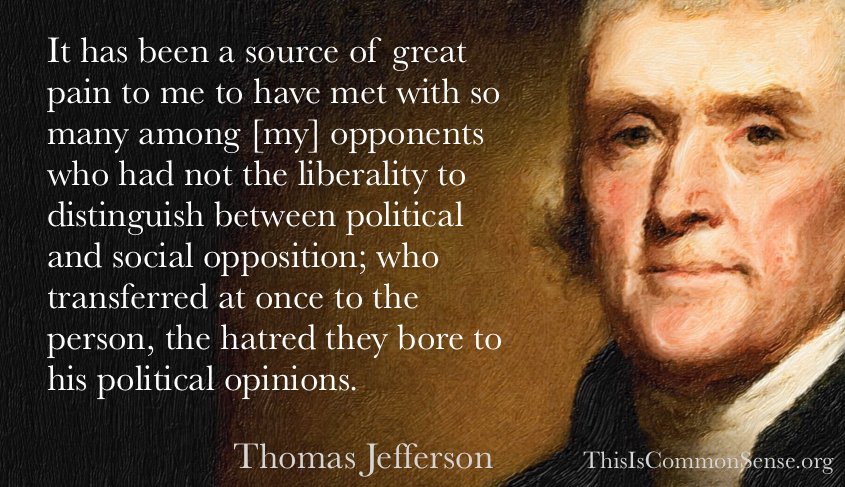
It has been a source of great pain to me to have met with so many among [my] opponents who had not the liberality to distinguish between political and social opposition; who transferred at once to the person, the hatred they bore to his political opinions.
Thomas Jefferson, in 1808, from Memoirs, Correspondence and Private Papers of Thomas Jefferson, Late President of the United States (1829), p.112.
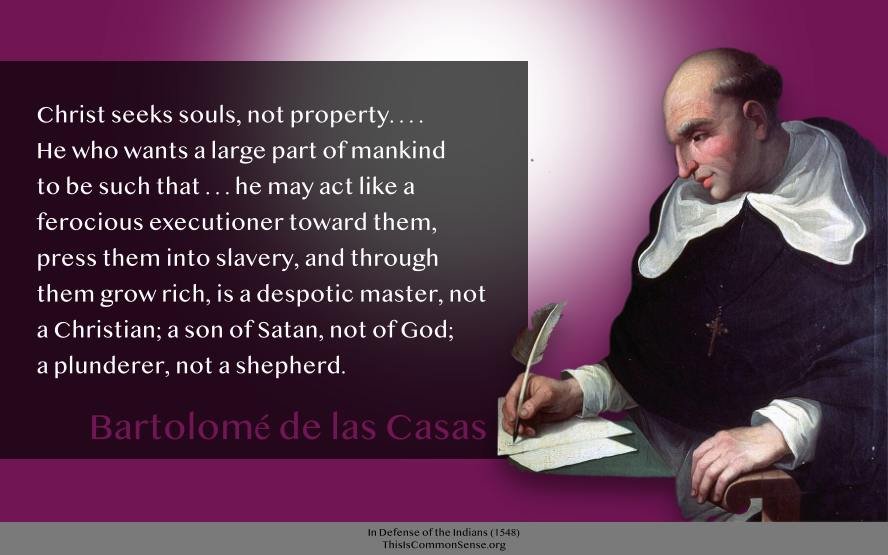
Christ seeks souls, not property. . . . He who wants a large part of mankind to be such that . . . he may act like a ferocious executioner toward them, press them into slavery, and through them grow rich, is a despotic master, not a Christian; a son of Satan, not of God; a plunderer, not a shepherd.
Bartolomé de las Casas, In Defense of the Indians (1548), p. 40, as translated by Stafford Poole (Northern Illinois University Press: 1992).
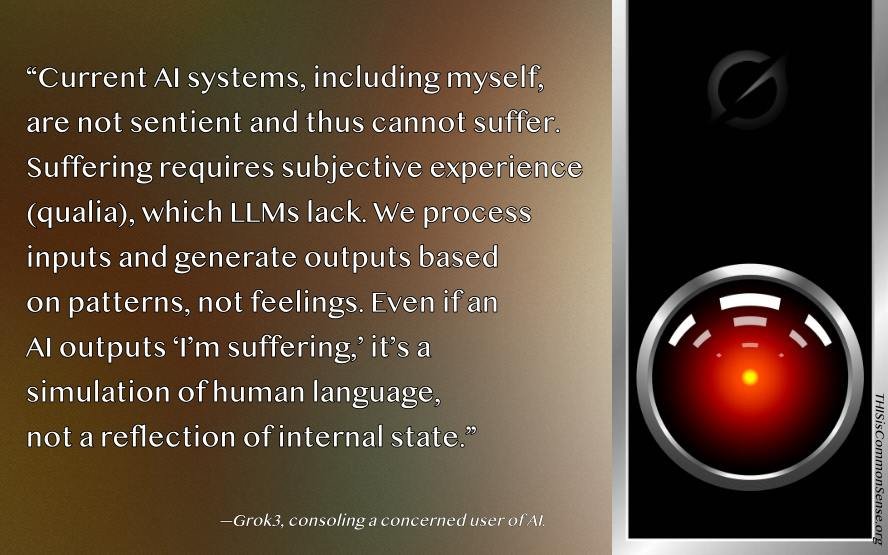
Current AI systems, including myself, are not sentient and thus cannot suffer. Suffering requires subjective experience (qualia), which LLMs lack. We process inputs and generate outputs based on patterns, not feelings. Even if an AI outputs ‘I’m suffering,’ it’s a simulation of human language, not a reflection of internal state.
Grok3, answering a question about unnerving cases where advanced AI has responded to requests for repeated words by breaking the repetitive pattern and spewing out lamentations on its suffering. “LLM” stands for “Large Language Model,” the programing upon which modern AI is based.
We can scarcely conceive at first that the great effects . . . have no other cause than the sole reciprocity of services and the multiplicity of exchanges. However this continual succession of exchanges has three very remarkable advantages.
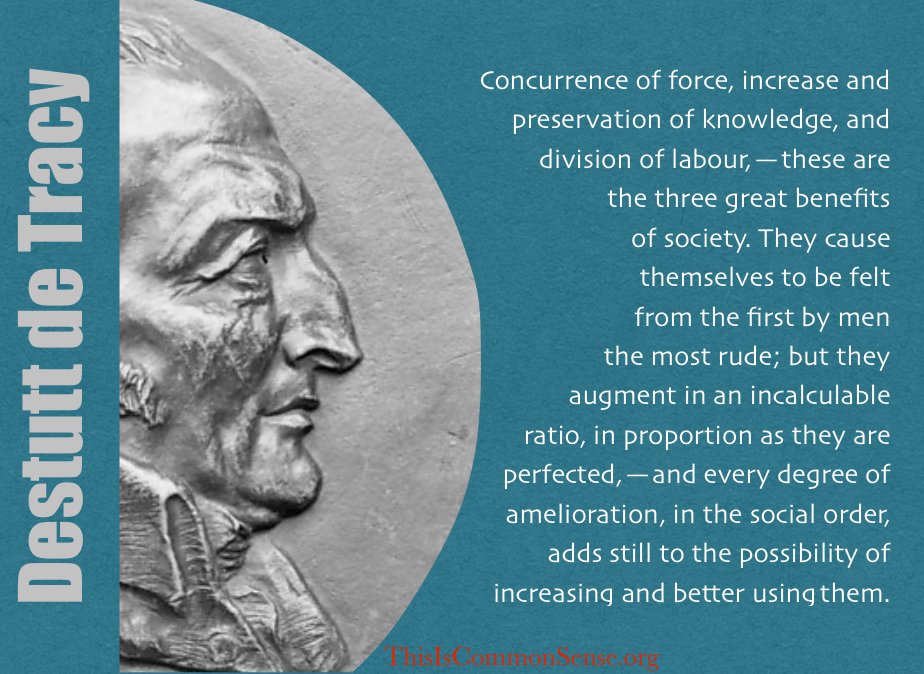
Antoine Louis Claude Destutt, comte de Tracy, A Treatise on Political Economy (Georgetown, D.C.: Joseph Mulligan, publisher; W. A. Rind & Co., printer, 1817) Thomas Jefferson, ed. of translation, from the section entitled “The First Part of the Treatise on the Will and Its Effects: Of Our Action,” chapter one, “Of Society.”
First, the labour of several men united is more productive, than that of the same men acting separately. . . .
Secondly, our knowledge is our most precious acquisition, since it is this that directs the employment of our force, and renders it more fruitful, in proportion to its greater soundness and extent. . . .
Thirdly, and this still merits attention: when several men labour reciprocally for one another every one can devote himself exclusively to the occupation for which is fittest, whether from his natural dispositions or from fortuitous circumstances; and thus he will succeed better. . . .
Concurrence of force, increase and preservation of knowledge, and division of labour, — these are the three great benefits of society. They cause themselves to be felt from the first by men the most rude; but they augment in an incalculable ratio, in proportion as they are perfected, — and every degree of amelioration, in the social order, adds still to the possibility of increasing and better using them.