Categories
Thought

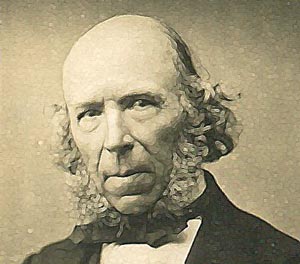
Herbert Spencer

Duplicate men are not to be found. There is in each a different balance of desires. Therefore the conditions adapted for the highest enjoyment of one, would not perfectly compass the same end for any other. And consequently the notion of happiness must vary with the disposition and character; that is, must vary indefinitely.

Herbert Spencer, Social Statics: or, The Conditions essential to Happiness specified, and the First of them Developed (London: John Chapman, 1851), Introduction, § 2.

Categories
Thought

Immanuel Kant

“No-one can compel me to be happy in accordance with his conception of the welfare of others, for each may seek his happiness in whatever way he sees fit, so long as he does not infringe upon the freedom of others to pursue a similar end which can be reconciled with the freedom of everyone else within a workable general law — i.e. he must accord to others the same right as he enjoys himself.”


Immanuel Kant, Theory and Practice (1791)

Categories
Thought

Herbert Spencer

Instead of civilization being artificial, it is a part of nature; all of a piece with the development of the embryo or the unfolding of a flower. The modifications mankind have undergone, and are still undergoing, result from a law underlying the whole organic creation; and provided the human race continues, and the constitution of things remains the same, those modifications must end in completeness.

Herbert Spencer, Social Statics: or, The Conditions essential to Happiness specified, and the First of them Developed (London: John Chapman, 1851), Chapter 1, § 4.

Categories
Thought

Immanuel Kant

Human freedom is realised in the adoption of humanity as an end in itself, for the one thing that no-one can be compelled to do by another is to adopt a particular end.

Immanuel Kant, Metaphysics of Morals (1797), Part Two: “Metaphysics of Virtue.”
Categories
Thought

Tom Clancy

“There’s two kinds of people in the world, the ones who need to be told and the ones who figure it out all by themselves.”


Tom Clancy, Without Remorse (1993), p. 231

Categories
Thought

Tom Clancy

“The difference between me and you is that I do good fiction.”


Bestselling author Tom Clancy, to news reporters at the National Press Club (May 18, 1999)

Categories
Thought

Tom Clancy

“What the government is good at is collecting taxes, taking away your freedoms and killing people. It’s not good at much else.”


Tom Clancy, as quoted by John Whitehead

Categories
Thought

Tom Clancy

“Nothing is as real as a dream. The world can change around you, but your dream will not. Your life may change, but your dream doesn’t have to. Responsibilities need not erase it. Duties need not obscure it. Your spouse and children need not get in its way, because the dream is within you. No one can take your dream away.”


Tom Clancy, commencement address, Loyola University 1986 graduation

Categories
Thought

Frédéric Bastiat

“I wonder how we could have ever thought of doing anything so fantastic as to pay many millions of francs for the purpose of removing the natural obstacles that stand between France and other countries, and at the same time pay many other millions for the purpose of substituting artificial obstacles that have exactly the same effect; so that the obstacle created and the obstacle removed neutralize each other and leave things quite ‘as they were before, the only difference being the double expense of the whole operation.’”


Frédéric Bastiat, from Economic Sophisms, a book against the artificial obstacles created by the protective tariff.

Categories
Thought

Frédéric Bastiat

Nature has provided, by means as simple as they are infallible, that there should be dispersion, diffusion, coordination, simultaneous progress, all constituting a state of things that your restrictive laws paralyze as much as they can; for the tendency of such laws is, by isolating communities, to render the diversity of condition much more marked, to prevent equalization, hinder integration, neutralize countervailing circumstances, and segregate nations, whether in their superiority or in their inferiority of condition.

Frédéric Bastiat, from Economic Sophisms, “To Equalize the Conditions of Production” — the “such laws” mentioned are protectionist measures, and protectionism was the chief target of Bastiat’s famous book.