“Calumniate, calumniate; there will always be something which sticks.”
Pierre-Augustin Caron de Beaumarchais, Le Barbier de Séville (1773).

“Calumniate, calumniate; there will always be something which sticks.”
Pierre-Augustin Caron de Beaumarchais, Le Barbier de Séville (1773).
“The inner spiritual chaos of the times, so powerfully created by the dynamics of capitalism itself, is such as to make nihilism an easy temptation. A ‘free society’ in Hayek’s sense gives birth in massive numbers to ‘free spirits’ — emptied of moral substance but still driven by primordial moral aspirations. Such people are capable of the most irrational actions. Indeed, it is my impression that, under the strain of modern life, whole classes of our population — and the educated classes most of all — are entering what can only be called, in the strictly clinical sense, a phase of infantile regression. With every passing year, public discourse becomes sillier and more petulant, emotions become, apparently, more ungovernable. Some of our most intelligent university professors are now loudly saying things that, had they been uttered by one of their students twenty years ago, would have called forth gentle and urbane reproof.”
Irving Kristol, “‘When virtue loses all her loveliness’ — some reflections on Capitalism and ‘the free society,’” National Affairs, No. 21, Fall 1970.
“I hasten to laugh at everything, for fear of being obliged to weep.”
Pierre-Augustin Caron de Beaumarchais, Le Barbier de Séville (1773).
“Our youthful rebels are anything but inarticulate; and though they utter a great deal of nonsense, the import of what they are saying is clear enough. What they are saying is that they dislike — to put it mildly — the liberal, individualist, capitalist civilization that stands ready to receive them as citizens. They are rejecting this offer of citizenship and are declaring their desire to see some other kind of civilization replace it.”
Irving Kristol, “‘When virtue loses all her loveliness’ — some reflections on Capitalism and ‘the free society,’” National Affairs, No. 21, Fall 1970.
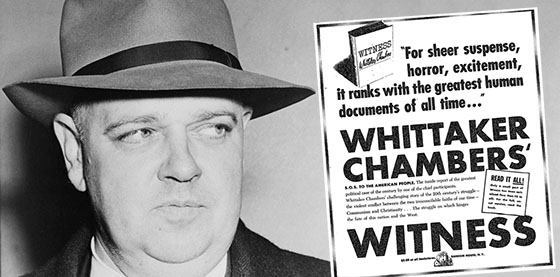
“Then he asked in German (the only language that we ever spoke): ‘Ist die Sowjetregierung eine faschistische Regierung? – Is the Soviet Government a fascist government?”. . . . I sat silent for some moments. Then I said: “Ja, die Sowjetregierung ist eine faschistische Regierung — the Soviet Government is a fascist government”. . . . Krivitsky turned for the first time and looked at me directly. ‘Du hast recht,’ he said, ‘und Kronstadt war der Wendepunkt – You are right, and Kronstadt was the turning point.”
Whittaker Chambers, Witness, pp. 459–460.
“When we lack the will to see things as they really are, there is nothing so mystifying as the obvious.”
Irving Kristol, “‘When virtue loses all her loveliness’ — some reflections on Capitalism and ‘the free society,’” National Affairs, No. 21, Fall 1970.
The deterioration of a government begins almost always by the decay of its principles.
Montesquieu, The Spirit of the Laws, Book VIII, Chapter 1.
Christians are beginning to lose the spirit of intolerance which animated them: experience has shown the error of the expulsion of the Jews from Spain, and of the persecution of those Christians in France whose belief differed a little from that of the king. They have realized that zeal for the advancement of religion is different from a due attachment to it; and that in order to love it and fulfill its behests, it is not necessary to hate and persecute those who are opposed to it.
Montesquieu, Persian Letters, no. 60.
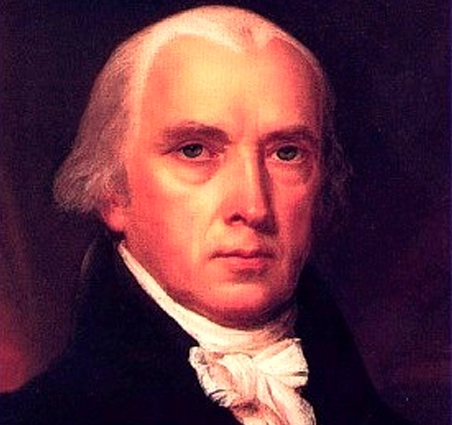
“The Constitution supposes, what the history of all governments demonstrates, that the executive is the branch of government most interested in war, and most prone to it. It has accordingly with studied care, vested the question of war in the legislature.”
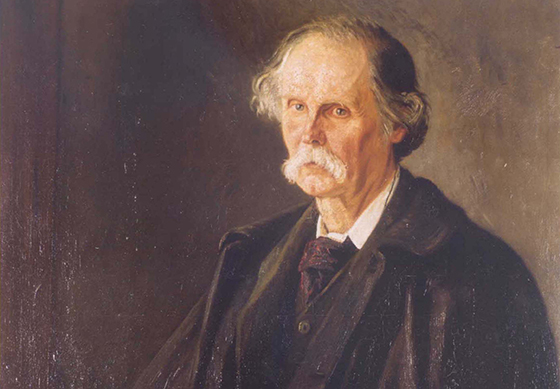
“The hope that poverty and ignorance may gradually be extinguished, derives indeed much support from the steady progress of the working classes during the nineteenth century.”
Alfred Marshall, Principles of Economics (1890), Book I.