Categories
Thought

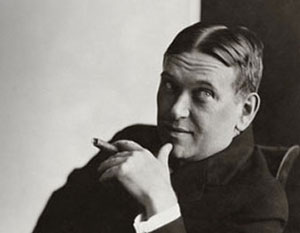
Ernest Bramah

“Before hastening to secure a possible reward of five taels by dragging an unobservant person away from a falling building, examine well his features lest you find, when too late, that it is one to whom you are indebted for double that amount.”

Ernest Bramah, The Wallet of Kai Lung

Categories
Thought

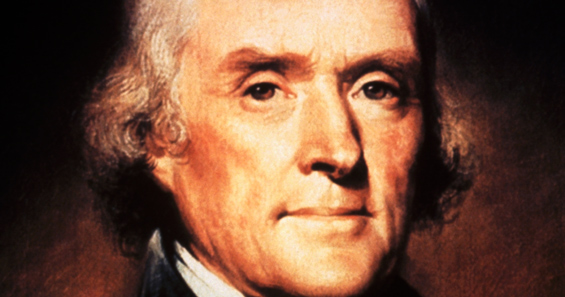
Tom Paine

“An Avidity to punish is always dangerous to liberty. It leads men tostretch, to misinterpret, and to misapply even the best of laws. He thatwould make his own liberty secure must guard even his enemy from oppression;for if he violates this duty he a establishes a precedent that will reach to himself.”


Thomas Paine (1795)

Categories
Thought

Gelett Burgess

“The Bromide does his thinking by syndicate. He follows the main-traveled roads, he goes with the crowd. In a word, they all think and talk alike — one may predicate their opinion upon any given subject. They follow custom and costume, they obey the Law of Averages. They are, intellectually, all peas in the same conventional pod, unenlightened, prosaic, living by rule and rote. They have their hair cut every month and their minds keep regular office-hours.”


Gelett Burgess, Are You a Bromide?, 1907.

Categories
Thought

Volney

“Fatality is the universal and rooted prejudice of the East. ‘It was written,’ is there the answer to every thing. Hence result an unconcern and apathy, the most powerful impediments to instruction and civilization.”


C. F. Volney, The Ruins, or, Meditation on the Revolutions of Empires (1793; first English-language edition, 1802)

Categories
Thought

Gelett Burgess

“If in the last few years you haven’t discarded a major opinion or acquired a new one, check your pulse. You may be dead.”


Gelett Burgess, American humorist.

Categories
Thought

Ernest Bramah

“However deep you dig a well it affords no refuge in the time of flood.”

Ernest Bramah, Kai Lung Unrolls His Mat, “The Story of Tong So, the Averter of Calamities” (1928)

Categories
Thought

Frederick Douglass

“I had very strangely supposed, while in slavery, that few of the comforts, and scarcely any of the luxuries, of life were enjoyed at the north, compared with what were enjoyed by the slaveholders of the south. I probably came to this conclusion from the fact that northern people owned no slaves. I supposed that they were about upon a level with the non-slaveholding population of the south. I knew they were exceedingly poor, and I had been accustomed to regard their poverty as the necessary consequence of their being non-slaveholders. I had somehow imbibed the opinion that, in the absence of slaves, there could be no wealth, and very little refinement. And upon coming to the north, I expected to meet with a rough, hard-handed, and uncultivated population, living in the most Spartan-like simplicity, knowing nothing of the ease, luxury, pomp, and grandeur of southern slaveholders. Such being my conjectures, any one acquainted with the appearance of New Bedford may very readily infer how palpably I must have seen my mistake.”


Frederick Douglass, Narrative of the Life of Frederick Douglass, 1845

Categories
Thought

Lao Tzu

“A journey of a thousand leagues starts with a single step.”

Lao Tzu, Tao Te Ching, Ch. 64, line 12

Categories
Thought

Frederick Douglass

“Slaves sing most when they are most unhappy. The songs of the slave represent the sorrows of his heart; and he is relieved by them, only as an aching heart is relieved by its tears. At least, such is my experience. I have often sung to drown my sorrow, but seldom to express my happiness. Crying for joy, and singing for joy, were alike uncommon to me while in the jaws of slavery. The singing of a man cast away upon a desolate island might be as appropriately considered as evidence of contentment and happiness, as the singing of a slave; the songs of the one and of the other are prompted by the same emotion.”


Frederick Douglass, Narrative of the Life of Frederick Douglass, 1845

Categories
Thought

Yves Guyot

“We must not confound liberty with anarchy. Liberty is the reciprocal respect for personal rights, according to certain fixed rules known by the name of law. Anarchy is the privilege of some and the spoliation of others, according to the caprices and arbitrary will of the cunning and the violent, and the feebleness and lack of energy of the timorous.”