Categories
Thought

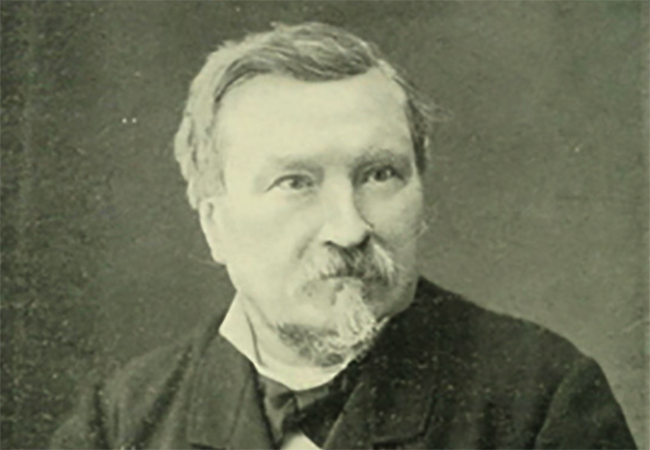
Anders Chydenius

The exercise of one coercion always makes another inevitable.

Anders Chydenius, Thoughts on the Natural Rights of Servants and Peasants (1778).
Categories
Thought

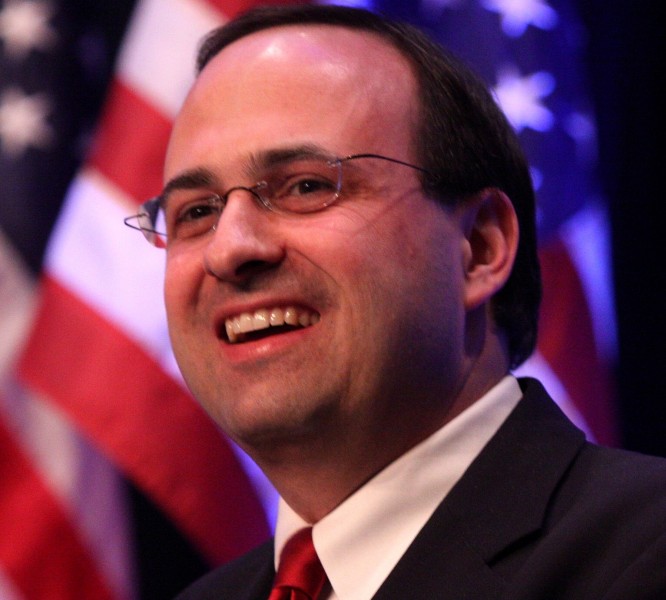
Pehr Evind Svinhufvud af Qvalstad

The person who sent me here has been arrested. Now I’m going home.


What Svinhufvud said to the Tomsk, Siberia, police station attendant after news of the February Revolution reached him in his forced exile from what was then still the Grand Duchy of Finland.

Categories
Thought

Edmond About

This discipline of the understanding reflects infinite credit upon the nineteenth century. If posterity does us justice, it will be grateful to us therefor. It will see that instead of cutting one another’s throats about theological questions, we have surveyed lines of railway, laid telegraphs, constructed steam-engines, launched ships, pierced isthmuses, created sciences, corrected laws, repressed factions, fed the poor, civilized barbarians, drained marshes, cultivated waste lands, without ever having a single dispute as to the infallibility of a man.


Edmond About, The Roman Question (1859), H. C. Coape, translator.

Categories
Snowden Thought

Edward Snowden

Privacy is the foundation of all other rights. Arguing that you don’t care about privacy because you have nothing to hide is no different from saying you don’t care about free speech because you have nothing to say.

Categories
Thought

Mary Wollstonecraft

It is justice, not charity, that is wanting in the world.

Mary Wollstonecraft, A Vindication of the Rights of Woman (1792), Chapter 4.

Categories
Thought

John Milton

Revolutions of ages do not oft recover the loss of a rejected truth, for the want of which whole nations fare the worse.

John Milton, Areopagitica; A speech of Mr. John Milton for the Liberty of Unlicenc’d Printing, to the Parlament of England (1644).

Categories
Thought

Mary Wollstonecraft

Independence I have long considered as the grand blessing of life, the basis of every virtue; and independence I will ever secure by contracting my wants, though I were to live on a barren heath.

Mary Wollstonecraft, A Vindication of the Rights of Woman (1792).
Categories
Thought

W. F. Lloyd

There may be a certain amount of convenience in having a timepiece in every room of a house; still the convenience of the first, that is, the importance of having one, is probably greater than that of all the rest put together. So, a person who has one house may wish to have a second, but still the want of the second is not equal to that of the first.


William F. Lloyd, “A Lecture on the Notion of Value as Distinguished Not Only From Utility, but also from Value in Exchange” (University of Oxford, 1833). This lecture is an early explication of the principle of diminishing marginal utility, a central concept in economics. The formal statements of the notion were published by other economists from 1870 on.

Categories
Thought

Marie Curie

Life is not easy for any of us. But what of that? We must have perseverance and above all confidence in ourselves. We must believe that we are gifted for something, and that this thing, at whatever cost, must be attained.


Marie Curie, as quoted in Madame Curie: A Biography (1937) by Eve Curie Labouisse, Part 2, p. 116.

Categories
Thought

W. F. Lloyd

Though nobody has ever seen two dogs making an exchange, yet a dog has been often seen to hide a bone. The dog does this from a sense of its value, properly so called. He does not do it merely from a sense of utility, or, in other words, because he likes a bone, but because he knows that a bone is a good thing which is not always to be had when wanted.


William F. Lloyd, “A Lecture on the Notion of Value as Distinguished Not Only From Utility, but also from Value in Exchange” (University of Oxford, 1833).