Although there exist many thousand subjects for elegant conversation, there are persons who cannot meet a cripple without talking about feet.
Ernest Bramah, The Wallet of Kai Lung, “The Transmutation of Ling” (1900)
Although there exist many thousand subjects for elegant conversation, there are persons who cannot meet a cripple without talking about feet.
Ernest Bramah, The Wallet of Kai Lung, “The Transmutation of Ling” (1900)
Utility is often summarily stigmatized as an immoral doctrine by giving it the name of Expediency, and taking advantage of the popular use of that term to contrast it with Principle. But the Expedient, in the sense in which it is opposed to the Right, generally means that which is expedient for the particular interest of the agent himself: as when a minister sacrifices the interest of his country to keep himself in place. When it means anything better than this, it means that which is expedient for some immediate object, some temporary purpose, but which violates a rule whose observance is expedient in a much higher degree. The Expedient, in this sense, instead of being the same thing with the useful, is a branch of the hurtful.
John Stuart Mill, Utilitarianism (London: Longmans, Green, and Co., 1879), Chapter II, “What Utilitarianism Is.”
“We were all ranked together at the valuation. Men and women, old and young, married and single, were ranked with horses, sheep, and swine. There were horses and men, cattle and women, pigs and children, all holding the same rank in the scale of being, and were all subjected to the same narrow examination. Silvery-headed age and sprightly youth, maids and matrons, had to undergo the same indelicate inspection. At this moment, I saw more clearly than ever the brutalizing effects of slavery upon both slave and slaveholder.”
Frederick Douglass, Narrative of the Life of Frederick Douglass, An American Slave, 1845
Better a dish of husks to the accompaniment of a muted lute than to be satiated with stewed shark’s fin and rich spiced wine of which the cost is frequently mentioned by the provider.
Ernest Bramah, Kai Lung Beneath the Mulberry Tree, “The Story of the Poet Lao Ping, Chun Shin’s Daughter Fa, and the Fighting Crickets” (1940)
We do not call anything wrong, unless we mean to imply that a person ought to be punished in some way or other for doing it; if not by law, by the opinion of his fellow creatures; if not by opinion, by the reproaches of his own conscience. This seems the real turning point of the distinction between morality and simple expediency. It is a part of the notion of Duty in every one of its forms, that a person may rightfully be compelled to fulfil it. Duty is a thing which may be exacted from a person, as one exacts a debt. Unless we think that it might be exacted from him, we do not call it his duty.
John Stuart Mill, Utilitarianism (London: Longmans, Green, and Co., 1879), Chapter V, “On the Connexion Between Justice and Utility.”
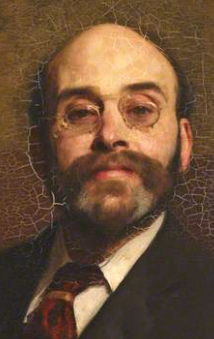
May our land be a land of liberty, the seat of virtue, the asylum of the oppressed, a name and a praise in the whole Earth, until the last shock of time shall bury the empires of the whole world in one common undistinguished ruin!
Joseph Warren, “Boston Massacre” oration, March 5, 1772. Image: detail of portrait by John Singleton Copley, c. 1765.
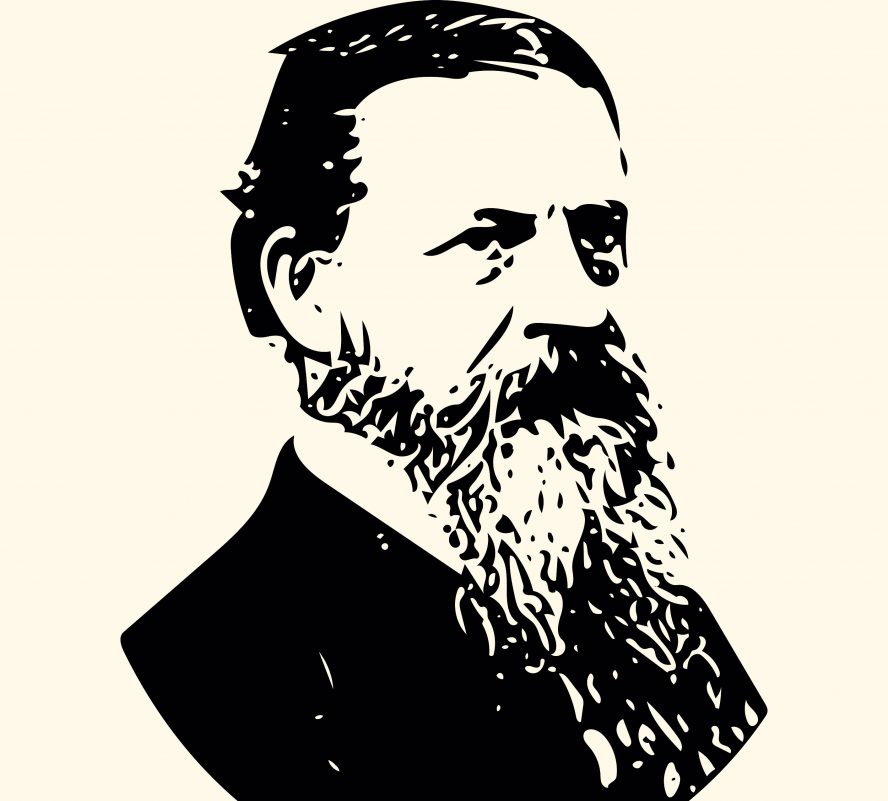
Where liberty dwells, there is my country.
H.L. Mencken attributed this popular statement to Benjamin Franklin, written in a March 14, 1783 letter to Benjamin Vaughan. That letter, however, has not been located. Bartlett’s Familiar Quotations notes this was the motto of James Otis (Latin: Ubi libertas, ibi patria; the 1780 A Complete Book of Heraldry marks it as the motto of Daniel Huger, Esq. Many early biographies of Thomas Paine portray Ben Franklin mystically speaking these words to Paine. The slogan has also been attributed to Algernon Sidney, the forgotten founding father. In “Defining Liberty: An Analysis of Its Three Elements” (ABA Journal, April 1965), Wendell J. Brown identified John Milton as its author. Which is why we picture the great poet, above. Help in correctly citing priority for this great quotation would be greatly appreciated.
He [Anthony Weiner] might run in Alaska.* I don’t think it’s a good idea that he think about it in the next five years, but who’s to say what’s going to happen in five years.**
Rep. Bill Pascrell (D-N.J.), in “The backstory: Weiner’s final undoing,” Jonathan Allen and Maggie Haberman, Politico, June 16, 2011 07:23 PM EDT, as forwarded in an email to Hillary Clinton from Cheryl Mills, 2011-06-16 02:23, courtesy WikiLeaks.
* Allen and Haberman characterize the first sentence as a joke, and the next sentence as said seriously.
** This past June marked five years from Pascrell’s utterance. We may be now witnessing Weiner’s FINAL “Final Undoing.”
pictured, above: Anthony Weiner
We cannot judge either of the feelings or of the characters of men with perfect accuracy from their actions or their appearance in public; it is from their careless conversations, their half-finished sentences, that we may hope with the greatest probability of success to discover their real characters.
Maria Edgeworth, “Preface” to Castle Rackrent (1800) in Tales and Novels, vol. 1, p. 9.
The penalty of misrepresentation and misinterpretation seems to be attached to every new idea that comes to birth through the utterances of genius.
James Huneker, in Egoists: A Book of Supermen (1913), p. 256.