I cannot praise a fugitive and cloistered virtue, unexercised and unbreathed, that never sallies out and sees her adversary, but slinks out of the race where that immortal garland is to be run for, not without dust and heat.
John Milton
I cannot praise a fugitive and cloistered virtue, unexercised and unbreathed, that never sallies out and sees her adversary, but slinks out of the race where that immortal garland is to be run for, not without dust and heat.
Where liberty dwells, there is my country.
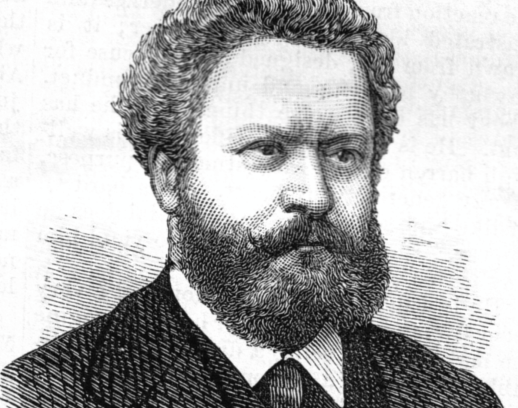
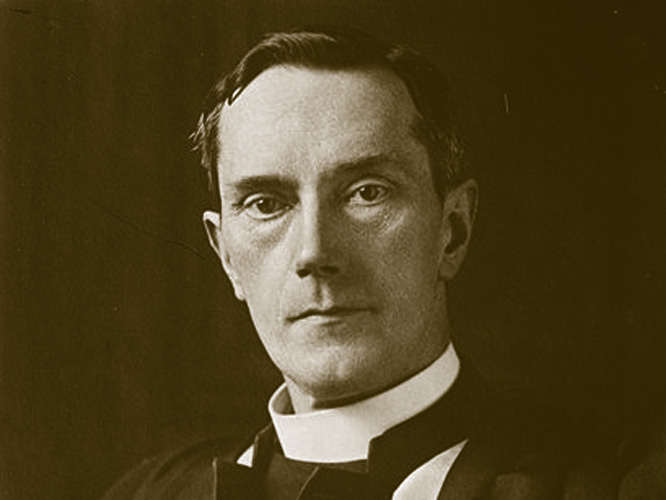
H.L. Mencken attributed this popular statement to Benjamin Franklin, written in a March 14, 1783 letter to Benjamin Vaughan. That letter, however, has not been located. Bartlett’s Familiar Quotations notes this was the motto of James Otis (Latin: Ubi libertas, ibi patria; the 1780 A Complete Book of Heraldry marks it as the motto of Daniel Huger, Esq. Many early biographies of Thomas Paine portray Ben Franklin mystically speaking these words to Paine. The slogan has also been attributed to Algernon Sidney, the forgotten founding father. In “Defining Liberty: An Analysis of Its Three Elements” (ABA Journal, April 1965), Wendell J. Brown identified John Milton as its author. Which is why we picture the great poet, above. Help in correctly citing priority for this great quotation would be greatly appreciated.
Be not astonished at new ideas; for it is well known to you that a thing does not therefore cease to be true because it is not accepted by many.
This is true liberty, when free-born men,
Having to advise the public, may speak free,
Which he who can, and will, deserves high praise;
Who neither can, nor will, may hold his peace:
What can be juster in a state than this?
Euripides, The Suppliant Women (c. 420-415 BC), as used by John Milton as epigraph to his Areopagitica (1644). A modern translation of this passage, and a few lines immediately preceding, by Frank William Jones, runs as follows:
Nothing . . .
Is worse for a city than an absolute ruler.
In earliest days, before the laws are common,
One man has power and makes the law his own:
Equality is not yet. With written laws,
People of small resources and the rich
Both have the same recourse to justice. Now
A man of means, if badly spoken of,
Will have no better standing than the weak;
And if the little man is right, he wins
Against the great. This is the call of freedom:
“what man has good advice to give the city,
And wishes to make it known?” He who responds
Gains glory; the reluctant hold their peace.
For the city, what can be more fair than that?
He who reigns within himself and rules passions, desires, and fears is more than a king.
Literature was not born the day when a boy crying ‘wolf, wolf’ came running out of the Neanderthal valley with a big gray wolf at his heels; literature was born on the day when a boy came crying ‘wolf, wolf’ and there was no wolf behind him.
Vladimir Nabokov, Lectures on Literature (1980).
Washington was worthy of honor because the last thing he had done with power was to resign it. Others grasped it, even abroad. George III said his retirement from the presidency, coupled with his resignation as Commander in Chief fourteen years earlier, “placed him in a light the most distinguished of any man living,” and that he was “the greatest character of the age.”
A leader is best when people barely know that he exists,
not so good when people obey and acclaim him,
worst when they despise him.
Fail to honor people,
They fail to honor you.
But of a good leader, who talks little,
when his work is done, his aims fulfilled,
they will all say,
‘We did this ourselves.’
Lao Tzu, Tao Te Ching, chapter 17.
The truth is a terrible thing, but not compared to falsehood.
I am fifty years old and I have always lived in freedom; let me end my life free; when I am dead let this be said of me: ‘He belonged to no school, to no church, to no institution, to no academy, least of all to any régime except the régime of liberty.’