. . . the search for truth strains the patience of most people, who would rather believe the first things that come to hand.
Thucydides, History of the Peloponnesian War, Paul Woodruff, translator, Book I, 1.21-[3].
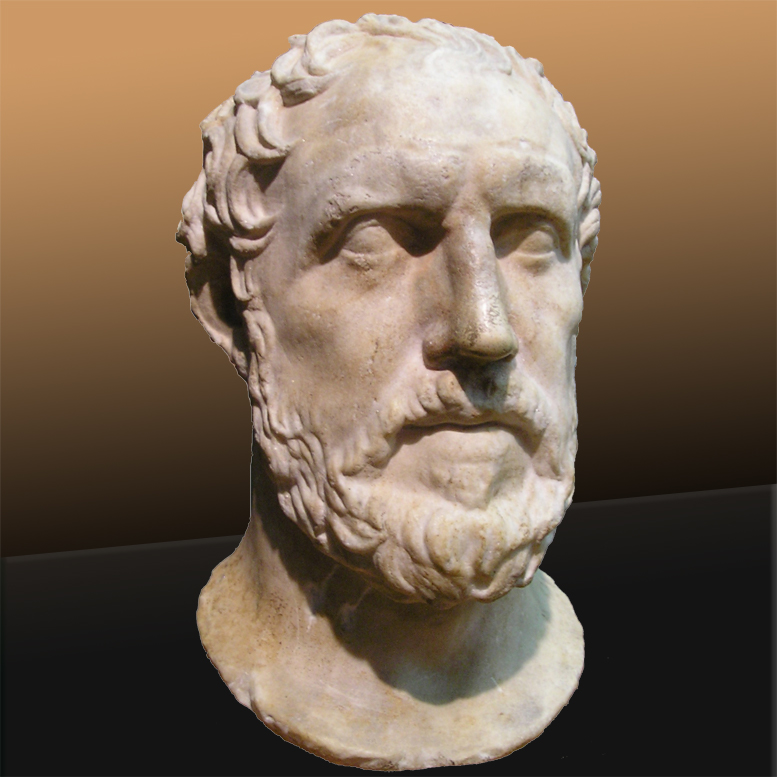
. . . the search for truth strains the patience of most people, who would rather believe the first things that come to hand.
Thucydides, History of the Peloponnesian War, Paul Woodruff, translator, Book I, 1.21-[3].

What can be done in a week? Nothing. There is almost nothing that can be done in a week by any large organization anywhere on any topic ever in the history of large organizations. Large organizations cannot do anything in a week.
Scott Adams, admittedly exaggerating in live online talk (Bitchute archive), September 29, 2018 (40:50), referring to the Kavanaugh hearing.
ὅπου γὰρ ἰσχὺς συζυγοῦσι καὶ δίκη
ποία ξυνωρὶς τῆσδε καρτερωτέρα
For where might and justice are yoke-fellows —
What pair is stronger than this?
The secret of happiness is freedom and the secret of freedom is courage.
Thucydides, History of the Peloponnesian War, Book II, 2.43.
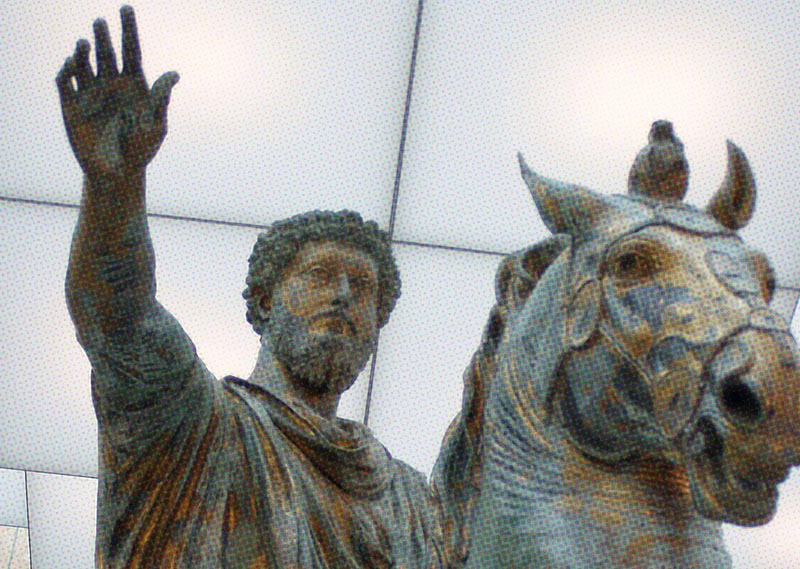
Live as on a mountain. . . . Let men see, let them know a real man who lives according to nature. If they cannot endure him, let them kill him. For that is better than to live thus.
Marcus Aurelius Antoninus, Meditations, X, 15.
For the true author of the subjugation of a people is not so much the immediate agent, as the power which permits it having the means to prevent it.
Thucydides, History of the Peloponnesian War, Book I, 69.
We can get some idea of a whole from a part, but never knowledge or exact opinion. Special histories therefore contribute very little to the knowledge of the whole and conviction of its truth. It is only indeed by study of the interconnexion of all the particulars, their resemblances and differences, that we are enabled at least to make a general survey, and thus derive both benefit and pleasure from history.
All things are subject to decay and change.
Polybius, The Histories, trans. James Hampton (1762), Vol. II, pp. 177-178.
In the constitution of that rational animal I see no virtue which is opposed to justice, but I see a virtue which is opposed to love of pleasure, and that is temperance.
Marcus Aurelius Antoninus, Meditations, VIII, 39.
The only method of learning to bear with dignity the vicissitudes of fortune is to recall the catastrophes of others.
Polybius, The Histories, trans. Evelyn S. Shuckburgh (London, New York: Macmillan and Co., 1889), Book I, Chapter 1.
Once killing starts, it is difficult to draw the line.
Tacitus, Histories (100-110 AD), Book I, 39.