Categories
Thought

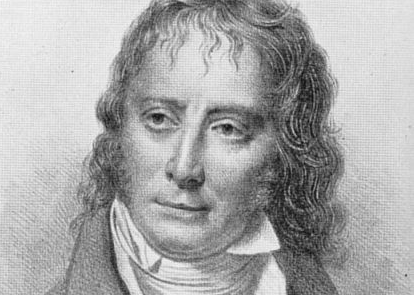
Benjamin Constant

“War precedes commerce. War and commerce are only two different means of achieving the same end, that of getting what one wants. Commerce is simply a tribute paid to the strength of the possessor by the aspirant to possession. It is an attempt to conquer, by mutual agreement, what one can no longer hope to obtain through violence. A man who was always the stronger would never conceive the idea of commerce. It is experience, by proving to him that war, that is, the use of his strength against the strength of others, exposes him to a variety of obstacles and defeats, that leads him to resort to commerce, that is, to a milder and surer means of engaging the interest of others to agree to what suits his own. War is all impulse, commerce, calculation. Hence it follows that an age must come in which commerce replaces war. We have reached this age.”


Benjamin Constant The Liberty of the Ancients Compared with That of the Moderns, 1819
Categories
Thought

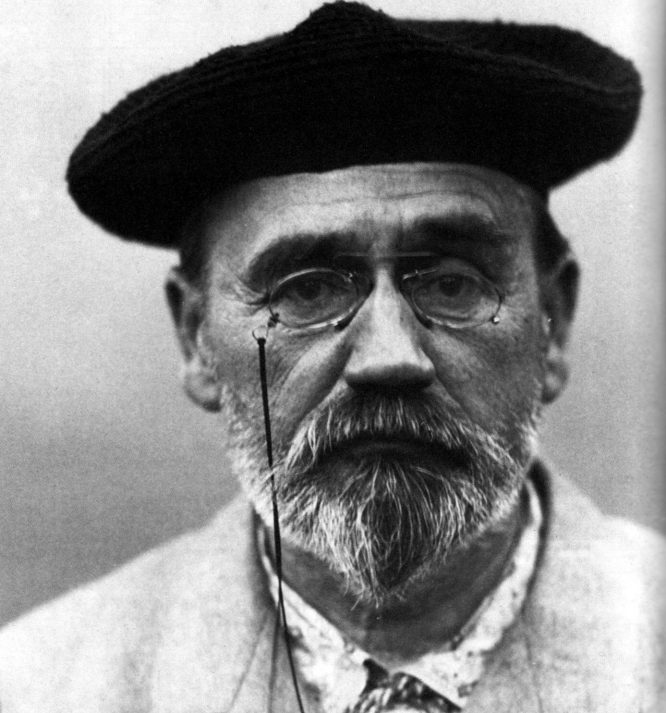
Émile Zola

If you shut up truth and bury it under the ground, it will but grow, and gather to itself such explosive power that the day it bursts through it will blow up everything in its way.


Émile Zola, as quoted in Dreyfus: His Life and Letters‎ (1937) edited by Pierre Dreyfus, p. 175.

Categories
Thought

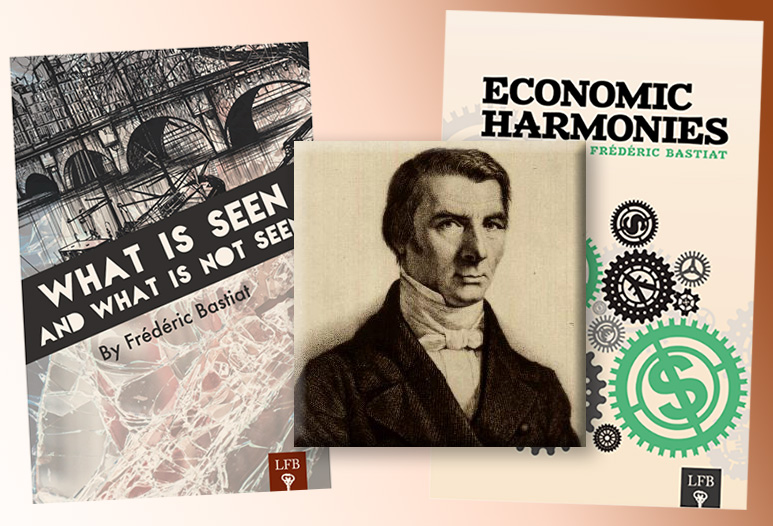
Frédéric Bastiat

[T]he misguided people are rushing into a horrible and absurd struggle, in which victory would be more fatal than defeat; since, according to this supposition, the result would be the realisation of universal evils, the destruction of every means of emancipation, the consummation of its own misery.


Frédéric Bastiat, “Capital and Interest” in Essays on Political Economy (New York:
G. P. Putnams & Sons, 1874). Bastiat is referring to the anti-capitalist ideas of “MM. Proudhon and Thoré” who, he argued, were “deceiving themselves” as well as the people.

Pierre Joseph Proudhon was the first person on record to call himself an “anarchist” and regard it as a good thing, and the first to call the owner of property a “capitalist.” He is known for a number of works promoting “mutualism,” including Systems of Economical Contradictions, or; The Philosophy of Misery, which was translated into English by Benjamin R. Tucker. Étienne-Joseph-Théophile Thoré (better known as Théophile Thoré-Bürger) was a journalist and art critic now known mostly as the re-discoverer of the paintings of Vermeer. Among his writings was La Recherche de la liberté of 1845.

Categories
Thought

Epicurus

I would prefer to speak openly and like an oracle to give answers serviceable to all mankind, even though no one should understand me, rather than to conform to popular opinions and so win the praise freely scattered by the mob.


Epicurus, “Vatican Sayings,” XXIX

Categories
Thought

Frédéric Bastiat

Government is not maimed, and cannot be so. It has two hands — one to receive and the other to give; in other words, it has a rough hand and a smooth one. The activity of the second is necessarily subordinate to the activity of the first. Strictly, Government may take and not restore. This is evident, and may be explained by the porous and absorbing nature of its hands, which always retain a part, and sometimes the whole, of what they touch. But the thing that never was seen, and never will be seen or conceived, is, that Government can restore more to the public than it has taken from it. It is therefore ridiculous for us to appear before it in the humble attitude of beggars. It is radically impossible for it to confer a particular benefit upon any one of the individualities which constitute the community, without inflicting a greater injury upon the community as a whole.

Frédéric Bastiat, “Government” in Essays on Political Economy (New York:
G. P. Putnams & Sons, 1874).
Categories
Thought

Karl Kraus

War: first, one hopes to win; then one expects the enemy to lose; then, one is satisfied that the enemy too is suffering; in the end, one is surprised that everyone has lost.


Karl Kraus, Die Fackel, no. 46 (October 9, 1917).

Categories
Thought

Morton Feldman

The people who you think are radicals might really be conservatives. The people who you think are conservative might really be radical.

Composer Morton Feldman, as quoted by Alex Ross, The Rest Is Noise:Listening to the Twentieth Century (2008), p. 177.

Categories
Thought

Xenophon

Yet is it more honourable, and just, and upright, and pleasing, to treasure in the memory good acts than bad.


Xenophon, Anabasis translation by John Selby Watson (1854) Bk. 5, ch. 8; p. 179.

Categories
Thought

Xenophon

It is only for those to employ force who possess strength without judgment; but the well advised will have recourse to other means. Besides, he who pretends to carry his point by force hath need of many associates; but the man who can persuade knows that he is himself sufficient for the purpose; neither can such a one be supposed forward to shed blood; for, who is there would choose to destroy a fellow citizen rather than make a friend of him by mildness and persuasion?


Xenophon, Memorabilia of Socrates Bk. 1, ch. 2, as translated by Sarah Fielding in The Whole Works of Xenophon (1840), p. 523.

Categories
Thought

Aeschylus

ὅπου γὰρ ἰσχὺς συζυγοῦσι καὶ δίκη
ποία ξυνωρὶς τῆσδε καρτερωτέρα

For where might and justice are yoke-fellows —
What pair is stronger than this?