Categories
Thought

New Coke

On April 23, 1985, Coca-Cola changed its formula in its newly released New Coke. The American response was overwhelmingly negative, and the original formula was back on the market in less than three months. A great demonstration of consumer sovereignty.

Categories
Thought

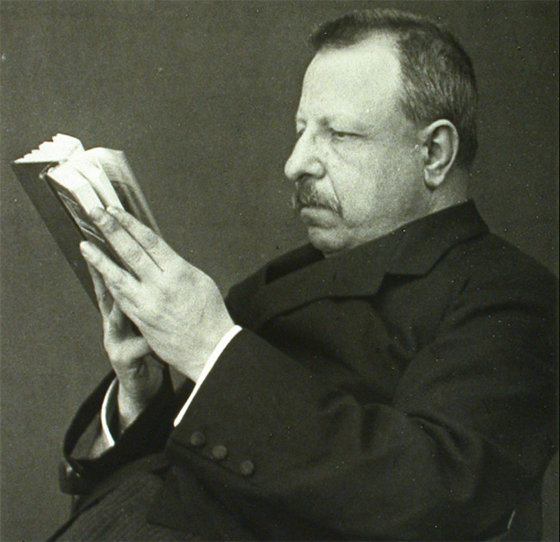
Benedetto Croce

Morality, and the ideal of freedom which is the political expression of morality, are not the property of a given party or group, but a value that is fundamentally and universally human. . . . No people will be truly free till all are free.

Benedetto Croce was an Italian philosopher and outspoken anti-fascist.
Categories
Thought

Tucker Carlson

In decadent societies the guilty aren’t punished; only the unpopular are punished.

Tucker Carlson, Tucker Carlson Tonight, Fox News (April 18, 2019).
Categories
Thought

Francis Amasa Walker

Protectionism is nothing if not socialistic. It proposes, in the public interest, to modify the natural course of trade and production, and to do this by depriving the citizen of his privilege of buying in the cheapest market. Yet the protectionist is not to be called, therefore, a Socialist, since the Socialist would not only have the state determine what shall be produced, but he would have the state itself undertake the production.

Francis Amasa Walker (Davis R. Dewey, ed.), Discussions of Economics and Statistics, Volume II (1899), p. 260.

Categories
Thought

Herbert Spencer

It is said that when railways were first opened in Spain, peasants standing on the tracks were not unfrequently run over; and that the blame fell on the engine-drivers for not stopping: rural experiences having yielded no conception of the momentum of a large mass moving at a high velocity.

The incident is recalled to me on contemplating the ideas of the so-called “practical” politician, into whose mind there enters no thought of such a thing as political momentum, still less of a political momentum which, instead of diminishing or remaining constant, increases. The theory on which he daily proceeds is that the change caused by his measure will stop where he intends it to stop. He contemplates intently the things his act will achieve, but thinks little of the remoter issues of the movement his act sets up, and still less its collateral issues.

Herbert Spencer, The Man versus the State (1884).
Categories
Thought

Frédéric Bastiat

Nature has provided, by means as simple as they are infallible, that there should be dispersion, diffusion, coordination, simultaneous progress, all constituting a state of things that your restrictive laws paralyze as much as they can; for the tendency of such laws is, by isolating communities, to render the diversity of condition much more marked, to prevent equalization, hinder integration, neutralize countervailing circumstances, and segregate nations, whether in their superiority or in their inferiority of condition.

Frédéric Bastiat, from Economic Sophisms, “To Equalize the Conditions of Production” — the “such laws” mentioned are protectionist measures, and protectionism was the chief target of Bastiat’s famous book.

Categories
Thought

Herbert Spencer

[T]here exists in man what may be termed an instinct of personal rights — a feeling that leads him to claim as great a share of natural privilege as is claimed by others — a feeling that leads him to repel anything like an encroachment upon what he thinks his sphere of original freedom.

Categories
Thought

Immanuel Kant

Act only on that maxim through which you can at the same time will that it should become a universal law.

Immanuel Kant, Groundwork for the Metaphysics of Morals (1797), chapter eleven
Categories
Thought

George Meredith

Perfect simplicity is unconsciously audacious.

George Meredith, The Ordeal of Richard Feverel (1859).

Categories
Thought

Camille Paglia

The English language was created by poets, a five-hundred year enterprise of emotion and metaphor, the richest dialogue in world literature. French rhetorical models are too narrow for the English tradition. Most pernicious of French imports is the notion that there is no person behind a text. Is there anything more affected, aggressive, and relentlessly concrete than a Parisian intellectual behind his/her turgid text? The Parisian is a provincial when he pretends to speak for the universe.

Camille Paglia, Sexual Personae: Art and Decadence from Nefertiti to Emily Dickinson, p. 34.