Categories
Thought

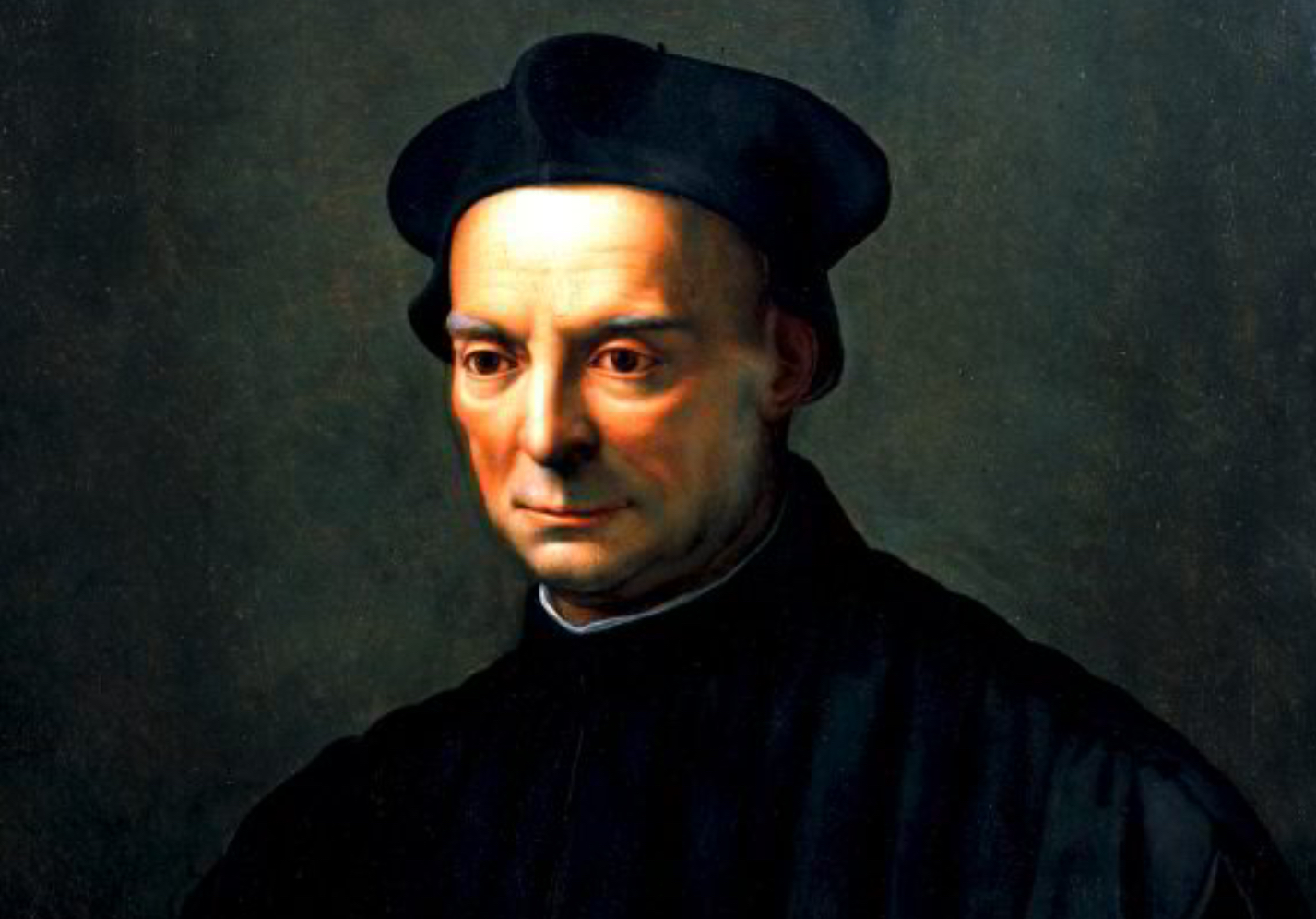
Niccolò Machiavelli

He who desires or wants to reform the State [government] of a City, and wishes that it may be accepted and capable of maintaining itself to everyone’s satisfaction, it is necessary for him at least to retain the shadow of ancient forms, so that it does not appear to the people that the institutions have been changed, even though in fact the new institutions should be entirely different from the past ones: for the general mass of men are satisfied with appearances, as if it exists, and many times are moved by the things which appear to be rather than by the things that are.

Niccolò Machiavelli, Discourses on Livy, XXV
Categories
Thought

John Locke

Men living together according to reason, without a common superior on earth, with authority to judge between them, is properly the state of nature. But force, or a declared design of force, upon the person of another, where there is no common superior on earth to appeal to for relief, is the state of war: and it is the want of such an appeal gives a man the right of war even against an aggressor, tho’ he be in society and a fellow subject. Thus a thief, whom I cannot harm, but by appeal to the law, for having stolen all that I am worth, I may kill, when he sets on me to rob me but of my horse or coat; because the law, which was made for my preservation, where it cannot interpose to secure my life from present force, which, if lost, is capable of no reparation, permits me my own defence, and the right of war, a liberty to kill the aggressor, because the aggressor allows not time to appeal to our common judge, nor the decision of the law, for remedy in a case where the mischief may be irreparable. Want of a common judge with authority, puts all men in a state of nature: force without right, upon a man’s person, makes a state of war, both where there is, and is not, a common judge.

John Locke, Second Treatise on Government, ch. 3
Categories
Thought

C. S. Lewis

The task of the modern educator is not to cut down jungles, but to irrigate deserts.

Categories
Thought

Denis Diderot

The arbitrary rule of a just and enlightened prince is always bad. His virtues are the most dangerous and the surest form of seduction: they lull a people imperceptibly into the habit of loving, respecting, and serving his successor, whoever that successor may be, no matter how wicked or stupid.

Denis Diderot, “Refutation of Helvétius” (written 1773-76, published 1875).
Categories
Thought

Herbert Spencer

In judging of political good and evil, the average legislator thinks much after the manner of the mother with the spoiled child: if a course is productive of immediate benefit, that is considered sufficient justification.

Herbert Spencer, The Study of Sociology (1873; 1891), pp. 102-103.
Categories
Thought

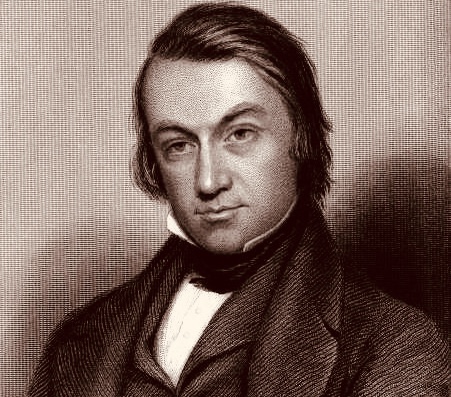
Charles Mackay

Dissatisfaction with his lot seems to be the characteristic of man in all ages and climates. So far, however, from being an evil, as at first might be supposed, it has been the great civiliser of our race; and has tended, more than any thing else, to raise us above the condition of the brutes.

Charles Mackay, Memoirs of Extraordinary Popular Delusions and the Madness of Crowds (1852).

Categories
Thought

Herbert Spencer

The present social state is transitional, as past social states have been transitional. There will, I hope and believe, come a future social state differing as much from the present as the present differs from the past with its mailed barons and defenseless serfs. In Social Statics, as well as in The Study of Sociology and in Political Institutions, is clearly shown the desire for an organisation more conducive to the happiness of men at large than that which exists. My opposition to socialism results from the belief that it would stop the progress to such a higher state and bring back a lower state. Nothing but the slow modification of human nature by the discipline of social life, can produce permanently advantageous changes.

Herbert Spencer, “From Freedom to Bondage,” in Thomas Mackay (ed.), A Plea for Liberty: An Argument Against Socialism and Socialistic Legislation (1891). The three works cited are Social Statics; or, The Conditions Essential to Human Happiness Specified, and the First of Them Developed (1851), presented in 1892 in an Abridged and Revised form; The Study of Sociology (1873); and Political Institutions (1882), which appeared as Part V in the second volume of his Principles of Sociology.
Categories
Thought

J. H. Levy

Socialism has its black sheep. What cause has not? But that which fills me with grief is that it has so many white ones. The most miserable circumstance of our time is that much of its devotion and self-denial is running into Socialistic channels. It is this misdirected self-abnegation, characteristic of the Dark Ages, which is carrying us back to them.

Categories
Thought

Herbert Spencer

It is not, then, chiefly in the interests of the employing classes that socialism is to be resisted, but much more in the interests of the employed classes.

Herbert Spencer, “From Freedom to Bondage,” in Thomas Mackay (ed.), A Plea for Liberty: An Argument Against Socialism and Socialistic Legislation (1891).
Categories
Thought

Herbert Spencer

A fundamental error pervading the thinking of nearly all parties, political and social, is that evils admit of immediate and radical remedies. ‘If you will but do this, the mischief will be prevented.’ ‘Adopt my plan and the suffering will disappear.’ ‘The corruption will unquestionably be cured by enforcing this measure.’ Everywhere one meets with beliefs, expressed or implied, of these kinds. They are all ill-founded. It is possible to remove causes which intensify the evils; it is possible to change the evils from one form into another; and it is possible, and very common, to exacerbate the evils by the efforts made to prevent them; but anything like immediate cure is impossible.

Herbert Spencer, “From Freedom to Bondage,” in Thomas Mackay (ed.), A Plea for Liberty: An Argument Against Socialism and Socialistic Legislation (1891).