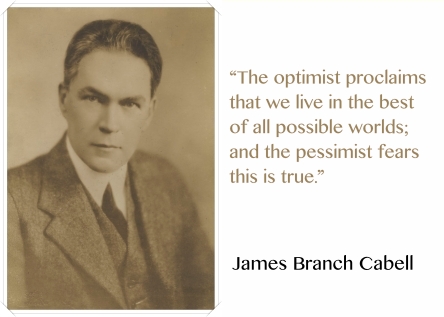
The optimist proclaims that we live in the best of all possible worlds; and the pessimist fears this is true.
The character “Coth of the Rocks,” in James Branch Cabell, The Silver Stallion: A Comedy of Redemption (1926).
James Branch Cabell
The optimist proclaims that we live in the best of all possible worlds; and the pessimist fears this is true.
The character “Coth of the Rocks,” in James Branch Cabell, The Silver Stallion: A Comedy of Redemption (1926).
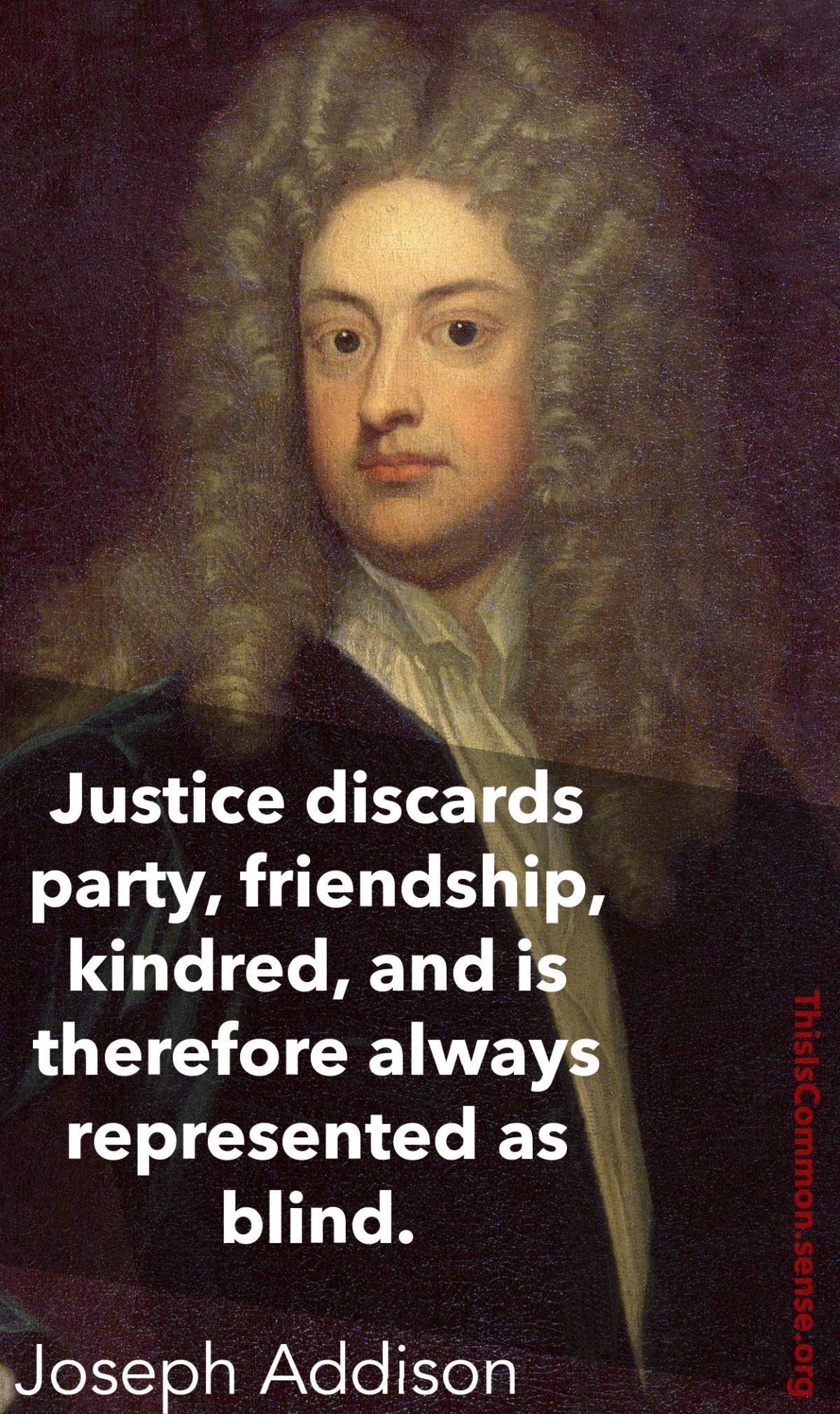
Justice discards party, friendship, kindred, and is therefore always represented as blind.
Joseph Addison, The Guardian (1713), no. 99.
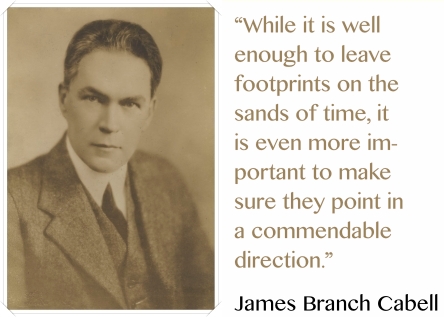
While it is well enough to leave footprints on the sands of time, it is even more important to make sure they point in a commendable direction.
James Branch Cabell, Beyond Life (1919).
Every cause produces more than one effect.
If one awakens in men the idea of freedom then the free men will incessantly go on to free themselves; if on the contrary, one only educates them, then they will at all times accommodate themselves to circumstance in the most highly educated and elegant manner and degenerate into subservient cringing souls.
Max Stirner, The False Principle of Our Education: or; Humanism and Realism (1842).
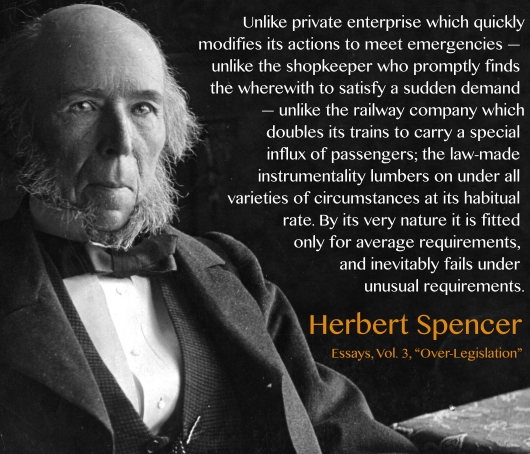
Unlike private enterprise which quickly modifies its actions to meet emergencies — unlike the shopkeeper who promptly finds the wherewith to satisfy a sudden demand — unlike the railway company which doubles its trains to carry a special influx of passengers; the law-made instrumentality lumbers on under all varieties of circumstances at its habitual rate. By its very nature it is fitted only for average requirements, and inevitably fails under unusual requirements.
Herbert Spencer, Essays: Scientific, Political, and Speculative (1891), Vol. 3, Ch. VII, “Over-Legislation.” See also Spencer’s essay “Specialized Administration.”
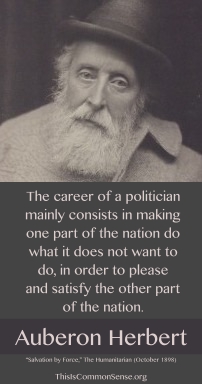
The career of a politician mainly consists in making one part of the nation do what it does not want to do, in order to please and satisfy the other part of the nation.
Auberon Herbert, The Right and Wrong of Compulsion by the State, and Other Essays, “Salvation by Force.”
So what do you do if you don’t know? How do you manage your risk if you don’t know? . . . The thing that you can default to is freedom. Because the one thing we know is that if we were to lose our freedom to anything, screw it: we’re out of here. Right? We’d all just close the planet and starve to death. If we lose our freedom we don’t even want to be here.
If you say to me ‘I can give you your freedom back but there’s a one percent change that you’ll die,’ I’m in; I’ll take my freedom. ‘I’ll give you your freedom back but there’s a one percent change your grandmother might die a few years early,’ I’m in; ‘sorry, Grandma.’ I’m gonna talk to Grandma, first, but you know what? She agrees. Grandma doesn’t disagree. Grandma wants me to be free; Grandma wants to be free. . . .
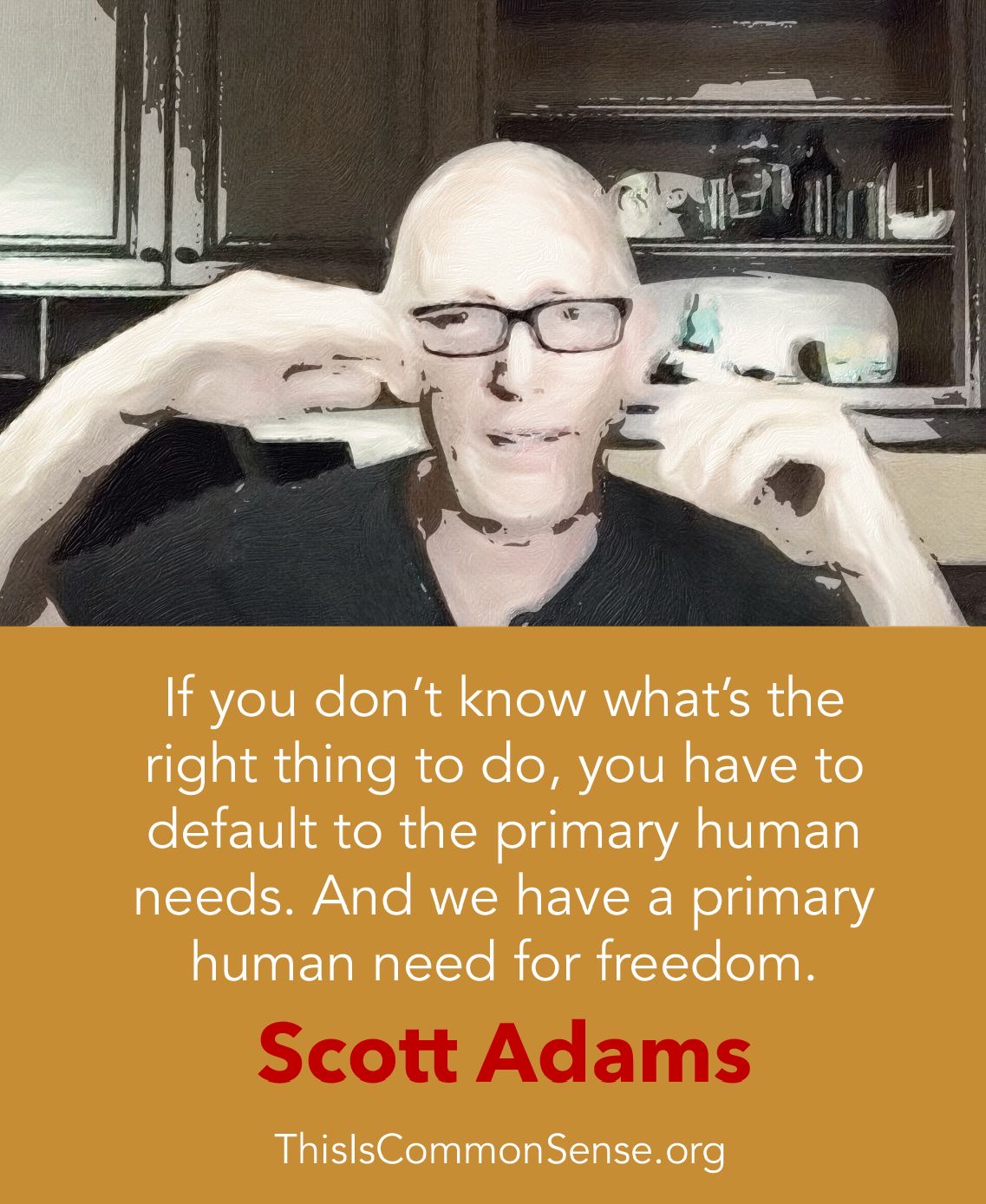
If you don’t know what’s the right thing to do, you have to default to the primary human needs. And we have a primary human need for freedom.
Real Coffee with Scott Adams, Periscope Episode 1151, “Trump Slaughtermeter Pinned 100%. Swiss Coronavirus Mystery. Who Reversal.”
When a man is treated like a beast, he says, ‘After all, I’m human.’ When he behaves like a beast, he says ‘After all, I’m only human.’
Karl Kraus, as quoted in Thomas Szasz, Karl Kraus and the Soul Doctors (1977).
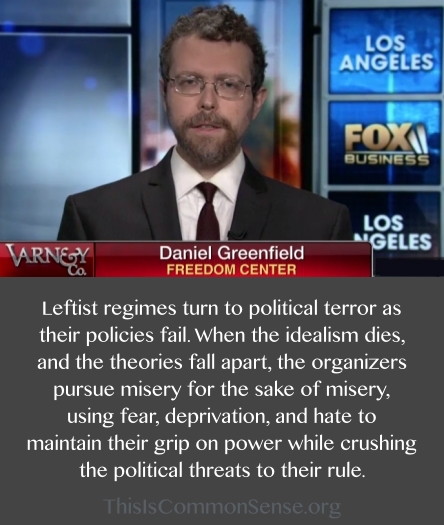
Leftist regimes turn to political terror as their policies fail. When the idealism dies, and the theories fall apart, the organizers pursue misery for the sake of misery, using fear, deprivation, and hate to maintain their grip on power while crushing the political threats to their rule.
Daniel Greenfield, “The Chinese Lockdown-and-Mask Model Failed. Now Its Proponents Need Scapegoats,” Sultan Knish, October 17, 2020.