Categories
Thought

J. H. Levy

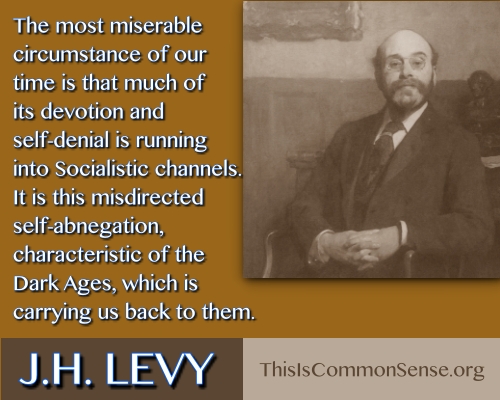
Socialism has its black sheep. What cause has not? But that which fills me with grief is that it has so many white ones. The most miserable circumstance of our time is that much of its devotion and self-denial is running into Socialistic channels. It is this misdirected self-abnegation, characteristic of the Dark Ages, which is carrying us back to them.

Joseph Hiam Levy, introduction to the first English edition (1894) of Yves Guyot’s The Tyranny of Socialism.

Categories
Thought

Lord Acton

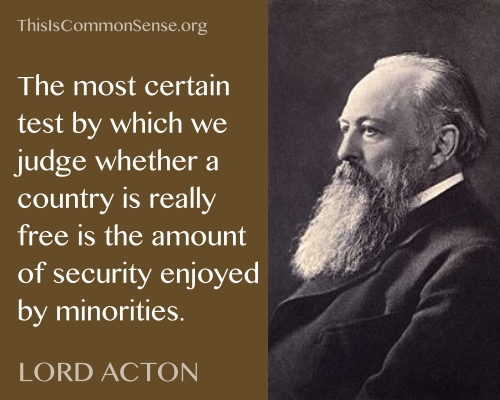
The most certain test by which we judge whether a country is really free is the amount of security enjoyed by minorities.

John Dalberg-Acton, 1st Baron Acton, The History of Freedom in Antiquity (1877).
Categories
Thought

James M. Buchanan

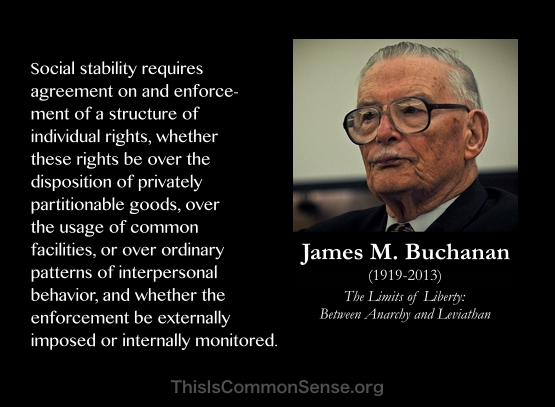
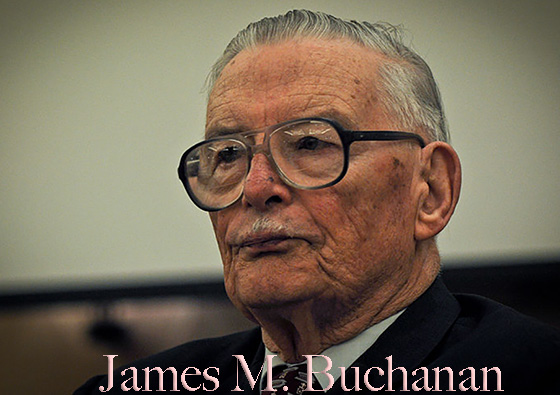
Social stability requires agreement on and enforcement of a structure of individual rights, whether these rights be over the disposition of privately partitionable goods, over the usage of common facilities, or over ordinary patterns of interpersonal behavior, and whether the enforcement be externally imposed or internally monitored.

James M. Buchanan, The Limits of Liberty: Between Anarchy and Leviathan (1975).
Categories
Thought

Ludwig von Mises

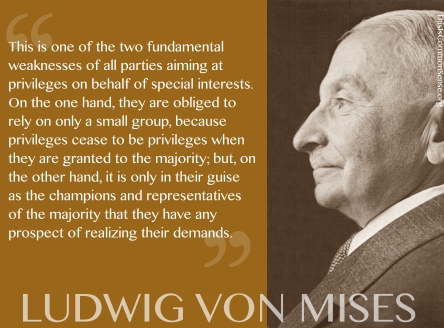
This is one of the two fundamental weaknesses of all parties aiming at privileges on behalf of special interests. On the one hand, they are obliged to rely on only a small group, because privileges cease to be privileges when they are granted to the majority; but, on the other hand, it is only in their guise as the champions and representatives of the majority that they have any prospect of realizing their demands.

Ludwig von Mises, Liberalism, first published in German as Liberalismus, 1927, and in English as The Free and Prosperous Commonwealth, 1962.

Categories
Thought

Ludwig von Mises

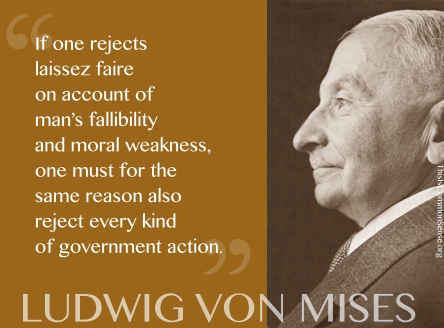
If one rejects laissez faire on account of man’s fallibility and moral weakness, one must for the same reason also reject every kind of government action.

Ludwig von Mises, Planning for Freedom (1952), p. 44

Categories
Thought

Richard Cobden

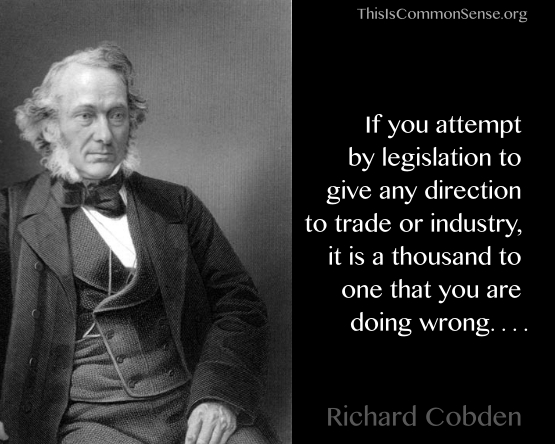
If you attempt by legislation to give any direction to trade or industry, it is a thousand to one that you are doing wrong; and if you happen to be right, it is work of supererogation, for the parties for whom you legislate would go right without you, and better than with you.

Richard Cobden, Speech in the House of Commons (February 27, 1846).

Categories
Thought

James M. Buchanan

Some physicist might believe that ultimately, we will be able to explain everything. To me, that is utterly stupid, just like saying that an atheist is equally dogmatic as a Texas Baptist. It seems to me that, if you accept evolution, you can still not expect your dog to get up and start talking German. And that’s because your dog is not genetically programmed to do that. We are human animals, and we are equally bound. There are whole realms of discourse out there that we cannot reach, by definition. There are always going to be limits beyond which we cannot go. Knowing that they are there, you can always hope to move a little closer — but that’s all.

James M. Buchanan, in Karen Ilse Horn (ed.) Roads to Wisdom, Conversations With Ten Nobel Laureates in Economics (2009).
Categories
Thought

Richard Cobden

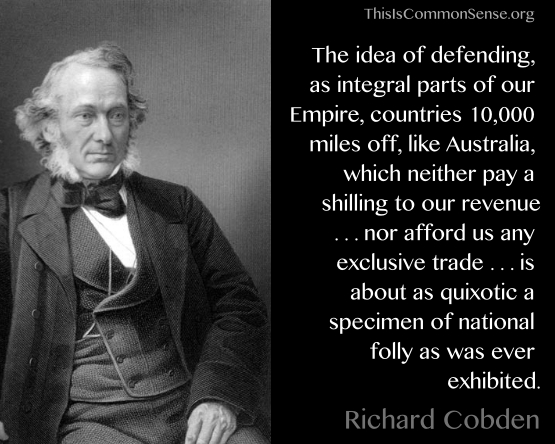
The idea of defending, as integral parts of our Empire, countries 10,000 miles off, like Australia, which neither pay a shilling to our revenue . . . nor afford us any exclusive trade . . . is about as quixotic a specimen of national folly as was ever exhibited.

Richard Cobden, a note to Edward Ellice, 1856.

Categories
Thought

Richard Dolan

Do not ever doubt the ambition of crazed futurists who truly believe in remaking human civilization and the human race itself to conform to their own Frankenstein-like vision of perfection….

Richard Dolan, “We are in a Global Revolution,” The Richard Dolan Show (September 14, 2021).

Categories
Thought

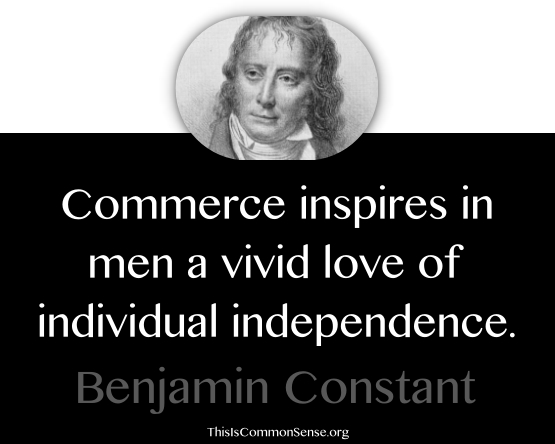
Benjamin Constant

[C]ommerce inspires in men a vivid love of individual independence. Commerce supplies their needs, satisfies their desires, without the intervention of the authorities. This intervention is almost always — and I do not know why I say almost — this intervention is indeed always a trouble and an embarrassment. Every time collective power wishes to meddle with private speculations, it harasses the speculators. Every time governments pretend to do our own business, they do it more incompetently and expensively than we would.

Benjamin Constant, The Liberty of the Ancients Compared with That of the Moderns (1819).