Proud people breed sad sorrows for themselves.
The character Nelly Dean, in Emily Brontë’s Wuthering Heights (1847).
Categories
Emily Brontë

Proud people breed sad sorrows for themselves.
The character Nelly Dean, in Emily Brontë’s Wuthering Heights (1847).
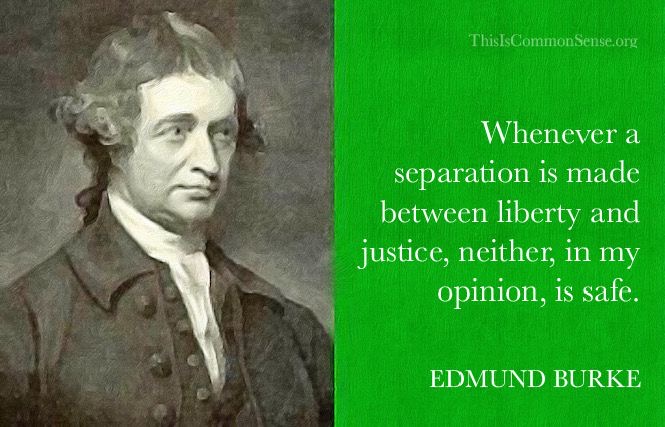
Whenever a separation is made between liberty and justice, neither, in my opinion, is safe.
Edmund Burke, Letter to M. de Menonville (October 1789).

Virtue is not always amiable. Integrity is sometimes ruined by prejudices and by passions.
John Adams, diary (February 9, 1779).

Liberty, if I understand it at all, is a general principle, and the clear right of all the subjects within the realm, or of none. Partial freedom seems to me a most invidious mode of slavery. But, unfortunately, it is the kind of slavery the most easily admitted in times of civil discord: for parties are but too apt to forget their own future safety in their desire of sacrificing their enemies. People without much difficulty admit the entrance of that injustice of which they are not to be the immediate victims. In times of high proceeding it is never the faction of the predominant power that is in danger: for no tyranny chastises its own instruments.
Edmund Burke, “A Letter to John Farr and John Harris, Esquires, Sheriffs of the City of Bristol, on Affairs of America” (April 3, 1777), in Writings and speeches (Little, Brown and Company, 1901), page 198.
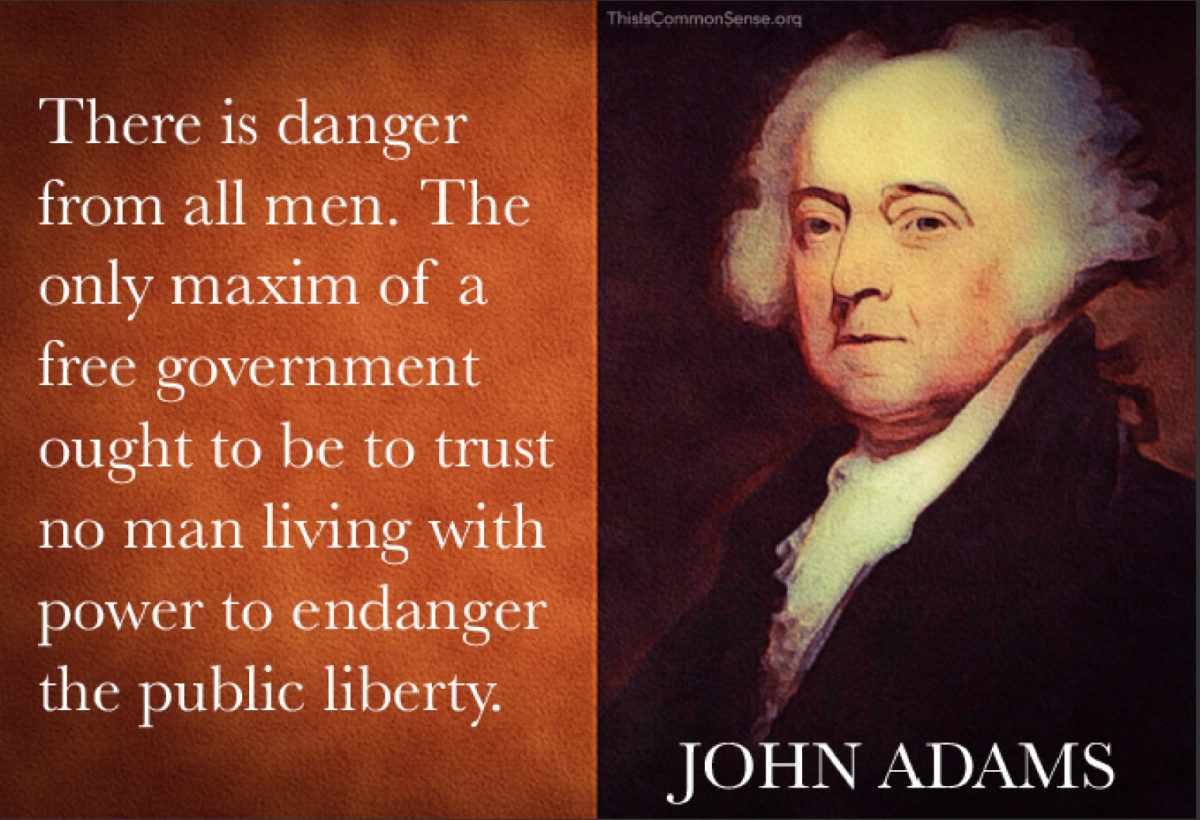
There is danger from all men. The only maxim of a free government ought to be to trust no man living with power to endanger the public liberty.
John Adams, in notes for an oration at Braintree (Spring 1772).
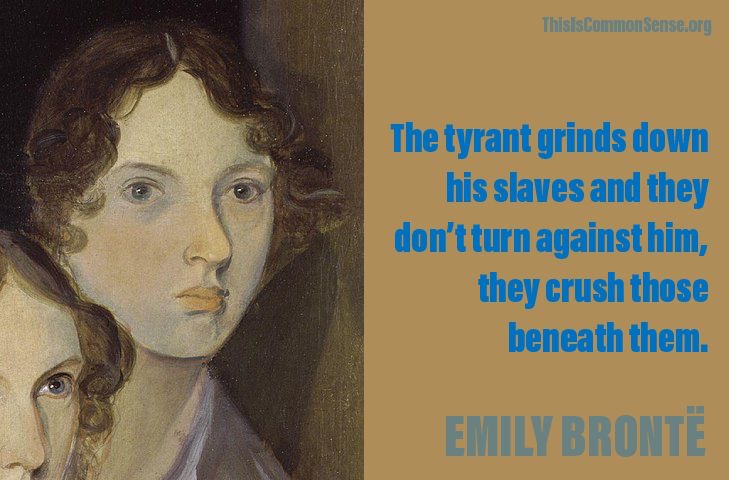
The tyrant grinds down his slaves and they don’t turn against him, they crush those beneath them.
The character Heathcliff, in Emily Brontë’s Wuthering Heights (1847).
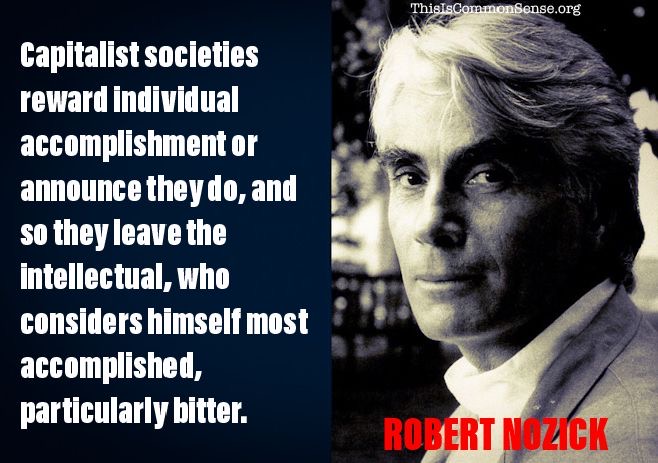
Capitalist societies reward individual accomplishment or announce they do, and so they leave the intellectual, who considers himself most accomplished, particularly bitter.
Robert Nozick, “Why Do Intellectuals Oppose Capitalism?”

I’m a German, and we once asked our grandparents how they could have just stood by in silence allowing a horrific totalitarian regime to come about. Anyone could have known — all they had to do was open their eyes and take a look: the vast majority chose not to. So, what will you tell your grandchildren? Will you tell them you didn’t know? Will you tell them you were ‘just following orders’? You need to understand: it is not about breaking the ‘fourth wave’; it is about breaking people. Australia does not need a ‘no-COVID strategy.’ What Australia needs is a ‘no-oppression strategy.’
Christine Margarete Anderson, a German politician serving as an Alternative for Germany (AfD) Member of the European Parliament, “answering an SOS call” from Australians, in which she designated the southern hemisphere country as “a former free and liberal democracy that has been formed into a totalitarian regime” in the cause of a zero-infection policy over the CCP virus.
Christine Anderson of the E.U. Parliament answers cries for help from Australia.
— The Freddersons (@FredFredderson1) December 5, 2021
The war is coming out into the open. pic.twitter.com/fqhh3RS6Wk
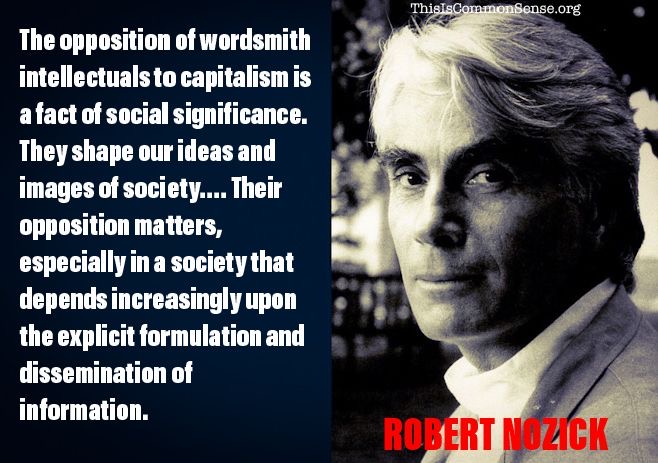
The opposition of wordsmith intellectuals to capitalism is a fact of social significance. They shape our ideas and images of society; they state the policy alternatives bureaucracies consider. From treatises to slogans, they give us the sentences to express ourselves. Their opposition matters, especially in a society that depends increasingly upon the explicit formulation and dissemination of information.
Robert Nozick, “Why Do Intellectuals Oppose Capitalism?”
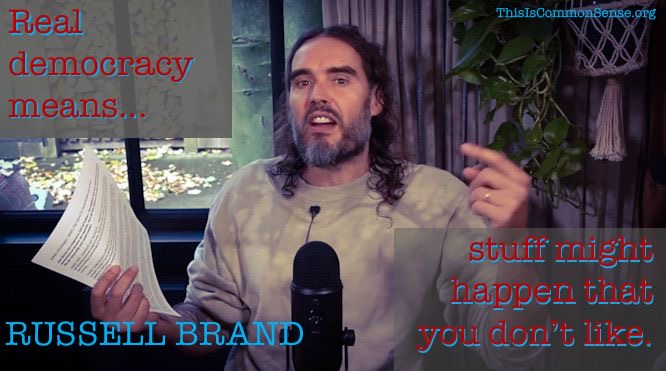
There’s an obvious pushback about being told what to think. Twitter temporarily afforded the option of, well, ‘just let the people decide.’ That’s what democracy is. That’s why democracy is not real, and never was. Because real democracy means stuff might happen that you don’t like. What they mean when they say democracy is ‘our democracy.’ What they mean by ‘the outcome of the people’ — the ‘outcome of our people.’ What they mean by ‘freedom of speech’ — ‘freedom for our speech.’
Comedian Russell Brand, “Hang On… ‘A Tool for Democracy’ or a Tool of THE ESTABLISHMENT,” discussing “Jack Dorsey has resigned as CEO of Twitter – the platform that was intended as a tool for democracy but became the opposite” and a Matt Taibbi article on Substack.