If you put the federal government in charge of the Sahara Desert, in five years there’d be a shortage of sand.
Categories
Milton Friedman
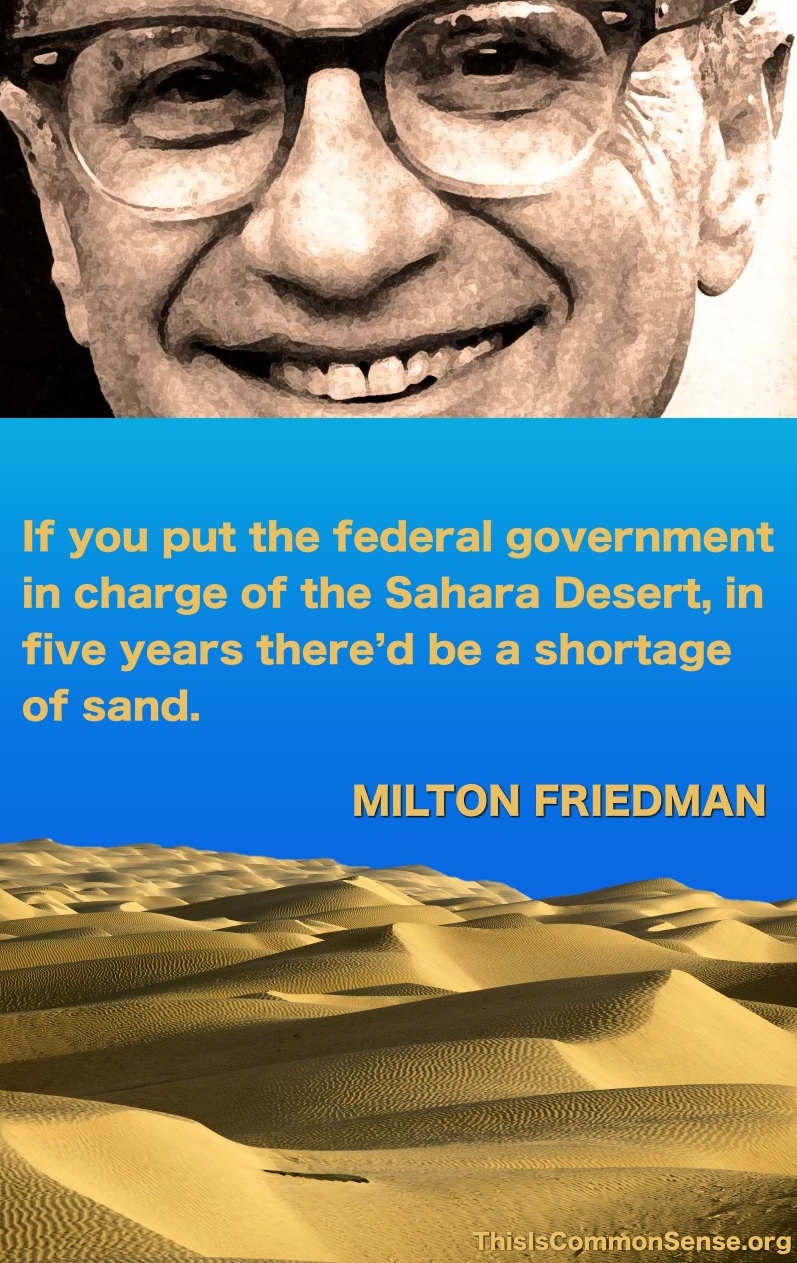
If you put the federal government in charge of the Sahara Desert, in five years there’d be a shortage of sand.

θαρρεῖν, ὦ Θεαίτητε, χρὴ τὸν καὶ σμικρόν τι
δυνάμενον εἰς τὸ πρόσθεν ἀεὶ προϊέναι.
No one should be discouraged, Theaetetus, who can make constant progress, even though it be slow.
Plato, Sophist.
Q. What is that fundamental principle?
A. It is justice, which alone comprises all the virtues of society.
Q. Why do you say that justice is the fundamental and almost only virtue of society?
A. Because it alone embraces the practice of all the actions useful to it; and because all the other virtues, under the denominations of charity, humanity, probity, love of one’s country, sincerity, generosity, simplicity of manners, and modesty, are only varied forms and diversified applications of the axiom, “Do not to another what you do not wish to be done to yourself,” which is the definition of justice.
Constantin Francois de Volney, The Law of Nature, Chapter XI: “The Social Virtues; Justice.”
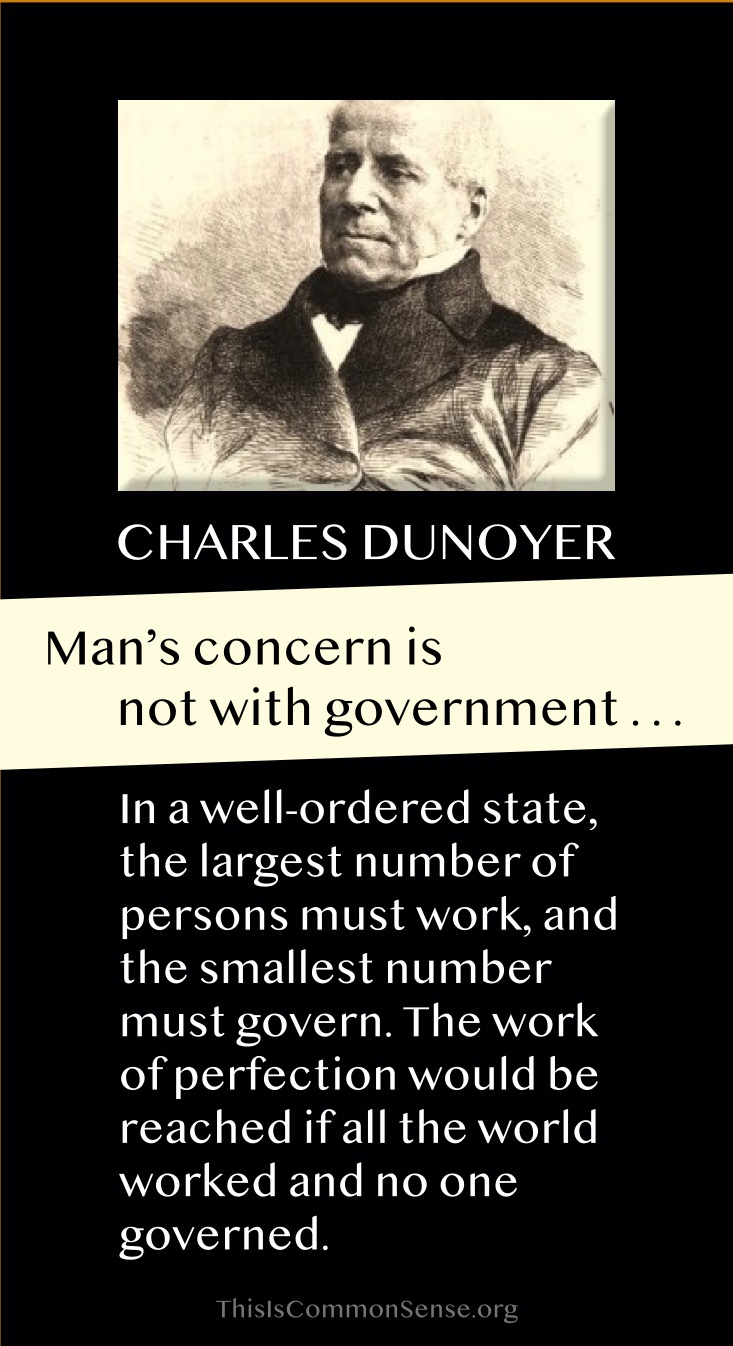
Man’s concern is not with government; he should look on government as no more than a very secondary thing — we might almost say a very minor thing. His goal is industry, labour and the production of everything needed for his happiness. In a well-ordered state, the government must only be an adjunct of production, an agency charged by the producers, who pay for it, with protecting their persons and their goods while they work. In a well-ordered state, the largest number of persons must work, and the smallest number must govern. The work of perfection would be reached if all the world worked and no one governed.

Preserve thyself; Instruct thyself; Moderate thyself; Live for thy fellow citizens, that they may live for thee.
Constantin Francois de Volney, The Law of Nature, last sentence.
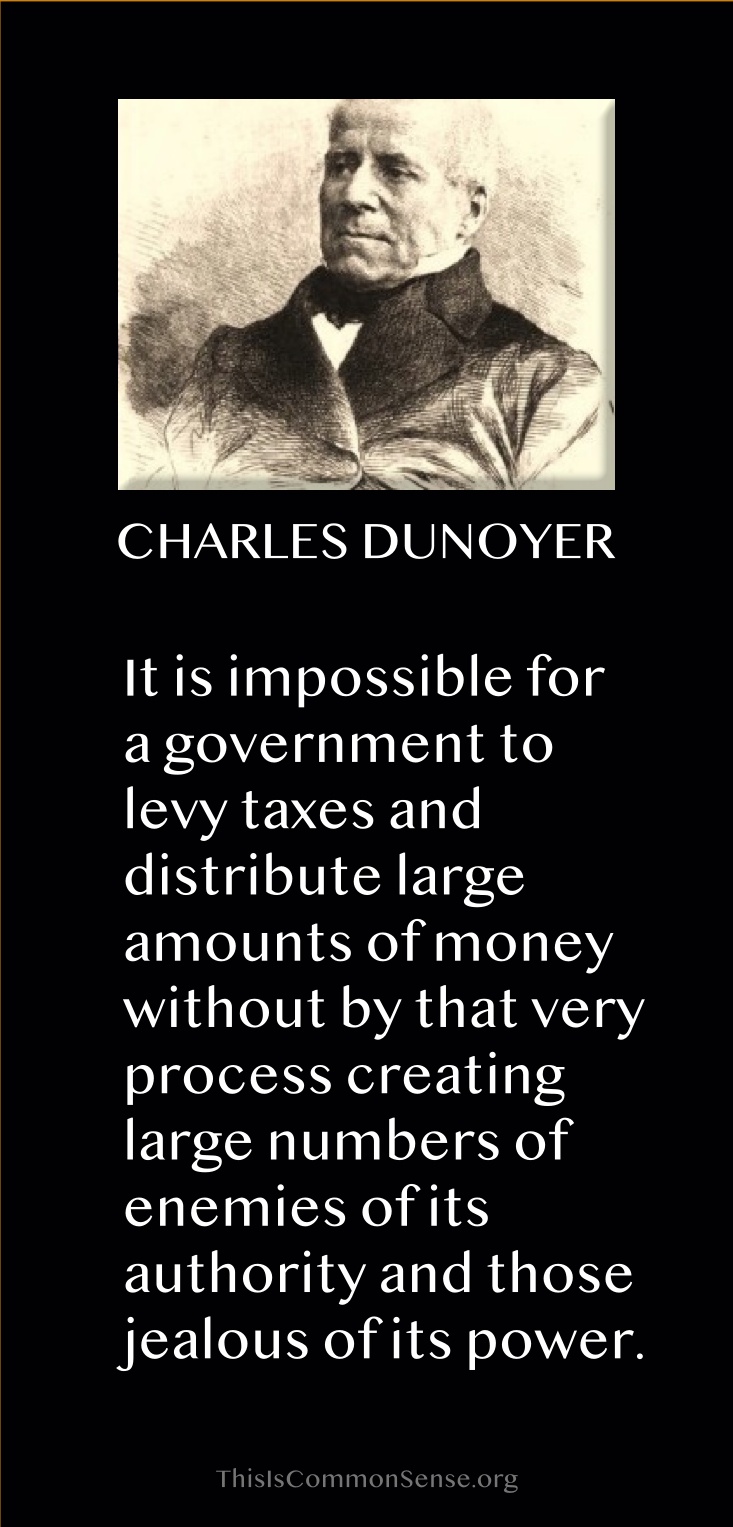
It is impossible for a government to levy taxes and distribute large amounts of money without by that very process creating large numbers of enemies of its authority and those jealous of its power.
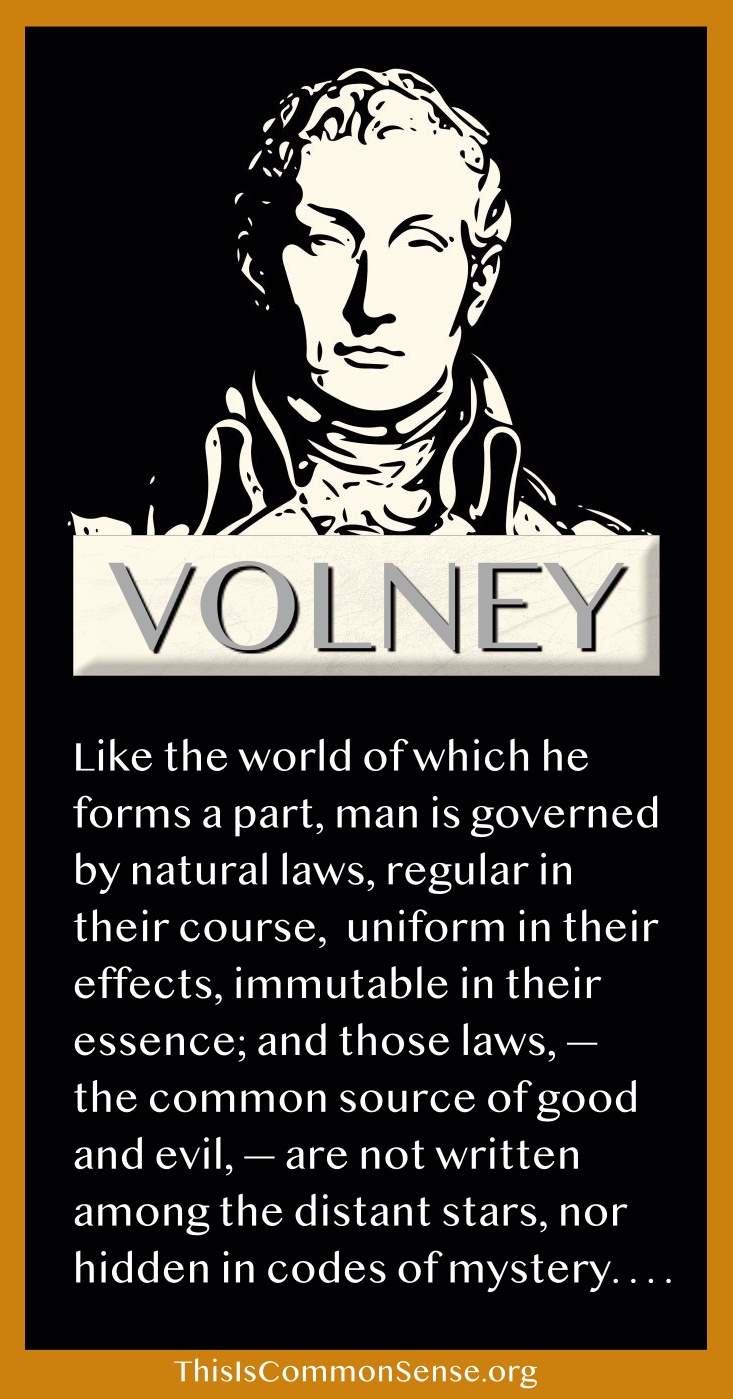
Like the world of which he forms a part, man is governed by natural laws, regular in their course, uniform in their effects, immutable in their essence; and those laws, — the common source of good and evil, — are not written among the distant stars, nor hidden in codes of mystery; inherent in the nature of terrestrial beings, interwoven with their existence, at all times and in all places, they are present to man; they act upon his senses, they warn his understanding, and give to every action its reward or punishment. Let man then know these laws! let him comprehend the nature of the elements which surround him, and also his own nature, and he will know the regulators of his destiny; he will know the causes of his evils and the remedies he should apply.
Constantin Francois de Volney, The Ruins: or, Meditations on the Revolutions of Empires, Joel Barlow and Thomas Jefferson, translators (French original: 1793), Chapter V: “Condition of Man in the Universe.”
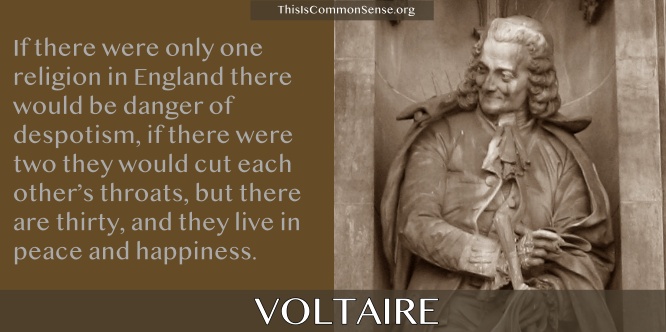
If there were only one religion in England there would be danger of despotism, if there were two they would cut each other’s throats, but there are thirty, and they live in peace and happiness.
Voltaire, Letters on England, letter 6, “On the Presbyterians,” Leonard Tancock, trans. (Harmondsworth, England: Penguin Books, 1980): p. 41, published first in English in 1733.
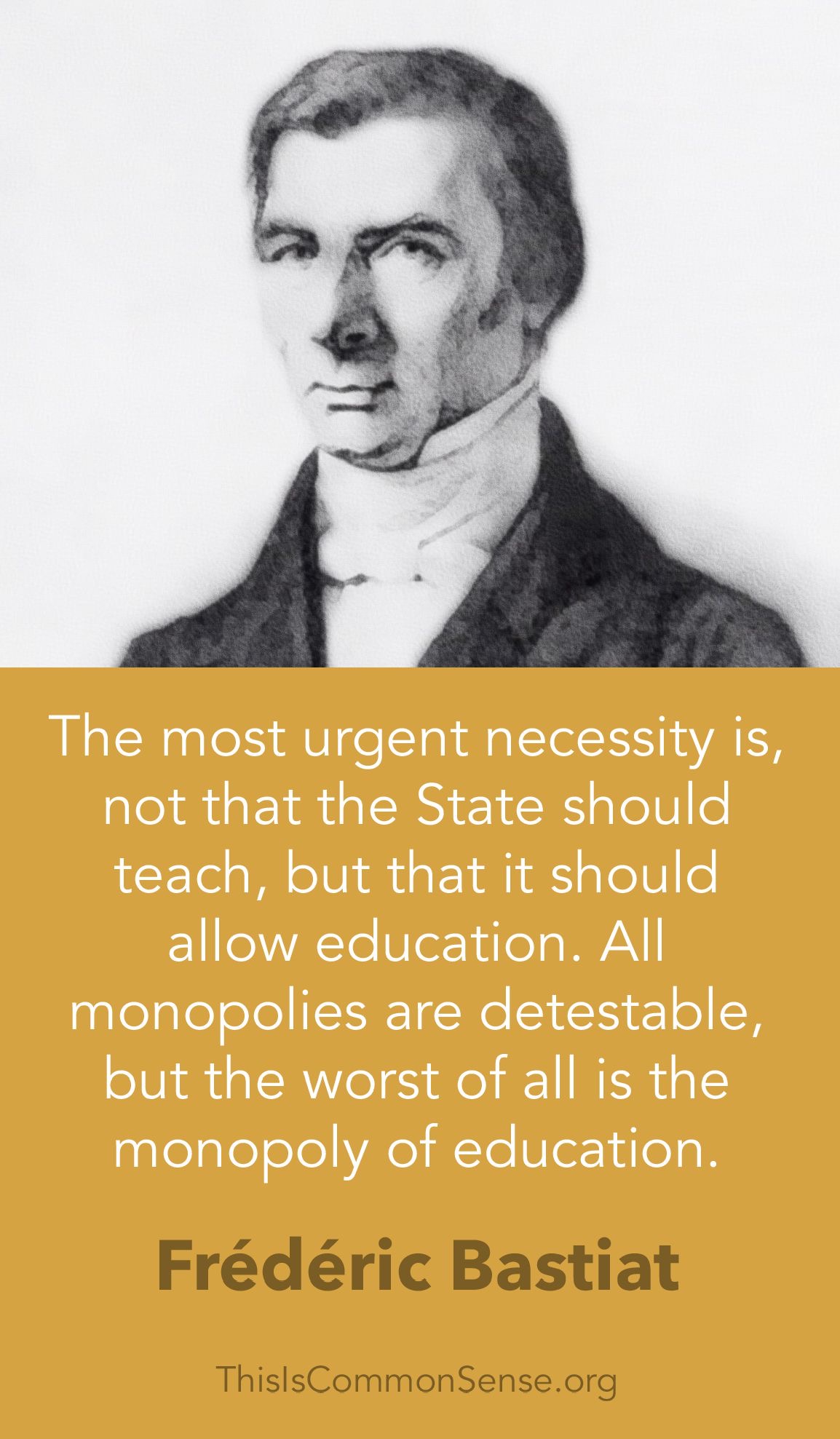
Le plus pressé, ce n’est pas que l’État enseigne, mais qu’il laisse enseigner. Tous les monopoles sont détestables, mais le pire de tous, c’est le monopole de l’enseignement.
The most urgent necessity is, not that the State should teach, but that it should allow education. All monopolies are detestable, but the worst of all is the monopoly of education.
Frédéric Bastiat, in debate with Pierre-Joseph Proudhon (1849–1850).
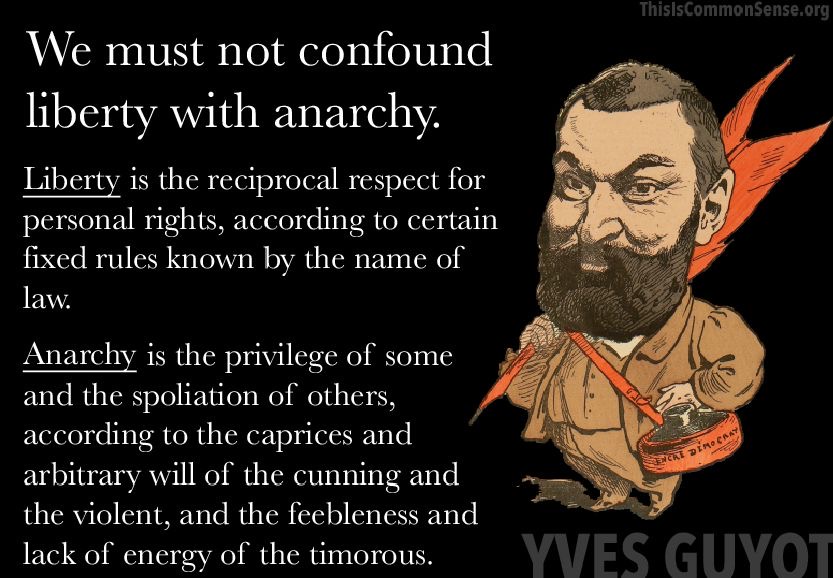
We must not confound liberty with anarchy. Liberty is the reciprocal respect for personal rights, according to certain fixed rules known by the name of law. Anarchy is the privilege of some and the spoliation of others, according to the caprices and arbitrary will of the cunning and the violent, and the feebleness and lack of energy of the timorous.
Yves Guyot, The Tyranny of Socialism, 1894.