Categories
Thought

Grover Cleveland

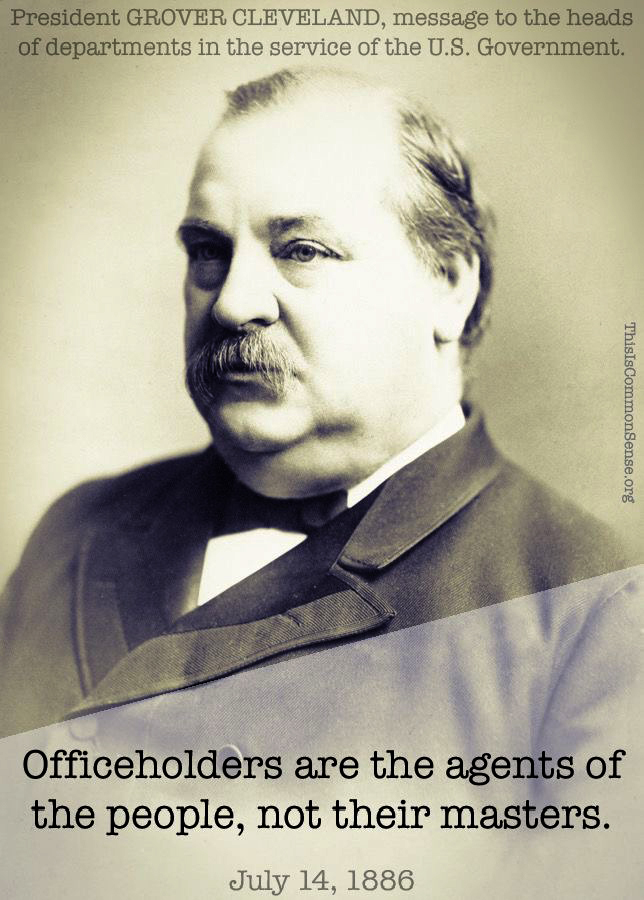
The ship of Democracy, which has weathered all storms, may sink through the mutiny of those aboard.

President Stephen Grover Cleveland’s letter to his law partner, Wilson S. Bissell, February 15th, 1894.
Categories
Thought

Matt Ridley

There simply is no other animal that exploits the law of comparative advantage between groups. Within groups, as we have seen, the division of labor is beautifully exploited by the ants, the mole rats, the Huia birds. But not between groups. . . . The law of comparative advantage is one of the ecological spaces that our species holds.

Matt Ridley, The Origin of Virtue: Human Instincts and the Evolution of Cooperation (1996), p. 210.
Categories
Thought

Immanuel Kant

Every one may seek his own happiness in the way that seems good to himself, provided that he infringe not such freedom of others to strive after a similar end as is consistent with the freedom of all according to a possible general law.

Immanuel Kant, quoted as an epigraph to J. H. Levy, The Outcome of Individualism (1890; Third Edition, 1892).
Categories
Thought

Matt Ridley

Government is not the solution to tragedies of the commons. It is the prime cause of them.

Matt Ridley, The Origin of Virtue: Human Instincts and the Evolution of Cooperation (1996).
Categories
Thought

George Santayana

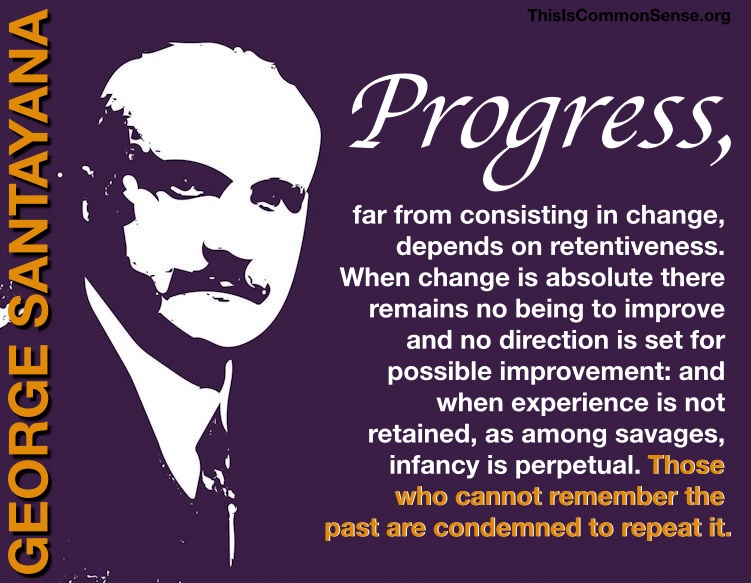
Progress, far from consisting in change, depends on retentiveness. When change is absolute there remains no being to improve and no direction is set for possible improvement: and when experience is not retained, as among savages, infancy is perpetual. Those who cannot remember the past are condemned to repeat it. In the first stage of life mind is frivolous and easily distracted; it misses progress by failing in consecutiveness and persistence. This is the condition of children and barbarians, in whom instinct has learned nothing from experience.

George Santayana, The Life of Reason: or The Phases of Human Progress: Volume 1, Introduction and Reason in Common Sense (1905).
Categories
Thought

J. S. Mill

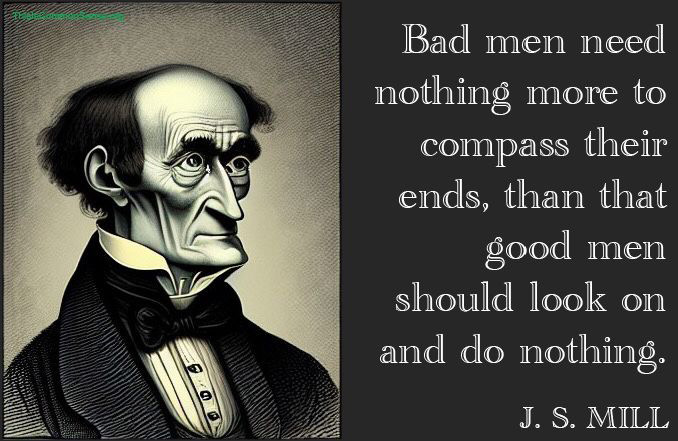
Let not any one pacify his conscience by the delusion that he can do no harm if he takes no part, and forms no opinion. Bad men need nothing more to compass their ends, than that good men should look on and do nothing.

John Stuart Mill, inaugural address delivered to the University of St. Andrews, Feb. 1st 1867.
Categories
Thought

John Bright

The moral law was not written for men alone in their individual character, but it was written as well for nations, and for nations great as this of which we are citizens. If nations reject and deride that moral law, there is a penalty which will inevitably follow. It may not come at once, it may not come in our lifetime; but, rely upon it, the great Italian is not a poet only, but a prophet, when he says: ‘The sword of heaven is not in haste to smite, Nor yet doth linger.’

John Bright, from a speech in Birmingham (October 29, 1858), quoted in G. M. Trevelyan, The Life of John Bright (London: Constable, 1913), p. 275.

Categories
Thought

J.S. Mill

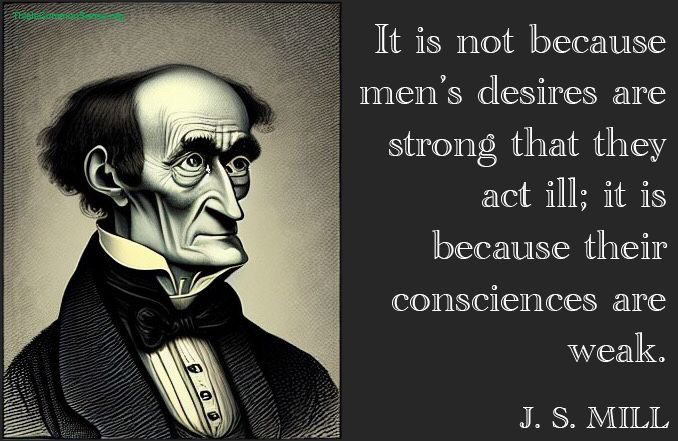
It is not because men’s desires are strong that they act ill; it is because their consciences are weak.

John Stuart Mill, On Liberty (1859).
Categories
Thought

John Bright

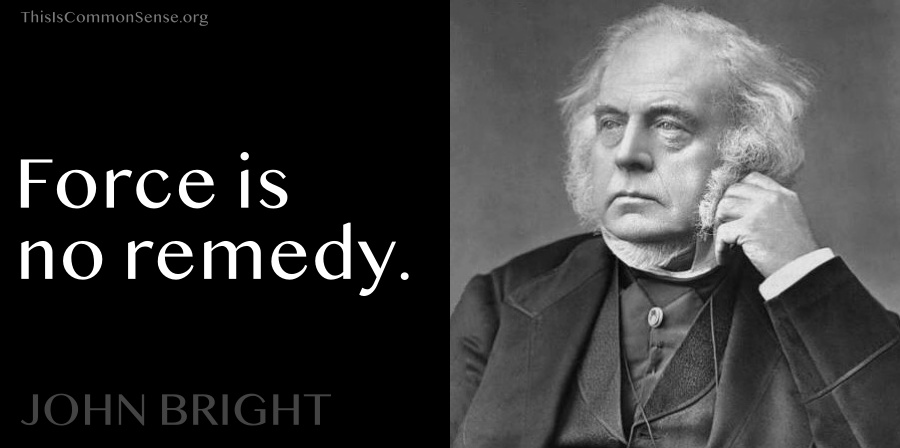
Force is no remedy.

Categories
Thought

Grover Cleveland

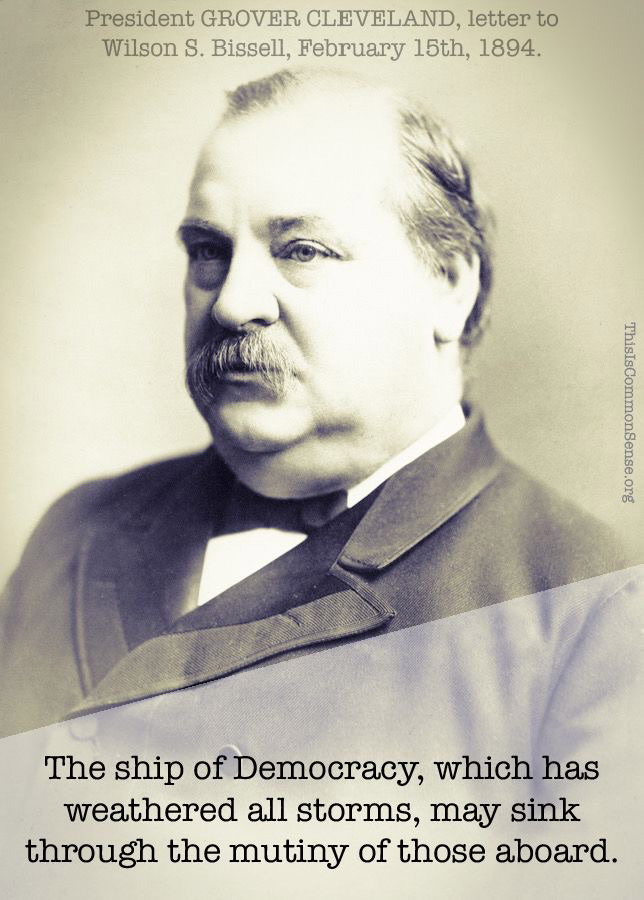
Officeholders are the agents of the people, not their masters. Not only is their time and labor due to the Government, but they should scrupulously avoid in their political action, as well as in the discharge of their official duty, offending by a display of obtrusive partisanship their neighbors who have relations with them as public officials.

President Stephen Grover Cleveland’s message to the heads of departments in the service of the US Government (July 14, 1886).