Categories
Thought

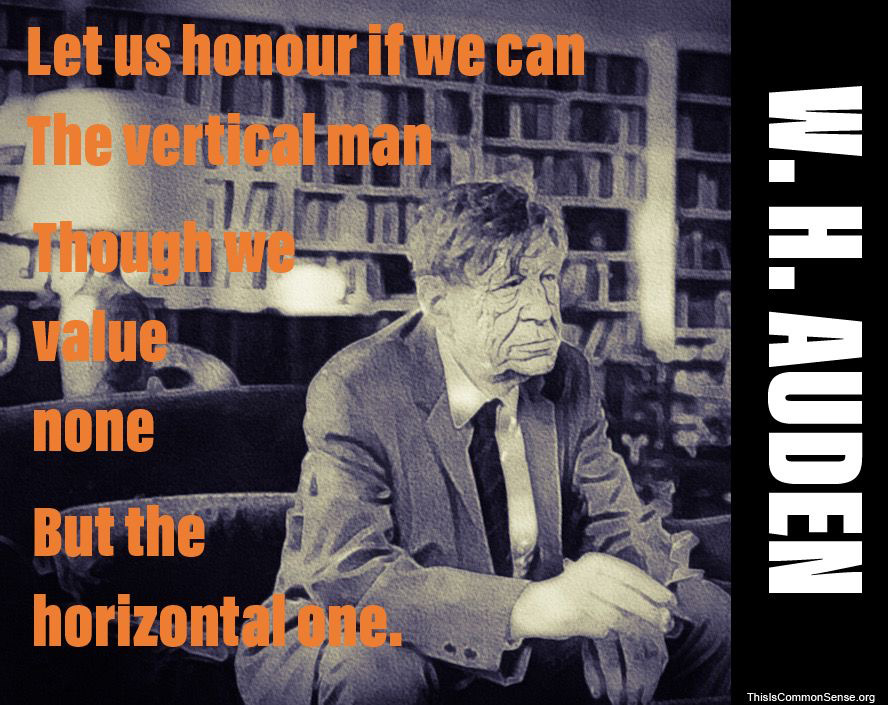
W.H. Auden

Let us honour if we can  
The vertical man  
Though we value none  
But the horizontal one.

W. H. Auden, included in The Collected Shorter Poems of W. H. Auden, 1927–1957 (1964), and also retrievable from numerous websites. See also “Law Like Love.”
Categories
Thought

Sinclair Lewis

Under a tyranny, most friends are a liability. One quarter of them turn “reasonable” and become your enemies, one quarter are afraid to speak, and one quarter are killed and you die with them. But the blessed final quarter keep you alive.

Sinclair Lewis, It Can’t Happen Here (1935).
Categories
Thought

Percy Bysshe Shelley

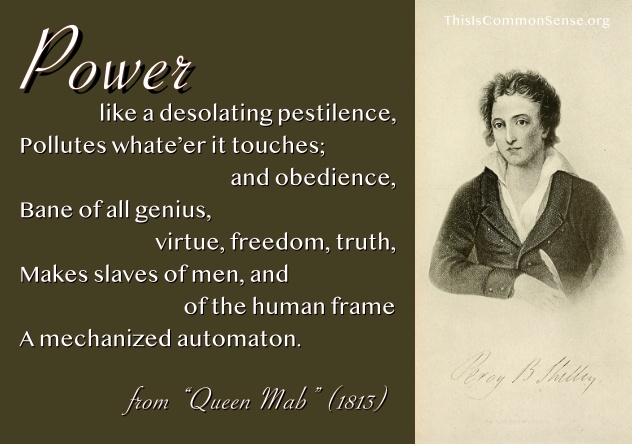
Power, like a desolating pestilence, 
Pollutes whate’er it touches; and obedience, 
Bane of all genius, virtue, freedom, truth, 
Makes slaves of men, and of the human frame 
A mechanized automaton.

Percy Bysshe Shelley, Queen Mab (1813), Canto III.
Categories
Thought

Søren Kierkegaard

The truth is a trap: you can not get it without it getting you; you cannot get the truth by capturing it, only by its capturing you.

The Journals of Søren Kierkegaard, 1854.

Image, above, is a caricature of Kierkegaard published in The Corsair, a satirical journal.

Categories
Thought

Upton Sinclair

I used to say to our audiences: “It is difficult to get a man to understand something, when his salary depends upon his not understanding it!”

Upton Sinclair, I, Candidate for Governor: And How I Got Licked (1935).
Categories
Thought

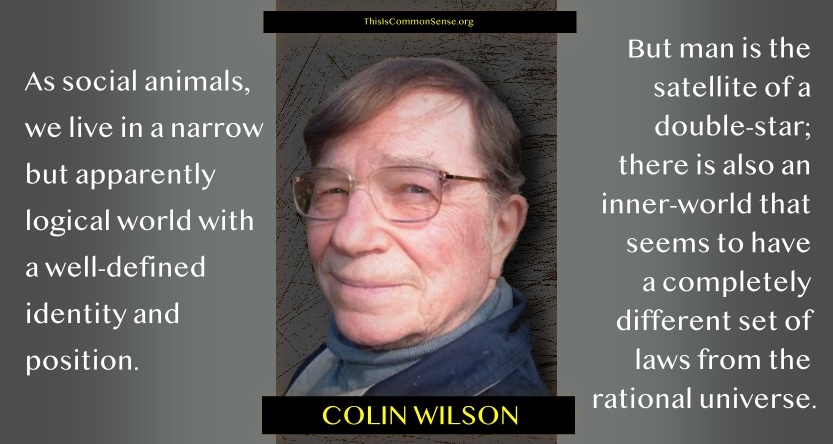
Colin Wilson

As social animals, we live in a narrow but apparently logical world with a well-defined identity and position. But man is the satellite of a double-star; there is also an inner-world that seems to have a completely different set of laws from the rational universe.

Colin Wilson, Bernard Shaw: A Reassessment (1969), p. 167.
Categories
Thought

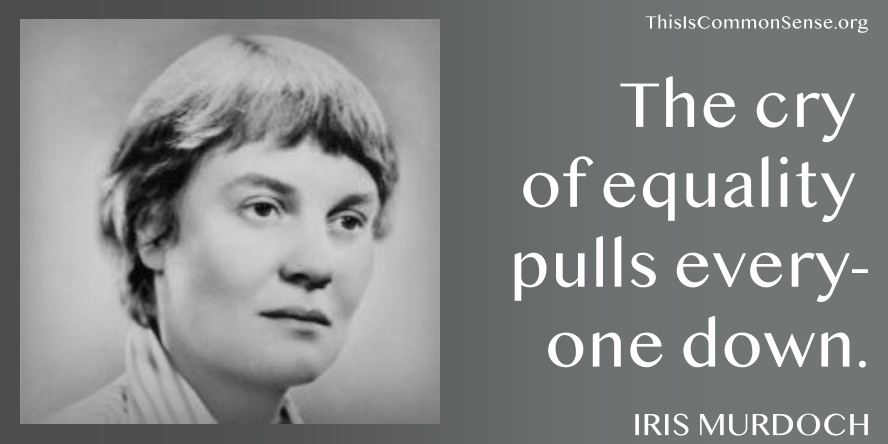
Iris Murdoch

The cry of equality pulls everyone down.

Iris Murdoch, as quoted in The Observer, September 13, 1987.

Also by Iris Murdoch on this site:

We know that the real lesson to be taught…”

Categories
Thought

Colin Wilson

The vitality of the ordinary members of society is dependent on its Outsiders.

Colin Wilson, The Outsider (1956), chapter three, “The Romantic Outsider.”
Categories
Thought

Arthur Schopenhauer

And now that I have allowed myself the jest to which in this two-sided life hardly any page can be too serious to grant a place, I part with the book with deep seriousness, in the sure hope that sooner or later it will reach those to whom alone it can be addressed; and for the rest, patiently resigned that the same fate should, in full measure, befall it, that in all ages has, to some extent, befallen all knowledge, and especially the weightiest knowledge of the truth, to which only a brief triumph is allotted between the two long periods in which it is condemned as paradoxical or disparaged as trivial. The former fate is also wont to befall its author. But life is short, and truth works far and lives long: let us speak the truth.

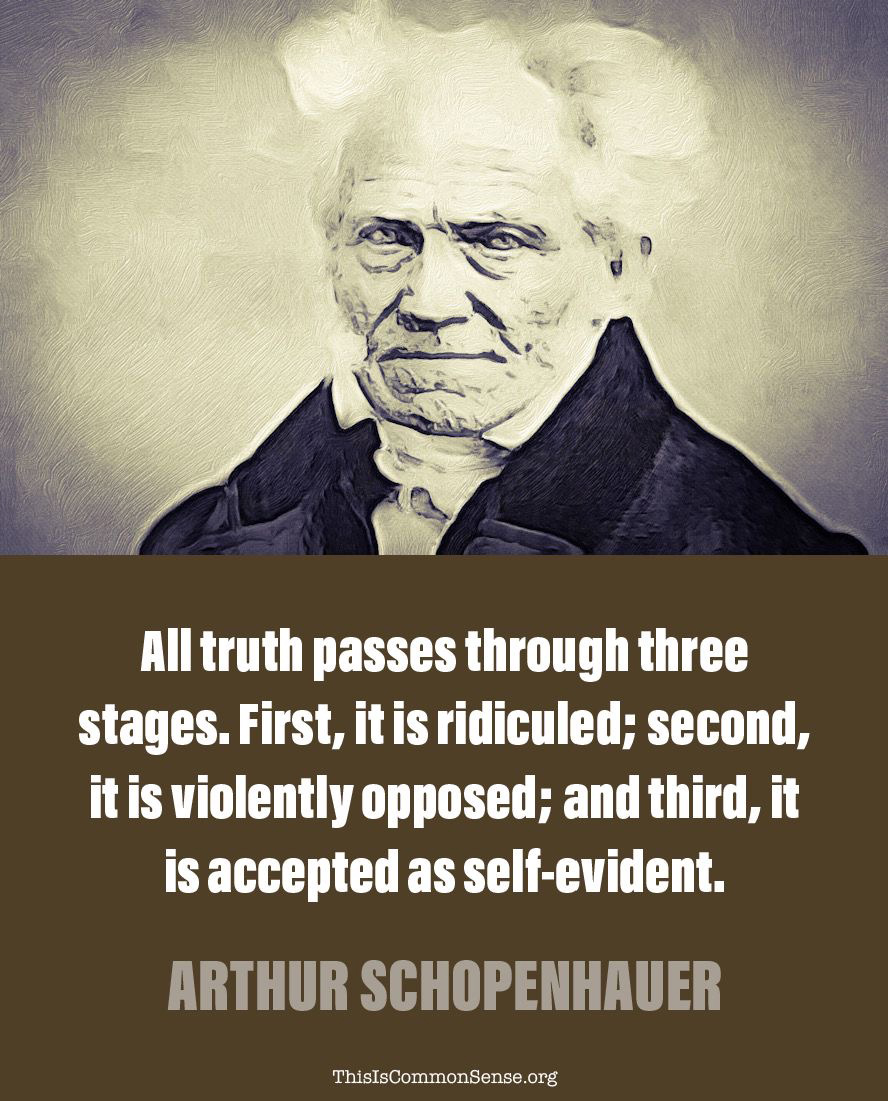
Somehow this passage from the preface to The World as Will and Representation is popularly condensed to:

All truth passes through three stages. First, it is ridiculed; second, it is violently opposed; and third, it is accepted as self-evident.

Arthur Schopenhauer, epigraph to the first section of UFOs: Generals, Pilots, and Government Officials Go on the Record (2010), by Leslie Kean.
Categories
Thought

Karl Popper

We are social creatures to the inmost centre of our being. The notion that one can begin anything at all from scratch, free from the past, or unindebted to others, could not conceivably be more wrong.

Philosopher Karl Popper, as quoted in Popper (1973) by Bryan Magee.