Sola la miseria è senza invidia nelle cose presenti.
In the affairs of this world, poverty alone is without envy.
Giovanni Boccaccio, The Decameron (c. 1350), “Fourth Day,” Introduction (tr. G. H. McWilliam).

Sola la miseria è senza invidia nelle cose presenti.
In the affairs of this world, poverty alone is without envy.
Giovanni Boccaccio, The Decameron (c. 1350), “Fourth Day,” Introduction (tr. G. H. McWilliam).
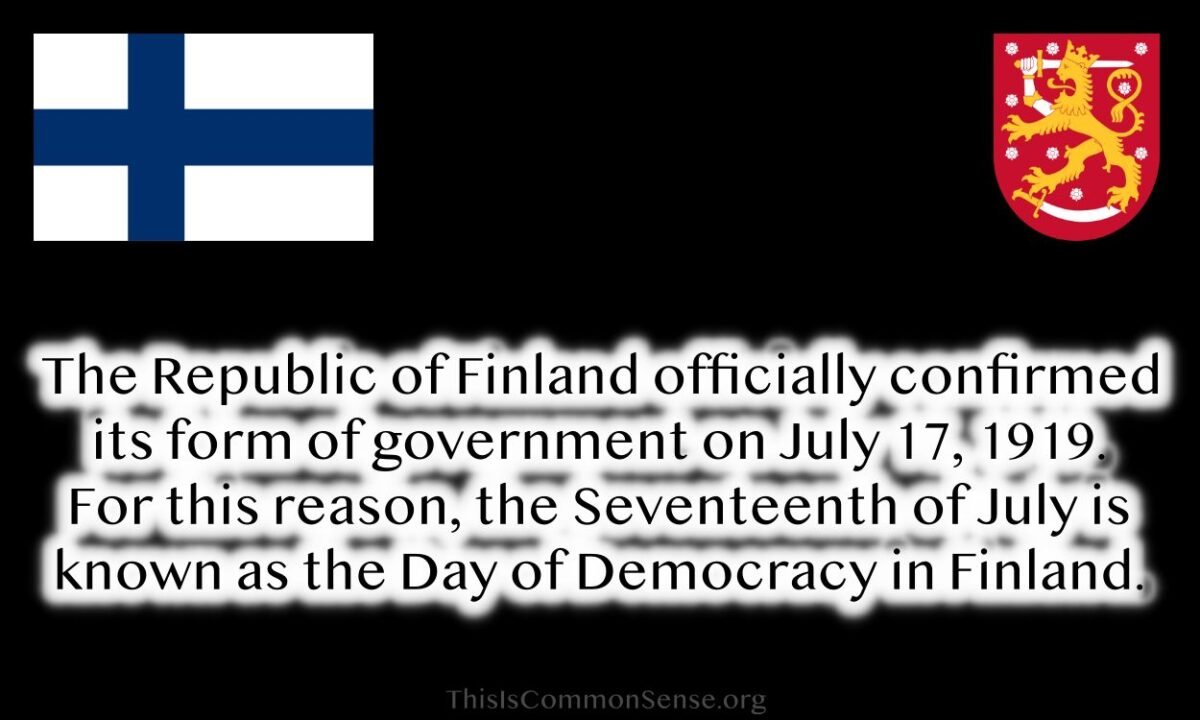
The Republic of Finland officially confirmed its form of government on July 17, 1919. For this reason, the Seventeenth of July is known as the Day of Democracy in Finland.
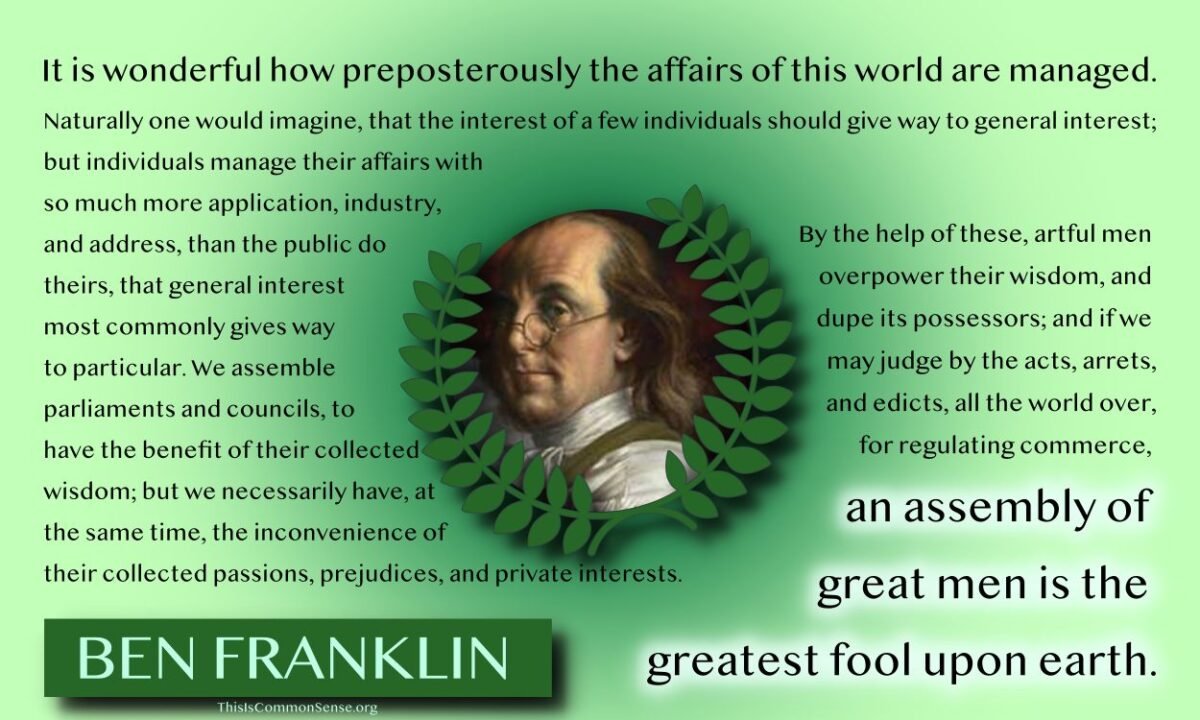
It is wonderful how preposterously the affairs of this world are managed. Naturally one would imagine, that the interest of a few individuals should give way to general interest; but individuals manage their affairs with so much more application, industry, and address, than the public do theirs, that general interest most commonly gives way to particular. We assemble parliaments and councils, to have the benefit of their collected wisdom; but we necessarily have, at the same time, the inconvenience of their collected passions, prejudices, and private interests. By the help of these, artful men overpower their wisdom, and dupe its possessors; and if we may judge by the acts, arrets, and edicts, all the world over, for regulating commerce, an assembly of great men is the greatest fool upon earth.
Benjamin Franklin, letter to Benjamin Vaughan, July 26, 1784. The word “arrets,” in the final sentence, is Franklin’s anglicization of “arrêts,” the French legal term for judicial decrees or formal rulings (typically issued by sovereign courts in pre-revolutionary France).
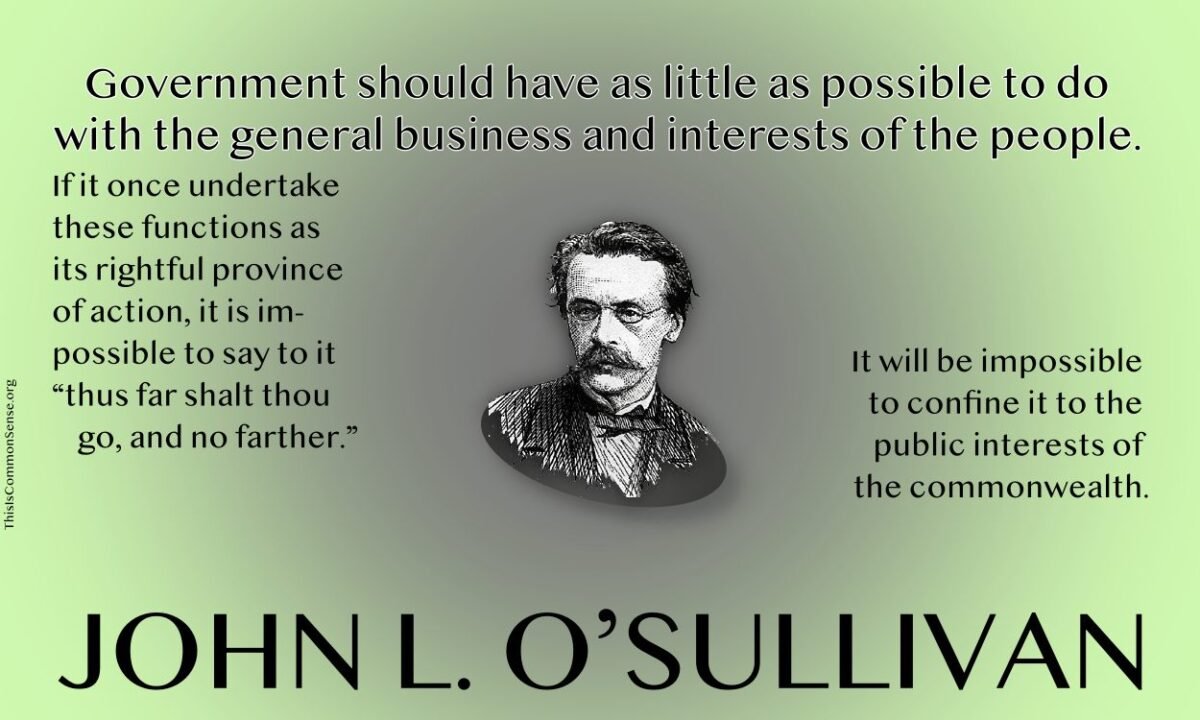
Government should have as little as possible to do with the general business and interests of the people. If it once undertake these functions as its rightful province of action, it is impossible to say to it “thus far shalt thou go, and no farther.” It will be impossible to confine it to the public interests of the commonwealth. It will be perpetually tampering with private interests, and sending forth seeds of corruption which will result in the demoralization of the society. Its domestic action should be confined to the administration of justice, for the protection of the natural equal rights of the citizen, and the preservation of social order.
From the introductory essay in the first issue of The United States Democratic Review (1837), presumably written by the magazine’s editor and co-founder, John L. O’Sullivan, the man who coined the term “Manifest Destiny” eight years later. Image: O’Sullivan as he appeared, in sketch, on the cover of Harper’s Weekly in November 1874.
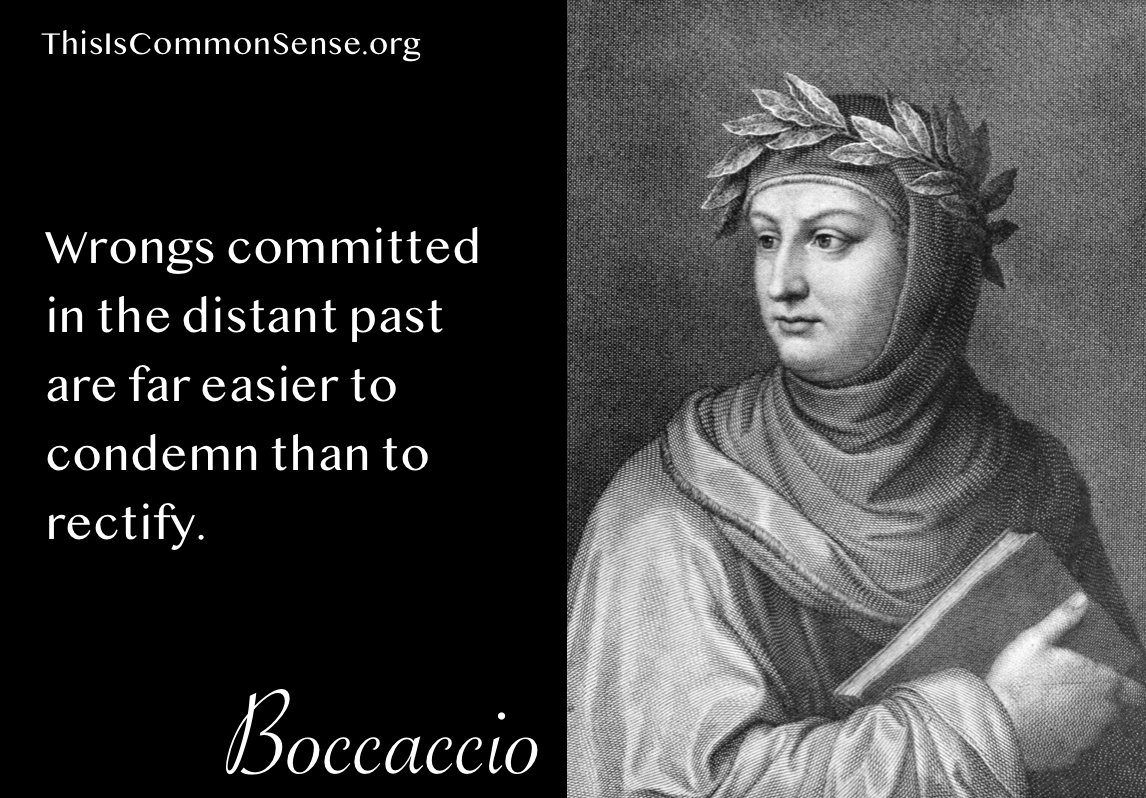
Le cose mal fatte e di gran tempo passate son
più agevoli a riprendere che ad emendare.
Wrongs committed in the distant past are far easier to condemn than to rectify.
Giovanni Boccaccio, The Decameron (c. 1350), “Second Day,” Fifth Story (tr. G. H. McWilliam).
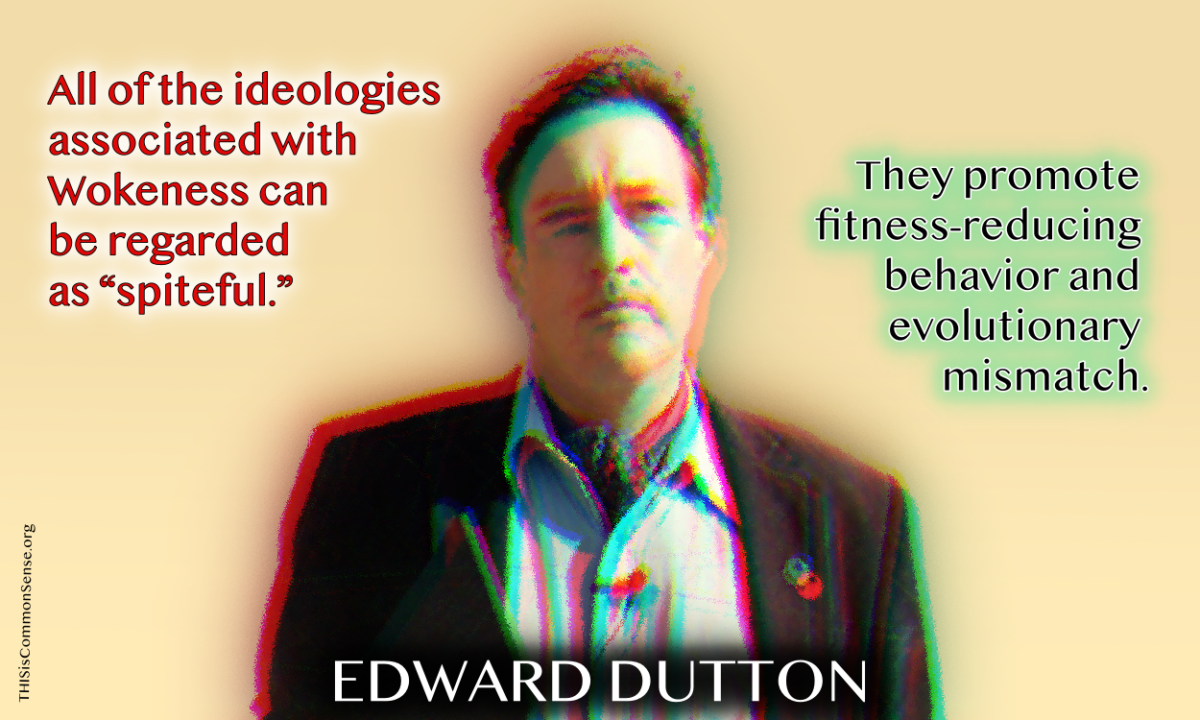
All of the ideologies associated with Wokeness can be regard as “spiteful.” They promote fitness-reducing behavior and evolutionary mismatch. Advocates of multiculturalism imply that Europeans should feel guilty for being European and should accept mass immigration of non-Europeans into their countries. This clearly damages the genetic interests of Europeans, because it causes them to become a smaller and smaller group, controlling less and less land. It undermines social trust, because people tend to trust those who are genetically similar to themselves, resulting in people becoming increasingly isolated, friendless, and unhappy. This is worsened by the ethnic conflict that has been shown to almost inevitably occur in multiracial societies. It creates an evolutionary mismatch, as we are evolved to be with people who are genetically similar to ourselves, as evidenced in numerous studies that have shown that we cooperate more, prefer to be around, and are more trusting with people who are genetically similar to ourselves, including members of our own ethnic group and race.
Edward Dutton, Spiteful Mutants (2022), pp. 61–62.
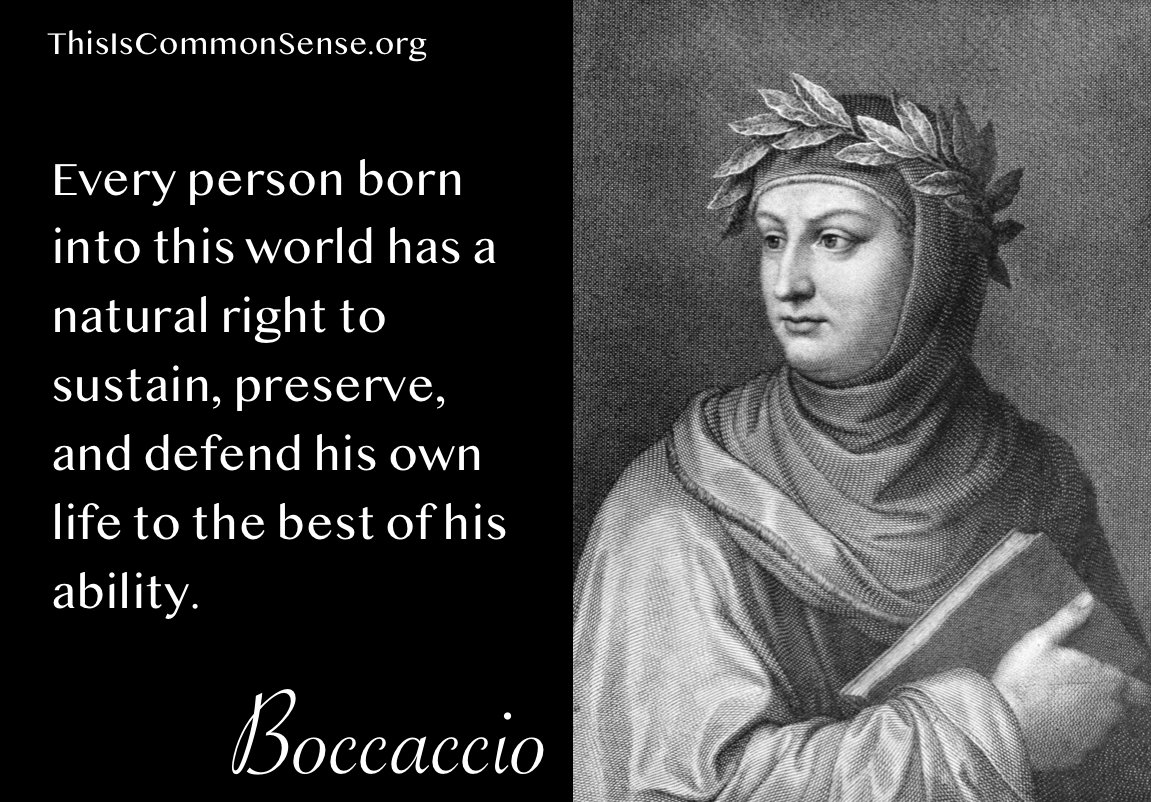
Natural ragione è di ciascuno che ci nasce, la sua vita,
quanto può, aiutare e conservare e difendere.
Every person born into this world has a natural right to sustain, preserve, and defend his own life to the best of his ability.
Giovanni Boccaccio, The Decameron (c. 1350), “First Day,” Introduction (tr. G. H. McWilliam).
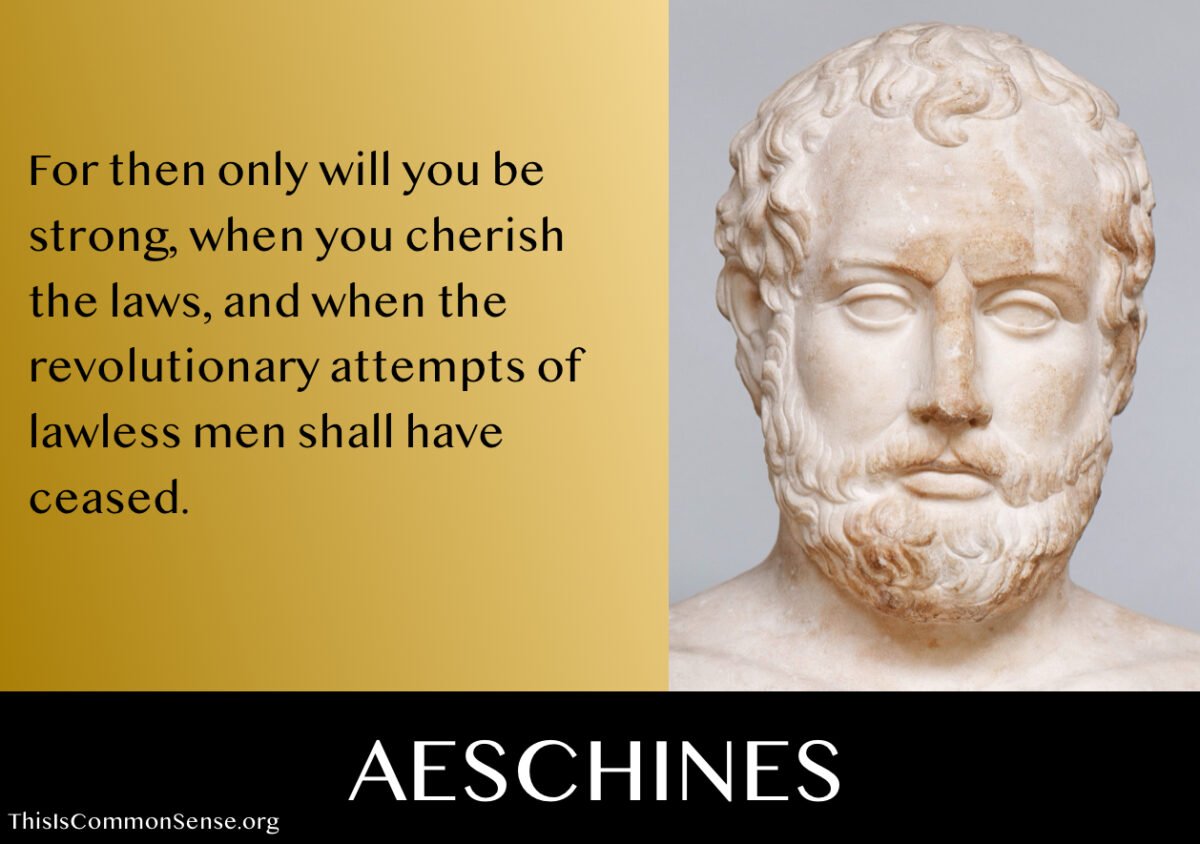
ἐντεῦθεν γὰρ ἰσχύσετε, ὅταν εὐνομῆσθε καὶ μὴ
καταλύησθε ὑπὸ τῶν παρανομοῦντων.
For then only will you be strong, when you cherish the laws, and when the revolutionary attempts of lawless men shall have ceased.
Aeschines, Against Timarchus (346/5 BC), I.5.
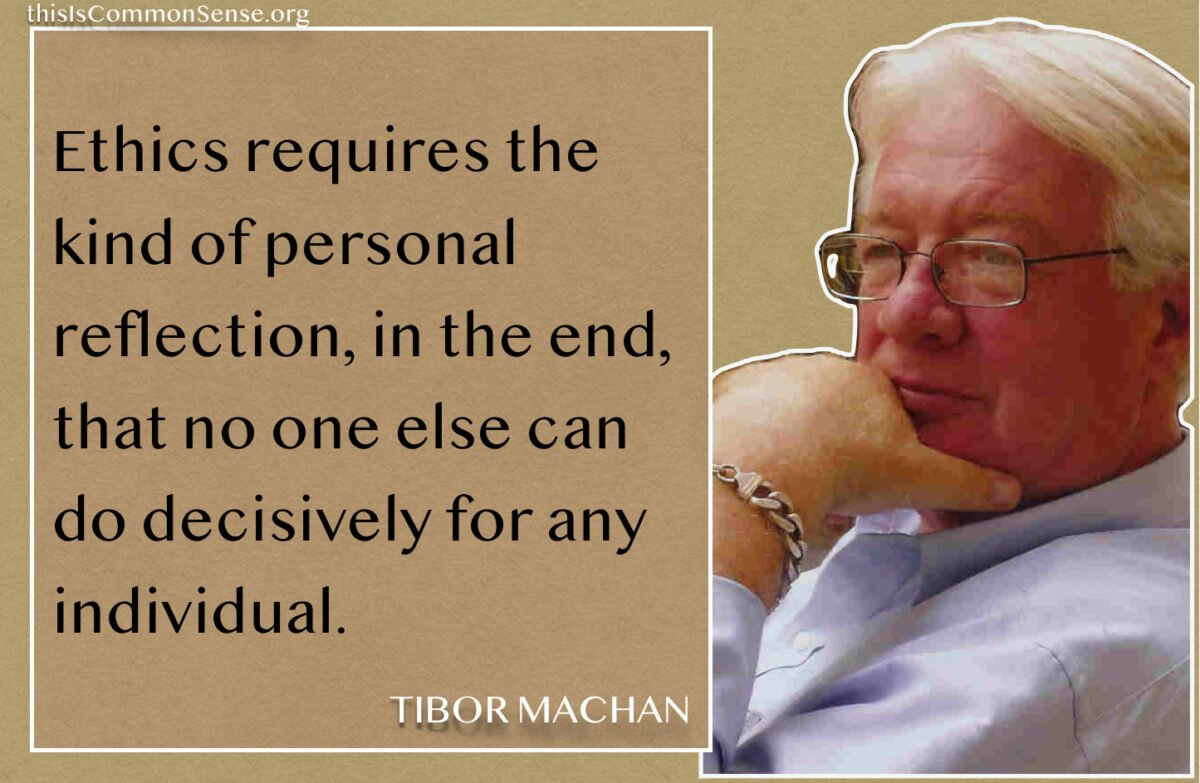
Ethics requires the kind of personal reflection, in the end, that no one else can do decisively for any individual.
Tibor R. Machan, The Promise of Liberty: A Non-Utopian Vision (2009), p. 69.

A fascist is a student who, seeing the representatives of a chemical industry recruiting on campus, cries, ‘Let’s chase the bastard off! We have the right to free speech but he doesn’t!’
John Hospers, Libertarianism: A Political Philosophy for Tomorrow (1971), p. 39.