“I hasten to laugh at everything, for fear of being obliged to weep.”
Pierre-Augustin Caron de Beaumarchais, Le Barbier de Séville (1773).
“I hasten to laugh at everything, for fear of being obliged to weep.”
Pierre-Augustin Caron de Beaumarchais, Le Barbier de Séville (1773).
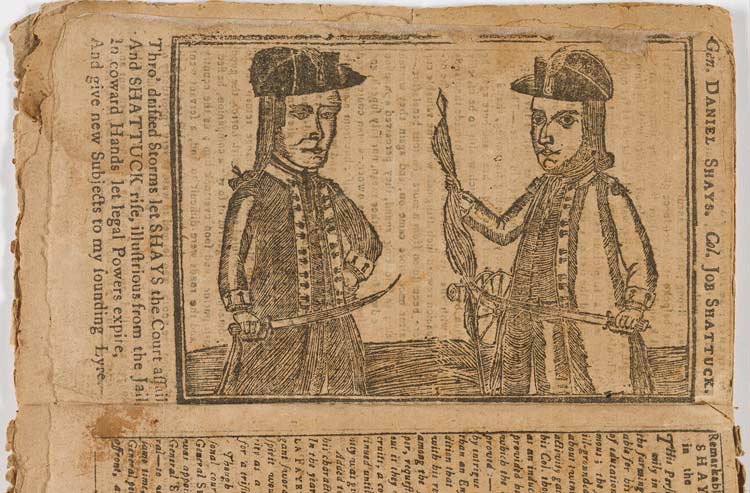
On January 25, 1787, Shays’s Rebellion experienced its largest confrontation, outside the Springfield Armory, with four of the rebels dead, 20 wounded.
The rebellion was a key moment in United States history. Daniel Shays and his followers objected to Massachussetts’s high taxes and rampant cronyism. The revolt, which was completely suppressed, led to the adoption of the U.S. Constitution and drawing George Washington from his retirement.

Will this nation be spared a President Hillary Clinton? Click on over to Townhall . . . and find out, well, who won’t stop her: Democratic Party voters. Then come back here for more reading:
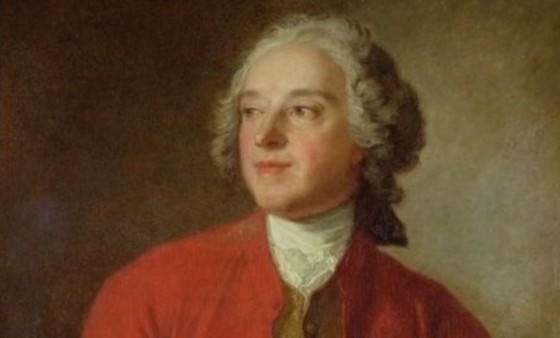
On January 24, 1732, French playwright, watchmaker, inventor, musician, diplomat, fugitive, spy, publisher, horticulturalist, arms dealer, satirist, financier, and revolutionary (both French and American) Pierre-Augustin Caron de Beaumarchais was born. He proved instrumental in securing armaments for the America Revolution, but remains best known for his three “Figaro” plays, Le Barbier de Séville, Le Mariage de Figaro, and La Mère coupable.
“There are as many styles of beauty as there are visions of happiness.”

Haven’t you wondered? Here is a how-to.
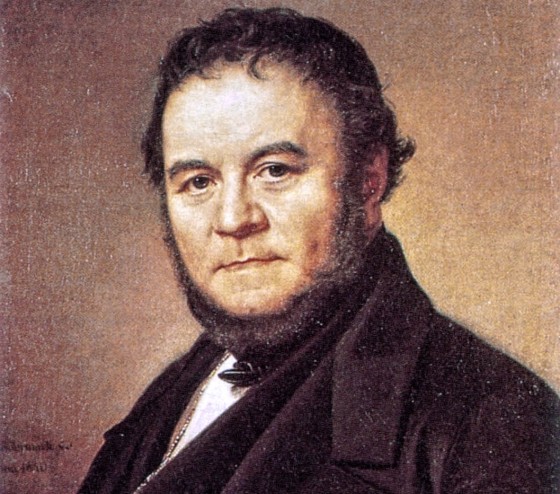
On January 23, 1783, novelist Marie-Henri Beyle, known by his pen name Stendhal, was born. Stendahl was an avid student of the French liberal philosophical tradition, a follower of Destutt de Tracy and an attendant at the count’s salons. His most famous works include the novel The Red and the Black and a treatise on romantic love.
On January 23, 1860, the Cobden–Chevalier Treaty was signed between France and Great Britain. The treaty was named after the two main proponents of the agreement, Richard Cobden (in England) and economist Michel Chevalier (in France). The treaty had been suggested the year earlier, in British Parliament, by Cobden’s colleague John Bright, who saw the measure as a peace measure, and an alternate to a military build-up.
“Our youthful rebels are anything but inarticulate; and though they utter a great deal of nonsense, the import of what they are saying is clear enough. What they are saying is that they dislike — to put it mildly — the liberal, individualist, capitalist civilization that stands ready to receive them as citizens. They are rejecting this offer of citizenship and are declaring their desire to see some other kind of civilization replace it.”
Irving Kristol, “‘When virtue loses all her loveliness’ — some reflections on Capitalism and ‘the free society,’” National Affairs, No. 21, Fall 1970.
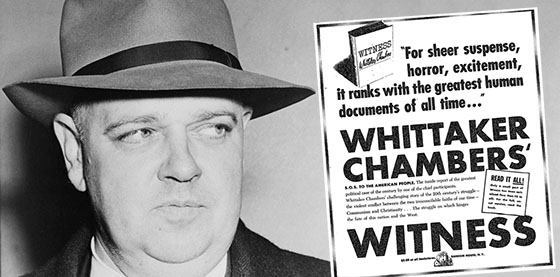
“Then he asked in German (the only language that we ever spoke): ‘Ist die Sowjetregierung eine faschistische Regierung? – Is the Soviet Government a fascist government?”. . . . I sat silent for some moments. Then I said: “Ja, die Sowjetregierung ist eine faschistische Regierung — the Soviet Government is a fascist government”. . . . Krivitsky turned for the first time and looked at me directly. ‘Du hast recht,’ he said, ‘und Kronstadt war der Wendepunkt – You are right, and Kronstadt was the turning point.”
Whittaker Chambers, Witness, pp. 459–460.
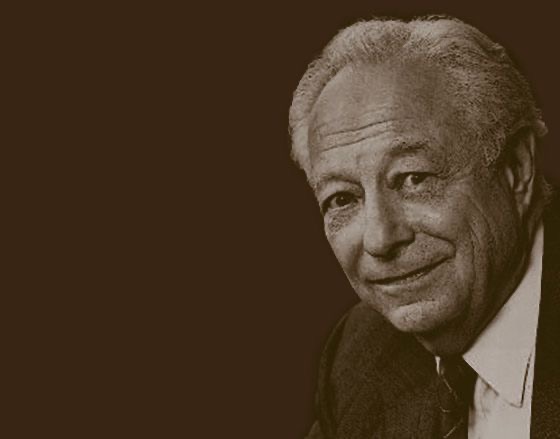
On January 22, 1920, American neoconservative pundit and author Irving Kristol was born.