On April 7, 1933, Prohibition in the United States was repealed for beer of no more than 3.2 percent alcohol by weight, eight months before the ratification of the XXI amendment.
Beer legal April 7, 1933
On April 7, 1933, Prohibition in the United States was repealed for beer of no more than 3.2 percent alcohol by weight, eight months before the ratification of the XXI amendment.
On April 6, 1930, Mohandes Gandhi raised a lump of mud and salt, declaring, “With this, I am shaking the foundations of the British Empire.” Thus began the Salt Satyagraha.
“In the democracy which I have envisaged, a democracy established by non-violence, there will be equal freedom for all. Everybody will be his own master. It is to join a struggle for such democracy that I invite you today.”
Mohandas K. Gandhi, August 8, 1942
This weekend at Townhall, I expand my thoughts from Thursday, on the whole Indiana RFRL controversy. Click on over to Townhall. But then back here, for I have by no means written the last word on the subject. Here is a wide variety of opinion:
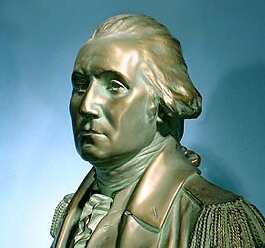
On April 5, 1792, U.S. President George Washington exercised his authority to veto a bill, the first time this power was used in the United States.
“There is no executive order; there is no law that can require the American people to form a national community. This we must do as individuals and if we do it as individuals, there is no President of the United States who can veto that decision.”
Barbara Jordan, 1976 Democratic National Convention Keynote Address
Milking a 1990s comedy for its economic lessons.
“Like any man, I would like to live a long life. Longevity has its place. But I’m not concerned about that now. I just want to do God’s will. And He’s allowed me to go up to the mountain. And I’ve looked over. And I’ve seen the promised land. I may not get there with you. But I want you to know tonight, that we, as a people will get to the promised land“
Martin Luther King, Jr., a day before his assassination, in a speech delivered at Bishop Charles Mason Temple in Memphis, Tennessee.
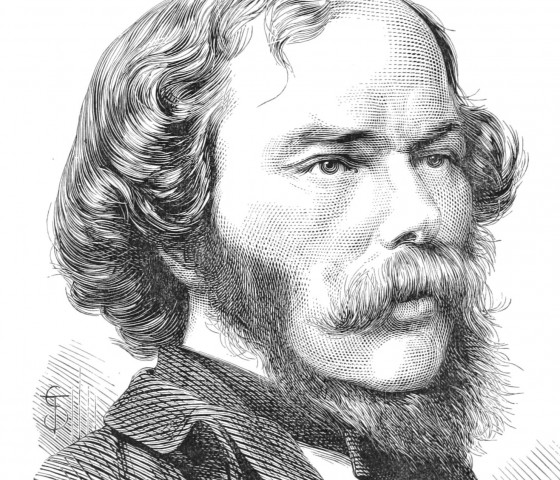
On April 4, 1841, William Henry Harrison died of pneumonia, becoming the first President of the United States to die in office and the one with the shortest term served (he died on his 32nd day as president). Renowned Indian killer, a proponent of the expansion of slavery into Northwest Territories, and a Whig, Harrison won the presidency in part by turning the Democrats’ “log cabin and hard cider” aspersions on his character as the basic symbols of the campaign.
Though hardly a “limited government man,” some limited government history buffs proclaim him the Greatest President, on the ostensibly droll and possibly cynical grounds that he spent so little time in office.
On a sadder note, Martin Luther King, Jr., was assassinated on this day in 1968.
“…only when it is dark enough can you see the stars. And I see God working in this period of the twentieth century in a way that men, in some strange way, are responding.
“Something is happening in our world. The masses of people are rising up. And wherever they are assembled today, whether they are in Johannesburg, South Africa; Nairobi, Kenya; Accra, Ghana; New York City; Atlanta, Georgia; Jackson, Mississippi; or Memphis, Tennessee — the cry is always the same: ‘We want to be free.‘“
Martin Luther King, Jr., a day before his assassination, in a speech delivered at Bishop Charles Mason Temple in Memphis, Tennessee.