On March 25, 1965, civil rights activists led by Martin Luther King, Jr., successfully completed their four-day, 50-mile march from Selma to the capitol in Montgomery, Alabama.
Categories
From Selma to Montgomery

On March 25, 1965, civil rights activists led by Martin Luther King, Jr., successfully completed their four-day, 50-mile march from Selma to the capitol in Montgomery, Alabama.
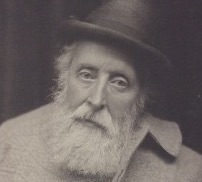
The day will come, as we shake our minds free from the old and stupid ideas about coercing each other, that we shall mock as much at the idea of state education as we are now learning to mock at the idea of state religion — when even a municipal organization of education will seem to us as absurd and grotesque an undertaking as a municipal organization of religion.
Auberon Herbert, letter to the editor, Newcastle Weekly Chronicle, as reprinted in The Right and Wrong of Compulsion by the State, 1885.
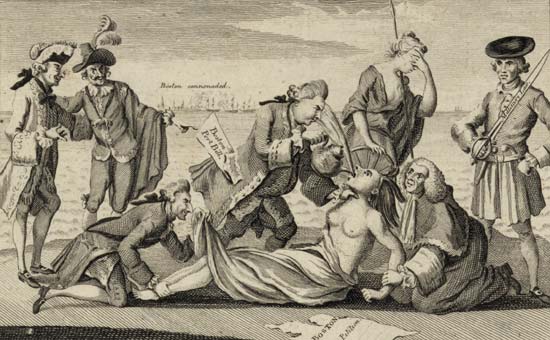
On March 24, 1765, the Kingdom of Great Britain passed the Quartering Act, which required the Thirteen Colonies to house British troops.
On the same date in 1855, slavery was abolished in Venezuela.
The Intolerable Acts (among which was the Quartering Act) was the American Patriots’ name for a series of punitive laws passed by the British Parliament in 1774 after the Boston Tea party. They were meant to punish the Massachusetts colonists for their defiance in throwing a large tea shipment into Boston harbor. In Great Britain, these laws were referred to as the Coercive Acts.

We would be worse than we are without the good books we have read, more conformist, not as restless, more submissive, and the critical spirit, the engine of progress, would not even exist. Like writing, reading is a protest against the insufficiencies of life. When we look in fiction for what is missing in life, we are saying, with no need to say it or even to know it, that life as it is does not satisfy our thirst for the absolute – the foundation of the human condition – and should be better. We invent fictions in order to live somehow the many lives we would like to lead when we barely have one at our disposal.
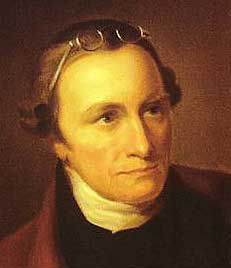
On March 23, 1775, Patrick Henry delivered his “Give me Liberty, or give me Death!” speech at St. John’s Church in Richmond, Virginia.
On this date in 1992, economist and social philosopher Friedrich August von Hayek died.
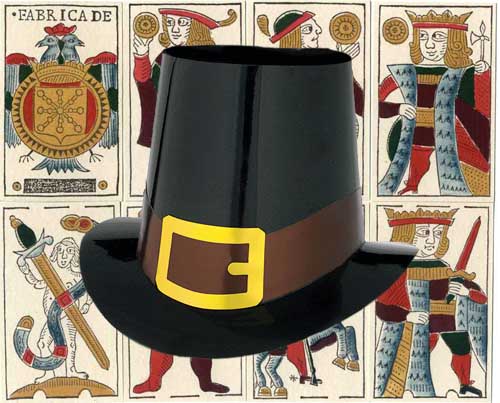
On March 22, 1630, the Massachusetts Bay Colony outlawed the possession of cards, dice, and gaming tables. Exactly eight years later, the colony expelled Anne Hutchinson for religious dissent.
In 1812 on this date, Stephen Pearl Andrews was born. Andrews would go on to become an important American abolitionist, free love advocate, and theorist of “individual sovereignty,” promulgating the reforms of Josiah Warren.
[I]n the good town of Newcastle you will not find a dozen men, unless in some way practically connected with school work, who really understand our present code or have given their attention to the many serious questions involved in it. When this divorce between public intelligence and the directing department has existed for some time, the people begin to be accustomed to see a great system in operation in their midst, settled and worked for them in all its main lines by an office, morally, if not physically, some hundreds of miles away, and presently, with very few searchings of heart and very little intelligence exercised, they simply accept it and let themselves and their children be molded by it into — a something that they don’t exactly understand, and about which in the pressure of life they don’t find time to ask many questions. They are stupefied by the system, just because so little is required of them, mentally or practically, as individuals.
Auberon Herbert, letter to the editor, Newcastle Weekly Chronicle, as reprinted in The Right and Wrong of Compulsion by the State, 1885.
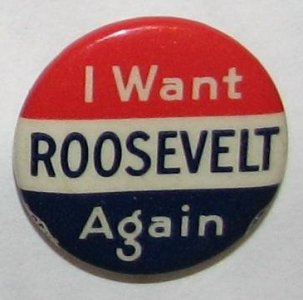
The Twenty-second Amendment (Amendment XXII) of the United States Constitution, which sets a term limit for election and overall time of service to the office of President of the United States, passed Congress on March 21, 1947.

Denis Diderot, “Encyclopédie,” in Encyclopédie, ou dictionnaire raisonné des sciences, des arts et des métiers, Vol. 5 (1755), pp. 635–648A.
As centuries pass by, the mass of works grows endlessly, and one can foresee a time when it will be almost as difficult to educate oneself in a library, as in the universe, and almost as fast to seek a truth subsisting in nature, as lost among an immense number of books; then one would have to undertake, out of necessity, a labor that had been neglected, because the need for it had not been felt.
If we think of the image of literature in times before the invention of printing, we see a small number of men of genius busy creating, and a countless throng of workers busy transcribing. If we anticipate centuries to come, and think of the image of literature once printing, which never rests, has filled huge buildings with books, we will find it once more split into two classes of men. There will be those who read little and immerse themselves in new research or what they take to be new (for if we already are ignorant of part of what is contained in so many books published in all sorts of languages, we will know still far less about what is in those books increased a hundred-, a thousand-fold); the others, workmen incapable of producing anything, will be busy leafing through those books night and day, and separating out what they deem worthy of being anthologized and preserved. Is this prediction not already being fulfilled?

Americans have made astounding political headway on an important — indeed, vital — subject.
Wouldn’t you know it, mainly without help of their elected representatives and officials.
Click on over to Townhall. Then come back here for more information.