Death is Nature’s remedy for all things, and why not Legislation’s?
Charles Dickens, A Tale of Two Cities (1859), Book II, “The Golden Thread”; Chapter I: “Five Years Later.”
Categories
Charles Dickens

Death is Nature’s remedy for all things, and why not Legislation’s?
Charles Dickens, A Tale of Two Cities (1859), Book II, “The Golden Thread”; Chapter I: “Five Years Later.”

On May 19, 1897, Irish author, playwright, and poet Oscar Wilde (October 16, 1854 – November 30, 1900) was released from Reading Prison, where he had finished, in ill health, his hard labor sentence for “gross indecency.” His “Ballad of Reading Gaol,” first published pseudonymously in a periodical with wide circulation amongst criminals, quickly achieved the status of a
He died less than three years later, in exile in Europe. His most famous works include the play The Importance of Being Earnest, the novel The Picture of Dorian Gray, and the fascinating essay “The Soul of Man Under Socialism.”

Yesterday, the federal debt was seen on USDebtClock.org as quickly and inexorably inching towards $36.9 trillion. The official budget deficit is over $2 trillion. And Moody’s made, on Friday, an adjustment in its ratings, stripping “the US of its top-notch triple-A credit rating as it warned about rising levels of government debt and a widening budget deficit in the world’s biggest economy.”
Now, none of the major ratings agencies bestows upon the federal government the top rating. “For the first time in history, the US does not hold a triple-A credit rating from at least one of the three big agencies. S&P in 2011 was the first to strip the country of its pristine rating, while Fitch took the move in 2023.”
Meanwhile, the president boasts of a record one trillion dollar military budget.
And Congress’s DOGE caucus, formed to back up DOGE cuts, is apparently dead.
Insolvency brinksmanship seems to be going gung ho ahead.
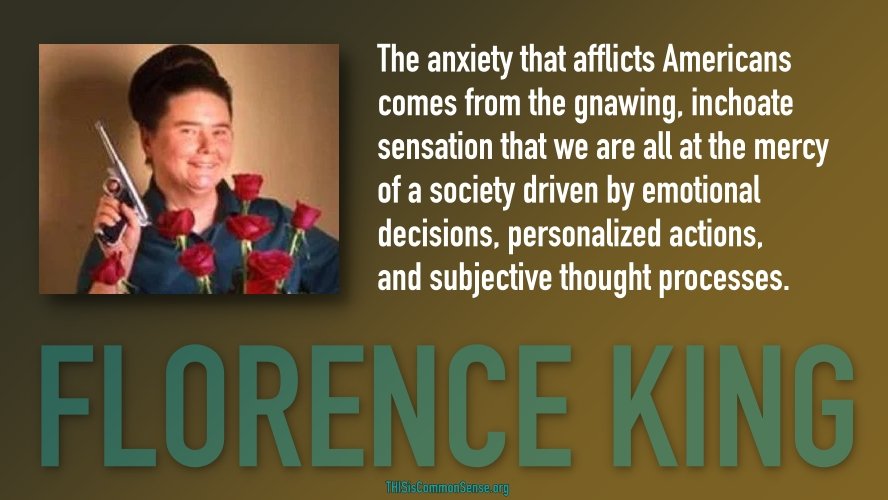
The anxiety that afflicts Americans comes from the gnawing, inchoate sensation that we are all at the mercy of a society driven by emotional decisions, personalized actions, and subjective thought processes.
Florence King, National Review (May 17, 1999), in STET, Damnit! The Misanthrope’s Corner, 1991-2002 (2003), p. 303.

On May 18, 1593, playwright Thomas Kyd’s accusations of heresy led to an arrest warrant for fellow playwright Christopher (“Kit”) Marlowe.
Kyd was the famed author of The Spanish Tragedy, and Kit Marlowe was known for a number of plays, including The Jew of Malta and The Tragicall History of the Life and Death of Doctor Faustus.
Marlowe died a few weeks later, on May 30, without having been arrested. The circumstances of his death were bizarre, suspicious — as if written by a playwright.
On May 18, 1652, Rhode Island passed the first law in English-speaking North America making slavery illegal.
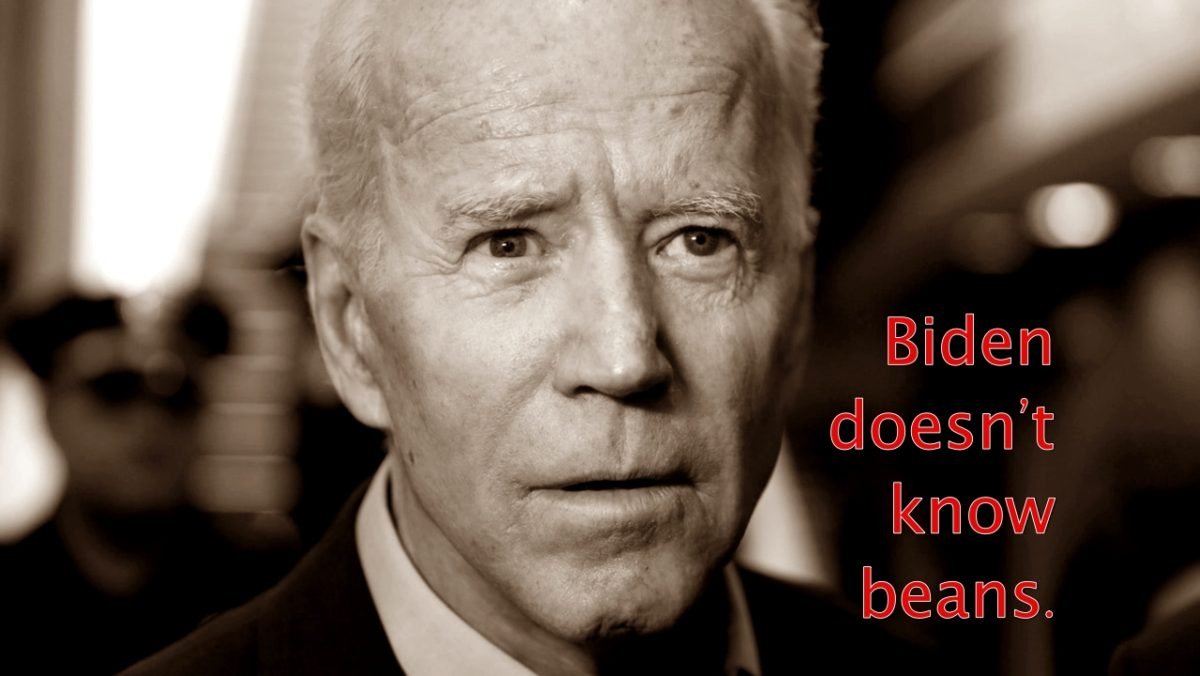
Last year to the day, James Bovard wrote this: “The Biden White House is proclaiming a new prerogative for presidents: they may suppress any evidence of their unfitness for office.”
Yesterday, on social media, Mr. Bovard updated the story he covered last year: “The damning audio of President Biden’s disastrous interview with Special Counsel Robert Hur is finally out. Here’s my New York Post oped last year on the BS pretenses the White House used to suppress the tape. Biden was not even sure if Trump was elected president in 2017 or in 2016.”
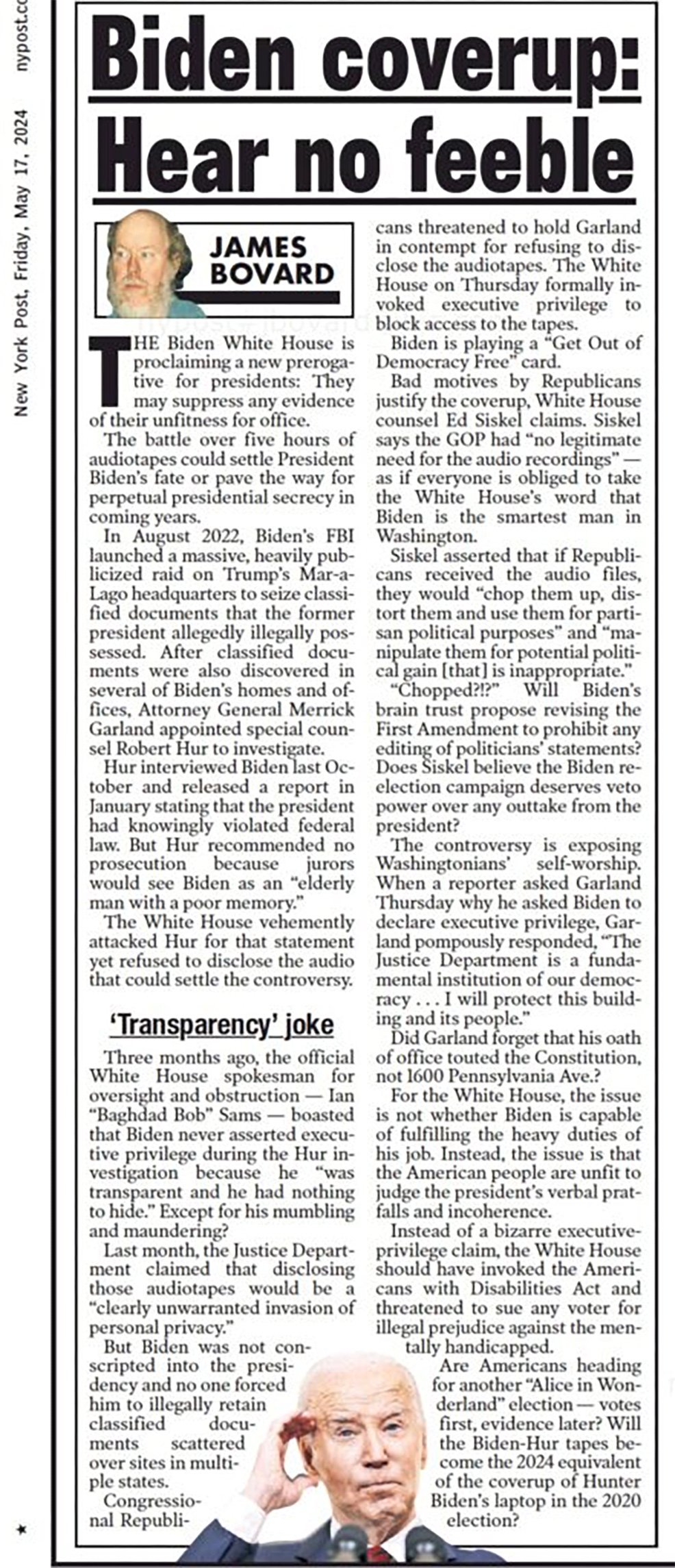
While Biden’s bumbling, brain-addled senescence was on display before the 2020 election, Democrats wouldn’t admit it until after his disastrous “debate” with Donald Trump last summer.
And, as Bovard indicated, now (finally!) we have the actual audio of the interview that was of some consequence last year. CBS gives some details:
Snippets from a 2023 interview that led Justice Department special counsel Robert Hur to describe former President Joe Biden as an “elderly man with a poor memory” were obtained and published by Axios Friday, showing Biden’s halting tone of voice and difficulty remembering dates.
CBS News has confirmed the audio matches the transcript of the interview released by the Biden White House in 2024.
In one four-minute clip, Biden was asked by Hur’s team — which was investigating Biden’s handling of classified records — about where he kept his documents shortly after leaving office as vice president. Biden’s response is marked by long pauses, and his voice appears hoarse at times. His speech is especially halting as he describes the period around his son Beau’s death.
In the audio obtained by news outlet Axios, Biden can also be heard struggling to remember the year when Beau died or the year when President Trump was first elected. Members of his staff can be heard correcting him or reminding him of the date.
Joe Walsh, “Recordings of Biden Justice Department interview emerge, highlighting his memory lapses,” CBS News (May 17, 2025).
It is noteworthy that CNN’s Jake Tapper had co-authored a book on the Biden decline cover-up in the Democratic Party. It is also noteworthy — and many commenters online have emphasized it — that Tapper was in on the cover-up. But that won’t be admitted, will it? At least, not by Tapper and other professional cover-up artists.
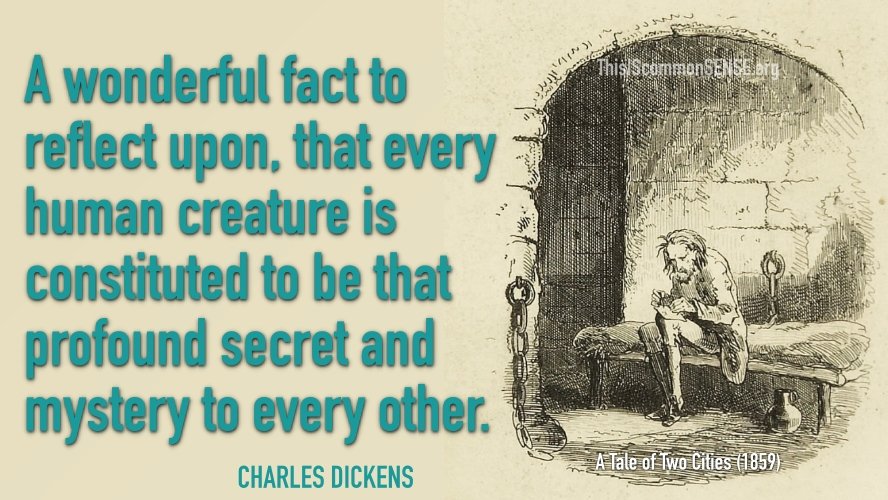
A wonderful fact to reflect upon, that every human creature is constituted to be that profound secret and mystery to every other. A solemn consideration, when I enter a great city by night, that every one of those darkly clustered houses encloses its own secret; that every room in every one of them encloses its own secret; that every beating heart in the hundreds of thousands of breasts there, is, in some of its imaginings, a secret to the heart nearest it!
Charles Dickens, A Tale of Two Cities (1859), Book I, “Recalled to Life”; Chapter III: “The Night Shadows.”
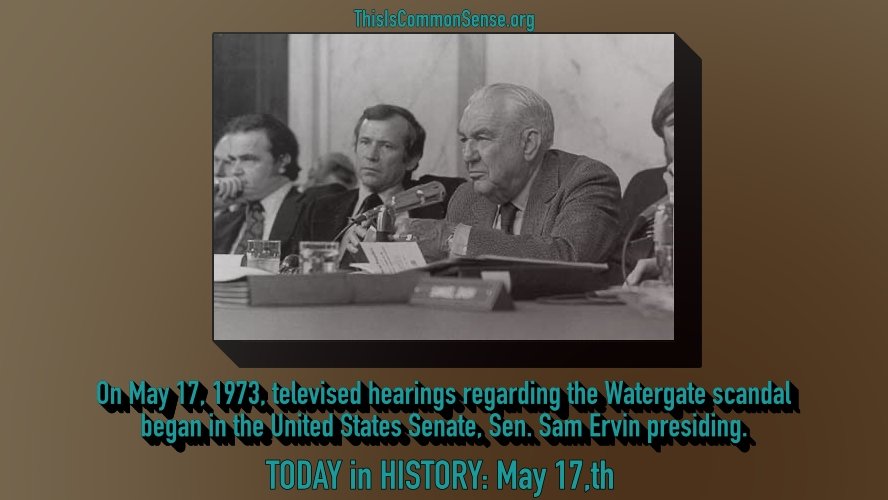
Fifty-two years ago, on May 17, 1973, televised hearings regarding the Watergate scandal began in the United States Senate, Sen. Sam Ervin presiding.

No one should be surprised. Though China pretends to be all sweetness and light, a former director the U.S. National Security Agency offers the basic truth: “We know that China believes there is value in placing at least some elements of our core infrastructure at risk of destruction or disruption.”
It is in this context that I place the recent discussion of Qatar’s offered Air Force One replacement. President Donald Trump has been clear regarding the Persian Gulf state’s seemingly generous offer. He’s for it. Why pay for something when you can have it for free?
“If they give you a putt, you pick it up and walk to the next hole and say ‘thank you very much.’”
But Air Force One, which carries the United States president across the country and around the world, is more than an ordinary plane. It’s a military device.
And outsourcing military devices to other countries is a dubious activity at best. The dangers are readily understandable. “Beware of Qatarians bearing gifts”; the horse mentioned in The Aenid, presented to Troy — is the classic case.
Why trust the state of Qatar?
Just as “U.S. energy officials are reassessing the risk posed by Chinese-made devices that play a critical role in renewable energy infrastructure after unexplained communication equipment was found inside some of them,” so too should Trump’s team reassess the gift horse from the Middle East.
This is Common Sense. I’m Paul Jacob.
Illustration created with Krea and Firefly
See all recent commentary
(simplified and organized)
See recent popular posts
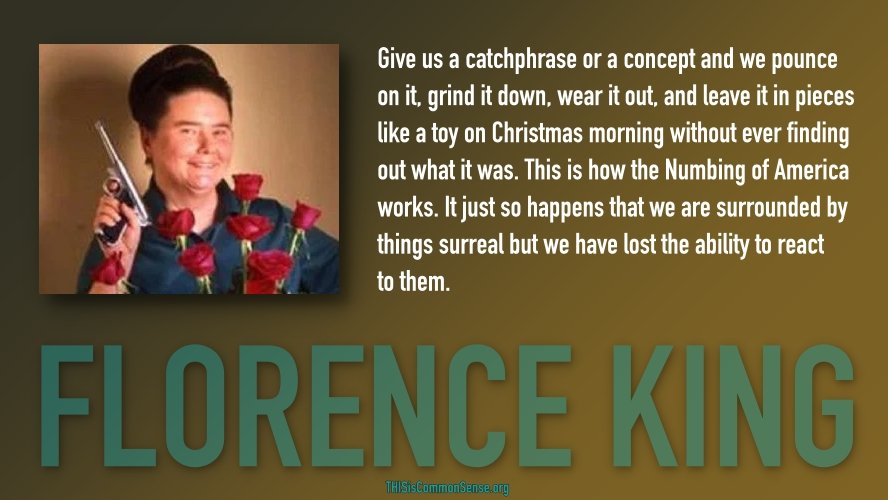
Give us a catchphrase or a concept and we pounce on it, grind it down, wear it out, and leave it in pieces like a toy on Christmas morning without ever finding out what it was. This is how the Numbing of America works. It just so happens that we are surrounded by things surreal but we have lost the ability to react to them.
Florence King on America’s new catchword, “surreal,” National Review (May 17, 1999), reprinted in STET, Damnit! The Misanthrope’s Corner, 1991-2002 (2003), p. 302.