Why is it that people never change their mind — until they do?
Douglass North, as quoted by Mike Munger on EconTalk, “Munger on Slavery and Racism,” August 22, 2016.

Why is it that people never change their mind — until they do?
Douglass North, as quoted by Mike Munger on EconTalk, “Munger on Slavery and Racism,” August 22, 2016.
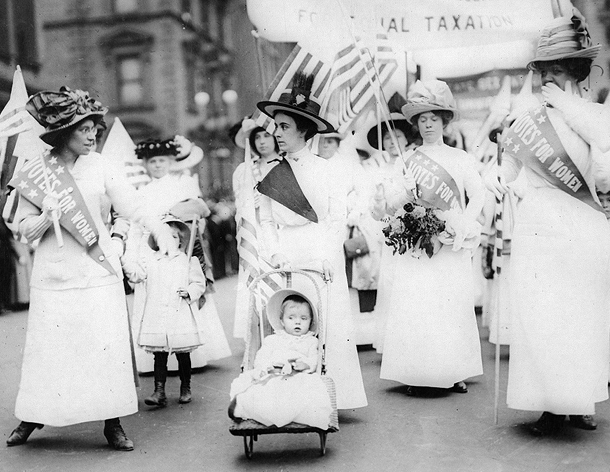
On August 26, 1920, the 19th amendment to United States Constitution took effect, giving women the right to vote in every state of the union.
Prior to the passage of this amendment, 15 states allowed women to vote. Most of them were west of the Mississippi. The territory of Wyoming was the first to extend voting rights to women in 1869.
Only humans can set aims and achieve them by their activities if they know the laws of nature and set up various processes based on them and organise them purposively.
Rein Vihalemm, “Chemistry as an Interesting Subject for the Philosophy of Science,” Estonian Studies in the History and Philosophy of Science, Rein Vihalemm, ed., Dordrecht / Boston / London: Kluwer Academic Publishers, 2001, p. 192.
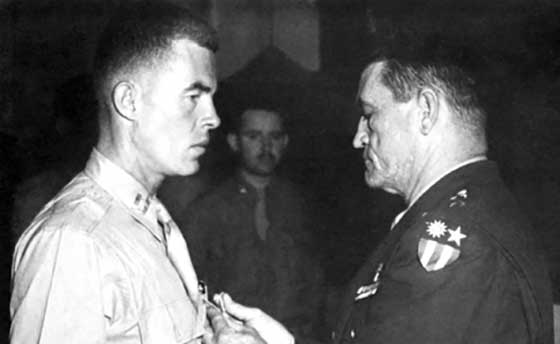
On August 25, 1945, the Cold War began (some say) when, ten days after World War II ended with the Japanese surrender, armed supporters of the Chinese Communist Party killed Baptist missionary Capt. John Birch (1918-1845).
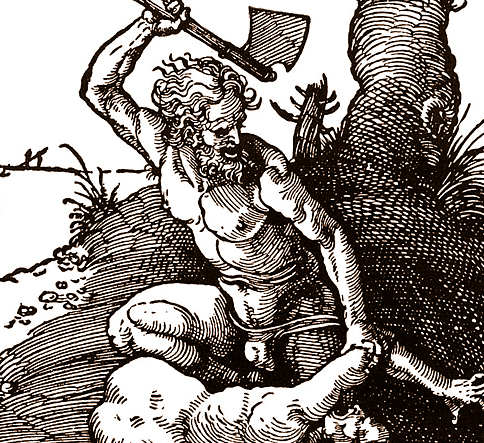
Every other sin hath some pleasure annexed to it, or will admit of an excuse; envy alone wants both. Other sins last but for awhile; the gut may be satisfied, anger remits, hatred hath an end, envy never ceaseth.
Robert Burton, The Anatomy of Melancholy, Part I, Section 2, member 3, subsection 7, Envy, Malice, Hatred, Causes (1621).
Image: Albrecht Dürer, Cain Killing Abel (1511), detail.

On August 24, 1682, William Penn received an area of territory to add it to his colony of Pennsylvania. The area comprises, today, the state of Delaware.
In 1814 on this day, British forces burnt down the White House. Unlike audience reaction to the 1996 movie Independence Day, there was no widespread cheering among Americans for the building’s destruction.
One year later, the modern Constitution of the Netherlands received its empowering signatures.
August 24 birthdays include that of British anti-slavery activist William Wilberforce (1759-1833), Argentine literary genius Jorge Luis Borges (1899-1986), and French historian and author of a magisterial study of the rise of capitalism in Europe, Fernand Braudel (1902-1985),
The Ukraine celebrates its independence from the Soviet Union with a National Day on August 24.
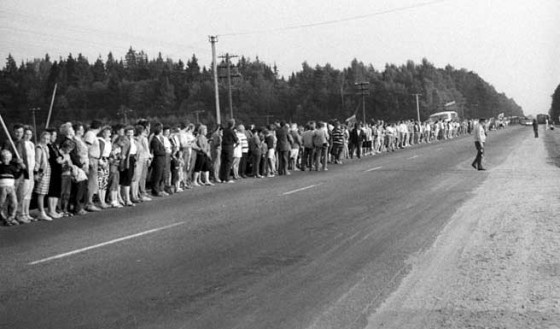
On August 23, 1989, two million people from Estonia, Latvia and Lithuania stood on the Vilnius-Tallinn road, holding hands, as part of the “Singing Revolution” that helped set the Soviet Union to its implosion.
In principle, a self-organising system cannot be constructed, since its organisation and behaviour cannot be prescribed and created by an external source. It emerges autonomously in certain conditions (which cannot be prescribed either). The task of the researcher is to investigate in what kind of systems and under what kind of conditions self-organisation emerges.
Rein Vihalemm, “Chemistry as an Interesting Subject for the Philosophy of Science,” Estonian Studies in the History and Philosophy of Science, Rein Vihalemm, ed., Dordrecht / Boston / London: Kluwer Academic Publishers, 2001, p. 195.

On August 22, 1952, France closed its penal colony on Devil’s Island.
At first a leper colony, it had been transformed by the end of the 19th century into a prison tasked primarily with housing enemies of the French state.
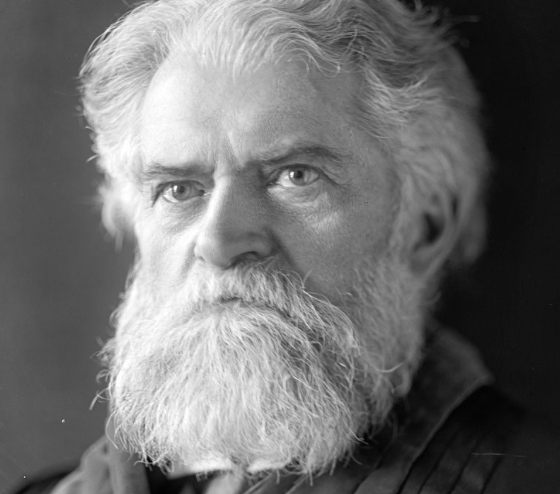
Every one who has taken the trouble to inquire into the actual state of society a few centuries ago knows that the condition of the laborer was about this: He lived in a hovel with hardly any thing which we would call a window, with the fire (if he ever had any) in the middle of the building, or perhaps in a chimney-piece at one end. This hovel he occupied in common with the pigs and poultry. His staple article of food was a kind of black bread which a negro of to-day would hardly offer his dog, with a few vegetables from the neighboring garden. The clothing of himself and wife was coarse, scanty, and dirty almost in the same proportion.
Simon Newcomb, Principles of Political Economy (1886), p. 514.